Patients traveling to Vietnam for professional dental prophylaxis can save up to 85% compared to Western clinics. While a standard ultrasonic scaling in the US or Australia averages $150 to $300, equivalent high-standard treatments in Ho Chi Minh City range from $20 to $80, utilizing identical premium Swiss technology.
Clinical Summary:
Analyzing the dental cleaning cost vietnam vs world reveals a profound economic advantage for international patients without compromising clinical efficacy. Modern Vietnamese dental centers deploy advanced dual scaler technology—integrating both piezoelectric and magnetostrictive systems—alongside the premium Swiss EMS Guided Biofilm Therapy (GBT) protocol. This combination ensures the painless eradication of subgingival calculus and biofilm using low-abrasive 25μm erythritol powder. By leveraging lower operational overhead and direct-pay models, clinics can offer comprehensive periodontal maintenance, scaling, and root planing at a fraction of global prices while strictly adhering to international cross-infection control standards.
Key Takeaways:
- Standard ultrasonic scaling in Vietnam costs between $20 and $32, while advanced GBT ranges from $60 to $80.
- Clinics utilize dual scaler technology (Piezoelectric and Magnetostrictive) to customize calculus removal based on patient sensitivity and tartar density.
- Guided Biofilm Therapy (GBT) employs ultra-fine 25μm erythritol powder for safe, painless stain eradication without scratching enamel or implants.
- The dramatic cost savings stem from lower domestic operational overhead and streamlined administrative processes, not compromised clinical standards.
- International patients benefit from strict cross-infection control protocols that match or exceed global benchmarks.
Average Fees by Country Table
Comparing global dental prophylaxis fees reveals that patients can access premium scaling, root planing, and advanced biofilm therapy in Vietnam at a fraction of the cost found in North America or Europe.
When evaluating the financial landscape of oral healthcare, the disparity between Western nations and Southeast Asian medical hubs becomes immediately apparent. In countries like the United States, Australia, and the United Kingdom, the high cost of living, exorbitant commercial real estate leases, and complex insurance administrative burdens heavily inflate the baseline cost of preventive dentistry. Conversely, Vietnam has optimized its private healthcare sector to deliver world-class treatments at highly accessible price points.
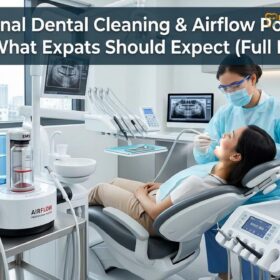
The following table illustrates the stark contrast in pricing for various levels of professional dental cleaning. It is important to note that the procedures performed in Vietnam utilize the exact same imported materials and equipment—such as Swiss EMS Airflow devices and Acteon ultrasonic scalers—as those used in top-tier Western clinics.
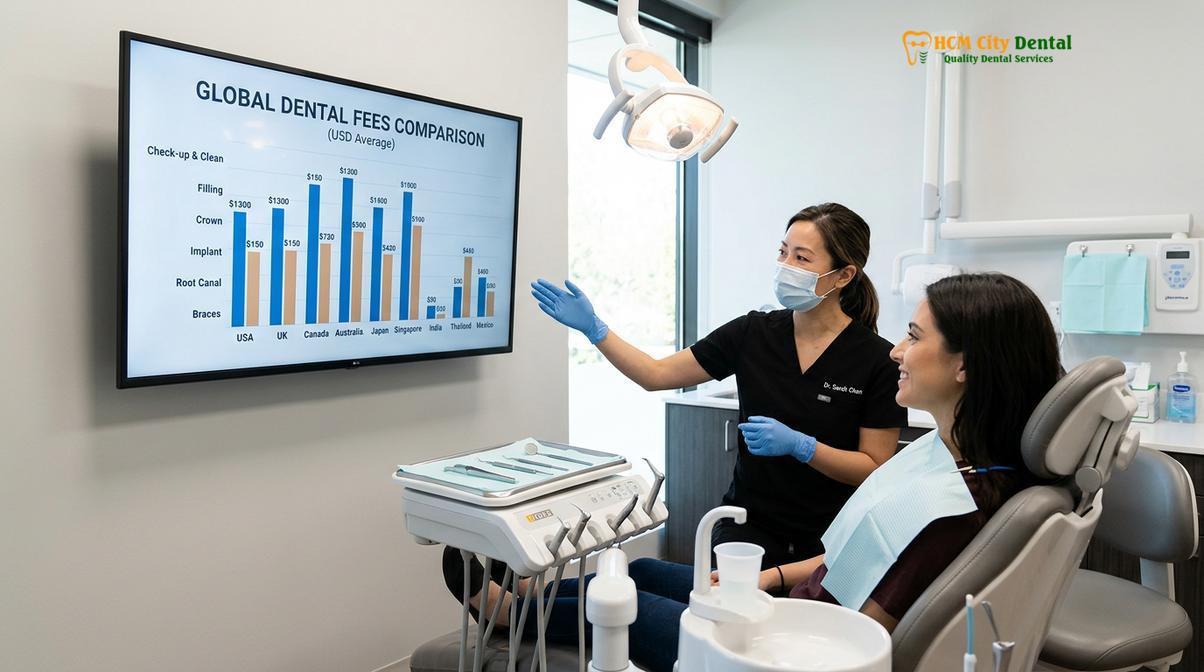
| Treatment Type | United States (USD) | Australia (USD) | United Kingdom (USD) | Vietnam (USD) |
|---|---|---|---|---|
| Standard Ultrasonic Scaling & Polishing | $150 – $250 | $120 – $200 | $100 – $180 | $20 – $32 |
| Guided Biofilm Therapy (GBT) / Airflow | $250 – $400 | $200 – $350 | $180 – $300 | $60 – $80 |
| Scaling & Root Planing (SRP per quadrant) | $250 – $450 | $200 – $400 | $150 – $350 | $40 – $60 |
| Full Mouth Debridement (Heavy Tartar) | $500 – $900 | $450 – $800 | $400 – $700 | $80 – $120 |
To provide complete transparency, the detailed pricing structure at leading facilities like HCMC Dental Clinic is categorized by the complexity of the clinical intervention:
- Standard Ultrasonic Scaling & Polishing: 500,000 to 800,000 VND (~$20 to $32 USD) for scheduled appointments. (Walk-in rates: 800,000 to 1,300,000 VND).
- Airflow Prophylaxis / Guided Biofilm Therapy (GBT): 1,500,000 to 2,000,000 VND (~$60 to $80 USD). (Walk-in rates: 2,500,000 to 3,300,000 VND).
- Scaling & Root Planing (SRP deep cleaning per quadrant): 1,000,000 to 1,500,000 VND (~$40 to $60 USD). (Walk-in rates: 1,600,000 to 2,500,000 VND).
- Full Mouth Debridement (Heavy Tartar Removal): 2,000,000 to 3,000,000 VND (~$80 to $120 USD). (Walk-in rates: 3,300,000 to 5,000,000 VND).
International patients who plan their visits in advance can often take advantage of a -40% WhatsApp booking discount, further maximizing the value of their medical travel itinerary.
Why Vietnam Offers 85% Savings
The dramatic cost difference is primarily driven by lower domestic operational overhead, reduced real estate expenses, and streamlined direct-pay models rather than any reduction in clinical material quality.
A common misconception among international patients is that lower prices equate to inferior care. However, when analyzing the dental cleaning cost vietnam vs world, the economic realities of the region explain the affordability. Vietnam boasts a significantly lower cost of living compared to Western nations. This macroeconomic factor translates directly into reduced overhead for dental practices. Salaries for highly skilled dental assistants, hygienists, and administrative staff are lower, and commercial real estate in major urban centers, while premium locally, is a fraction of the cost of spaces in New York, Sydney, or London.
Furthermore, the Western dental model is heavily burdened by insurance administration. In the US, clinics must employ dedicated billing specialists to navigate complex insurance codes, pre-authorizations, and claim denials. This administrative bloat forces clinics to inflate their baseline prices to maintain profitability. In contrast, Vietnam operates predominantly on a transparent, direct-pay model. By eliminating the middleman, clinics can pass these operational savings directly to the patient.
“The efficiency of the direct-pay healthcare model in Southeast Asia eliminates the administrative friction caused by insurance networks, allowing clinics to invest heavily in advanced technology while keeping patient fees remarkably low.”
Additionally, the high volume of patients seeking the cheapest dental cleaning Asia has to offer allows top clinics to negotiate favorable bulk purchasing agreements with international dental suppliers. Whether importing Swiss EMS powders or German sterilization equipment, these economies of scale ensure that the materials used are identical to those in the West, but procured at a lower per-unit cost.
Premium Technology at Local Prices
Top-tier Vietnamese clinics deploy advanced dual scaler systems and Swiss-engineered airflow protocols to ensure painless, highly effective subgingival calculus and biofilm eradication.
The hallmark of a world-class prophylaxis appointment is the technology utilized to disrupt bacterial colonies and remove mineralized deposits. Modern dentistry has evolved far beyond aggressive hand scraping. Today, the focus is on minimally invasive techniques that preserve the tooth structure while achieving optimal gingival health. HCMC Dental Clinic exemplifies this approach by integrating a “Dual Scaler Advantage” into their treatment protocols.
The Dual Scaler Advantage
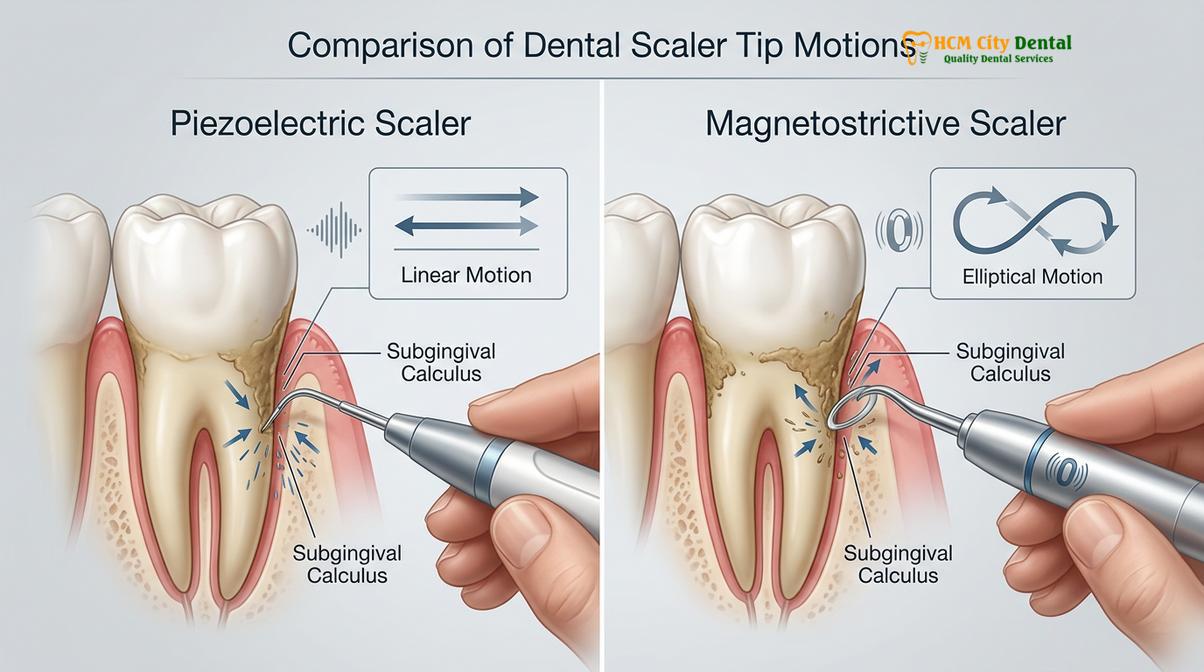
Not all calculus is created equal, and therefore, a one-size-fits-all approach to scaling is clinically inadequate. By utilizing both Piezoelectric and Magnetostrictive ultrasonic scalers, clinicians can customize the treatment to the specific density of the tartar and the sensitivity profile of the patient[1].
- Piezoelectric Scalers (e.g., Acteon/Satelec): These devices utilize quartz crystals to generate a linear, back-and-forth motion at the tip, operating at frequencies up to 32 kHz. Because only the lateral sides of the tip are active, the clinician has precise control. This technology generates significantly lower heat and requires less water coolant, making it the preferred choice for patients with sensitive teeth, pediatric patients, and those with orthodontic appliances.
- Magnetostrictive Scalers (e.g., Dentsply Cavitron): These units rely on a stack of metal strips that expand and contract in a magnetic field, creating an elliptical, figure-eight motion at the tip. Because all surfaces of the tip (front, back, and sides) are active, it is highly efficient at breaking down heavy, tenacious calculus, performing deep subgingival tartar removal, and executing full mouth debridement in cases of severe periodontitis.
Both systems rely on the cavitation effect—the rapid formation and collapse of microscopic bubbles in the water coolant. When these bubbles implode, they release shockwaves that lyse (break open) the cell walls of periodontal pathogens, effectively flushing the periodontal pocket of harmful bacteria[2].
Guided Biofilm Therapy (GBT)
For patients seeking the ultimate in comfort and efficacy, the premium Swiss EMS Guided Biofilm Therapy (GBT) protocol represents the gold standard in modern prophylaxis. GBT is a systematic, 8-step clinical protocol designed to remove biofilm, stains, and early calculus without the need for abrasive pastes or aggressive instrumentation.
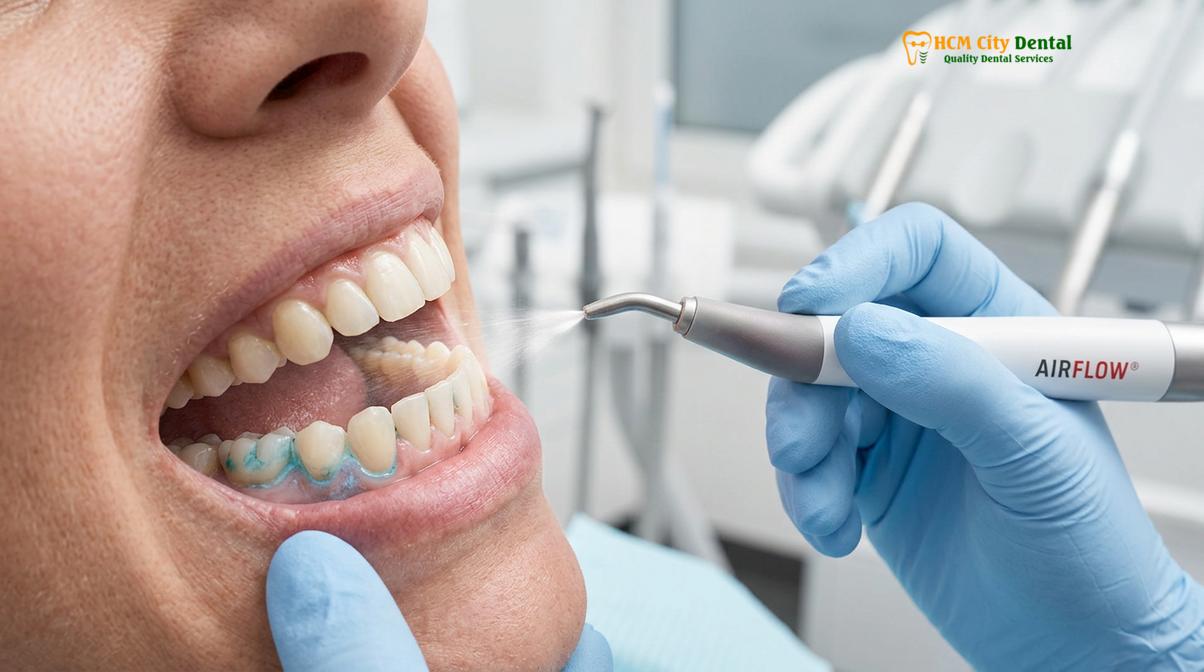
The cornerstone of GBT is the Airflow technology, which utilizes a precisely calibrated mixture of warm water, air, and low-abrasive erythritol powder. With a microscopic grain size of just 25μm, erythritol is significantly finer than traditional sodium bicarbonate powders. This allows it to gently polish the tooth surface, eradicating biofilm and extrinsic stains painlessly and safely without scratching natural enamel, titanium implants, porcelain crowns, or delicate veneers[3].
According to Dr. Nguyen Van Cuong, the clinical selection of ultrasonic power levels and specific scaler tips is critical for enamel preservation safety and maximizing patient comfort during deep debridement. By verifying the GBT protocol step-by-step, clinicians ensure that the subgingival biofilm is thoroughly eradicated, promoting optimal enamel remineralization and gingival reattachment.
Quality Standards Comparison
Leading dental centers in Ho Chi Minh City adhere to rigorous international cross-infection controls, utilizing Class-B autoclaves and single-use barriers to guarantee patient safety.
When traveling abroad for medical care, patient safety and cross-infection control are paramount concerns. The concept of vietnam dental quality assurance is built upon strict adherence to protocols established by global health organizations. Reputable clinics do not cut corners on hygiene to offer lower prices; rather, they invest heavily in hospital-grade sterilization infrastructure.
In a premium facility, the sterilization workflow is meticulously documented and isolated from the clinical treatment areas. Instruments undergo a multi-step decontamination process:
- Enzymatic Ultrasonic Cleaning: Used instruments are submerged in an ultrasonic bath with enzymatic detergents to dissolve organic debris and blood proteins.
- Thermal Disinfection: Instruments are mechanically washed and thermally disinfected at high temperatures.
- Packaging and Sealing: Cleaned instruments are sealed in sterile pouches with chemical indicator strips that change color only when specific sterilization parameters are met.
- Class-B Autoclave Sterilization: The sealed pouches are subjected to pressurized steam sterilization in a Class-B autoclave, which utilizes a pre-vacuum cycle to ensure steam penetrates even the most complex, hollow instruments (such as dental handpieces).
Clinical Warning: While top-tier clinics maintain impeccable standards, international patients should avoid unaccredited, heavily discounted street clinics that may lack proper Class-B autoclaves or digital imaging technology. Always verify a clinic’s sterilization protocols and dentist credentials before booking.
Furthermore, the clinical environment utilizes single-use barriers for all high-touch surfaces, and clinicians strictly adhere to personal protective equipment (PPE) guidelines. This level of rigor ensures that the risk of cross-contamination is virtually eliminated, providing peace of mind that rivals any top-tier clinic in the West.
Travel + Treatment Budget Calculator
Combining a routine prophylaxis appointment with a vacation allows international patients to offset their travel expenses entirely through the substantial savings accrued from their dental treatments.
To truly understand the value proposition of dental tourism, one must look at the total cost of the trip compared to the cost of local treatment. When analyzing the teeth cleaning cost comparison worldwide, the financial logic becomes undeniable, especially for patients requiring more extensive periodontal care alongside their routine cleaning.
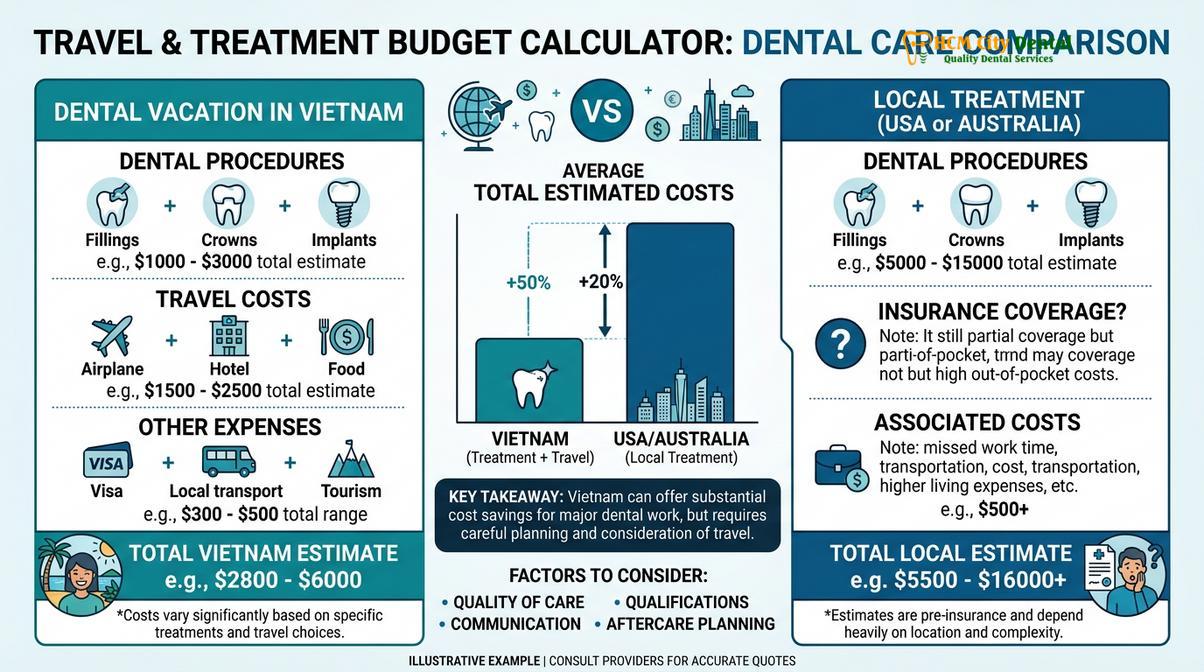
Consider a hypothetical scenario for an international patient requiring a Full Mouth Debridement, Guided Biofilm Therapy, and a comprehensive examination with digital panoramic X-rays:
- Cost in the United States:
- Comprehensive Exam & X-rays: $150
- Full Mouth Debridement: $600
- Advanced Airflow/Polishing: $250
- Total US Cost: ~$1,000 USD
- Cost in Vietnam (including travel):
- Round-trip Flight (e.g., from Australia or US West Coast): $500 – $800
- Boutique Hotel (3 nights): $150
- Comprehensive Exam & X-rays: Often complimentary with treatment
- Full Mouth Debridement: $100
- Guided Biofilm Therapy (GBT): $70
- Total Vietnam Cost: ~$820 – $1,120 USD
In this scenario, the patient receives premium dental care and a multi-day international vacation for roughly the same price as a single, brief clinical visit in their home country. For patients requiring additional restorative work—such as fillings, crowns, or teeth whitening—the savings compound exponentially, making the journey highly lucrative.
Comprehensive Oral Health Overview: Plaque, Tartar, and Prevention
Understanding the progression from soft bacterial plaque to mineralized calculus is essential for preventing periodontal disease, bad breath, and irreversible gingival recession.
To fully appreciate the value of professional comprehensive professional oral hygiene treatments, patients must understand the biological mechanisms that necessitate them. The oral cavity is a complex microbiome housing hundreds of bacterial species. While many are benign, specific pathogenic strains—such as Streptococcus mutans and Porphyromonas gingivalis—thrive in the presence of fermentable carbohydrates.
The Pathogenesis of Plaque and Calculus
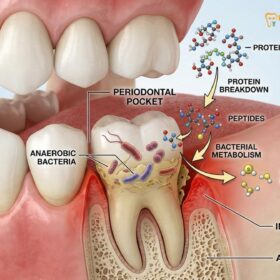
Within hours of brushing, a sticky, colorless biofilm known as dental plaque begins to form on the tooth surfaces. This biofilm acts as a matrix, protecting the bacteria as they multiply and excrete acidic byproducts. If this soft plaque is not mechanically disrupted through effective brushing and flossing, it begins to absorb calcium and phosphate ions from the saliva. Over a period of 24 to 72 hours, this mineralization process transforms the soft plaque into hardened calculus (tartar)[4].
Once calculus forms, it cannot be removed by a toothbrush or dental floss. Its porous, rough surface provides an ideal scaffold for further plaque accumulation, creating a vicious cycle. When this buildup occurs along and beneath the gumline (subgingival calculus), it triggers a localized inflammatory response from the body’s immune system. This condition, known as plaque-induced gingivitis, is characterized by red, swollen gums that bleed easily during brushing.
Clinical Case Example: A 45-year-old expatriate visited HCMC Dental Clinic in Ho Chi Minh City presenting with persistent halitosis and bleeding gums. Clinical probing revealed 4-5mm periodontal pockets indicative of early periodontitis. The patient underwent a comprehensive Scaling and Root Planing (SRP) session utilizing magnetostrictive ultrasonics, followed by a GBT session to polish the root surfaces. Within two weeks, tissue inflammation subsided, bleeding ceased, and pocket depths reduced to a healthy 2-3mm range.
Halitosis and Extrinsic Staining
Beyond periodontal destruction, untreated biofilm and calculus are the primary culprits behind chronic bad breath (halitosis). Anaerobic bacteria residing in deep periodontal pockets and on the posterior surface of the tongue produce volatile sulfur compounds (VSCs), which emit a distinct, unpleasant odor.
Furthermore, lifestyle habits such as the consumption of coffee, tea, red wine, and tobacco use lead to severe extrinsic staining. These chromogenic compounds become embedded in the pellicle layer and the porous calculus. While over-the-counter whitening toothpastes attempt to scrub these stains away using harsh abrasives (which can damage enamel), professional airflow polishing with erythritol powder safely dissolves the stains at a microscopic level, restoring the natural luminosity of the teeth.
Preventive Home Care: The Modified Bass Technique
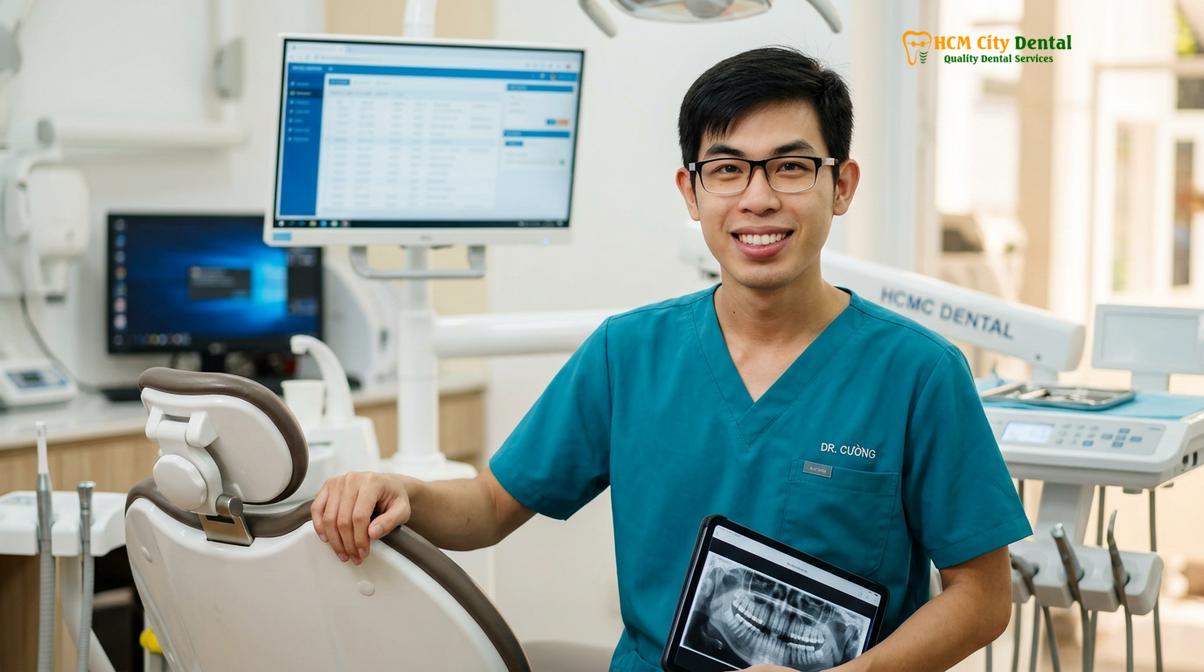
Dr. Nguyen Van Cuong frequently emphasizes that while meticulous home brushing and flossing disrupt soft plaque, only professional ultrasonic scaling can safely detach hardened subgingival calculus without damaging the root surface. To maximize the longevity of a professional cleaning, patients must adopt proper home care techniques.
The Modified Bass technique is widely considered the most effective manual brushing method for disrupting plaque at the gingival margin:
- Hold the toothbrush horizontally and angle the bristles at a 45-degree angle toward the gumline.
- Apply gentle pressure so the bristles slightly enter the gingival sulcus (the shallow space between the tooth and gum).
- Use short, vibratory back-and-forth motions for several seconds on a small group of teeth.
- After the vibratory motion, sweep or roll the brush away from the gumline to clear the dislodged debris.
- Repeat this process systematically across all facial, lingual, and occlusal surfaces of the dentition.
Following a thorough cleaning, the application of a professional fluoride varnish can significantly aid in enamel remineralization, fortifying the tooth structure against future acid attacks and reducing dentinal hypersensitivity.
“Consistent periodontal maintenance is not merely a cosmetic endeavor; it is a critical medical intervention that halts the progression of bone loss, preserves the natural dentition, and reduces the systemic inflammatory burden on the body.”
When to See a Doctor
While routine cleanings are preventive, certain clinical signs indicate the need for immediate professional intervention. You should schedule a diagnostic consultation if you experience any of the following symptoms:
- Persistent Gingival Bleeding: Gums that bleed consistently during normal brushing or flossing, or spontaneous bleeding without provocation.
- Chronic Halitosis: Bad breath or a persistent bad taste in the mouth that does not improve with oral hygiene, indicating potential deep pocket infections.
- Gingival Recession: Gums that appear to be pulling away from the teeth, exposing the sensitive, yellowish root surfaces.
- Tooth Mobility: Any noticeable looseness or shifting of the adult teeth, which is a late-stage sign of severe periodontal bone loss.
- Purulent Exudate: The presence of pus between the teeth and gums when pressure is applied.
Early detection and intervention through professional scaling and root planing can halt disease progression and prevent the need for complex surgical extractions or implant therapy.
Frequently Asked Questions
Is it safe to get a dental cleaning in Vietnam?
Yes, it is highly safe to receive a dental cleaning in Vietnam provided you choose an accredited, internationally standardized clinic. Leading facilities utilize Class-B autoclaves, single-use barriers, and strict cross-infection control protocols that match or exceed the safety guidelines established by global dental associations. The technology and materials used are imported from reputable global manufacturers.
Why is dental care so cheap in Vietnam?
Dental care is highly affordable in Vietnam primarily due to lower domestic operational overhead, reduced commercial real estate costs, and the absence of complex insurance-driven price inflation. These economic efficiencies allow clinics to offer premium treatments using imported materials at a fraction of Western prices, passing the savings directly to the patient through a transparent direct-pay model.
What is the cost of GBT cleaning in Saigon?
The cost of Guided Biofilm Therapy (GBT) in Saigon typically ranges from 1,500,000 to 2,000,000 VND (approximately $60 to $80 USD) for scheduled appointments. Walk-in rates may be slightly higher, but this premium Swiss protocol remains vastly more affordable than equivalent treatments in North America or Europe, which often exceed $250 USD.
Does ultrasonic scaling damage tooth enamel?
When performed correctly by a trained clinician, ultrasonic scaling does not damage tooth enamel. Modern piezoelectric and magnetostrictive scalers are calibrated to specifically target mineralized calculus and biofilm, leaving the much harder underlying enamel intact while preserving the structural integrity of the tooth. The use of proper water coolant also prevents any thermal damage to the pulp.
How often should I schedule a professional prophylaxis appointment?
Clinical guidelines generally recommend scheduling a professional prophylaxis appointment every six months for individuals with healthy gums. However, patients with a history of periodontal disease, heavy calculus buildup, or orthodontic appliances may require more frequent periodontal maintenance visits every three to four months to disrupt biofilm maturation and prevent disease relapse[5].
References
- Journal of Clinical Periodontology. Guided Biofilm Therapy clinical efficacy. (2021).
- International Journal of Dental Hygiene. Ultrasonic scaling vs hand scaling. (2020).
- Journal of Periodontology. Scaling and root planing for periodontitis. (2019).
- Clinical Oral Investigations. Erythritol air-polishing powder safety. (2022).
- Journal of the American Dental Association. Professional cleaning recall intervals. (2018).