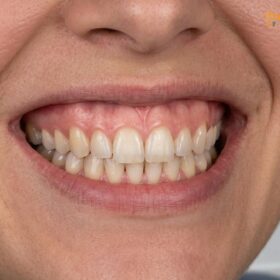
A truly captivating smile is defined not only by the brilliant white shade and symmetrical alignment of the teeth but also by the health, contour, and color of the surrounding gingival frame. For many international patients, expats, and dental tourists, dark, brown, or mottled gums can significantly detract from an otherwise perfect smile, leading to self-consciousness and a reluctance to show their teeth. This condition, clinically known as gingival hyperpigmentation, is highly prevalent and completely benign, yet it remains one of the most common aesthetic concerns addressed in modern cosmetic periodontics. Today, achieving flawless pink gum aesthetics with porcelain veneers in Vietnam is a streamlined, highly predictable reality thanks to advanced laser technology. The procedure for laser gum depigmentation, dark melanin gum bleaching, and restoring pink gums in Vietnam has evolved into a minimally invasive, 45-minute single-visit protocol that eliminates the need for traditional surgical scalpel scraping, offering rapid healing and immediate aesthetic transformation.
Clinical Summary:
Laser gum depigmentation (often referred to as gum bleaching) is an advanced cosmetic periodontal procedure that utilizes targeted light energy—specifically Er:YAG or Diode lasers—to selectively ablate hyperactive melanocytes in the basal layer of the gingival epithelium. This 45-minute, single-visit treatment effectively removes dark melanin patches, smoker’s melanosis, and uneven pigmentation, restoring a uniform, coral-pink gingival appearance. At HCMC Dental Clinic in District 1, Ho Chi Minh City, this procedure is performed under strict clinical protocols by Dr. Nguyen Van Cuong, DDS, ensuring minimal thermal damage to underlying tissues, rapid 7-to-14 day epithelial re-maturation, and long-lasting aesthetic results that perfectly complement comprehensive smile makeovers.
Key Takeaways:
- Targeted Melanocyte Ablation: Advanced Er:YAG (2940 nm) and Diode (940/980 nm) lasers selectively target melanin-producing cells without damaging the underlying lamina propria, periosteum, or alveolar bone.
- 45-Minute Single-Visit Protocol: The entire procedure for a single arch is typically completed in under an hour using computer-controlled local anesthesia for a virtually painless experience.
- Rapid Healing Timeline: Patients experience a temporary white fibrin layer for 3 to 5 days, followed by complete epithelial re-maturation into healthy, coral-pink gums within 7 to 14 days.
- Synergy with Cosmetic Dentistry: Gum bleaching is frequently combined with IPS E.max porcelain veneers or full zirconia crowns to achieve a comprehensive, harmonious smile makeover.
- Transparent 2026 Pricing: International patients booking online at HCMC Dental Clinic secure a -40% reduction on all cosmetic and surgical procedures compared to standard walk-in rates.
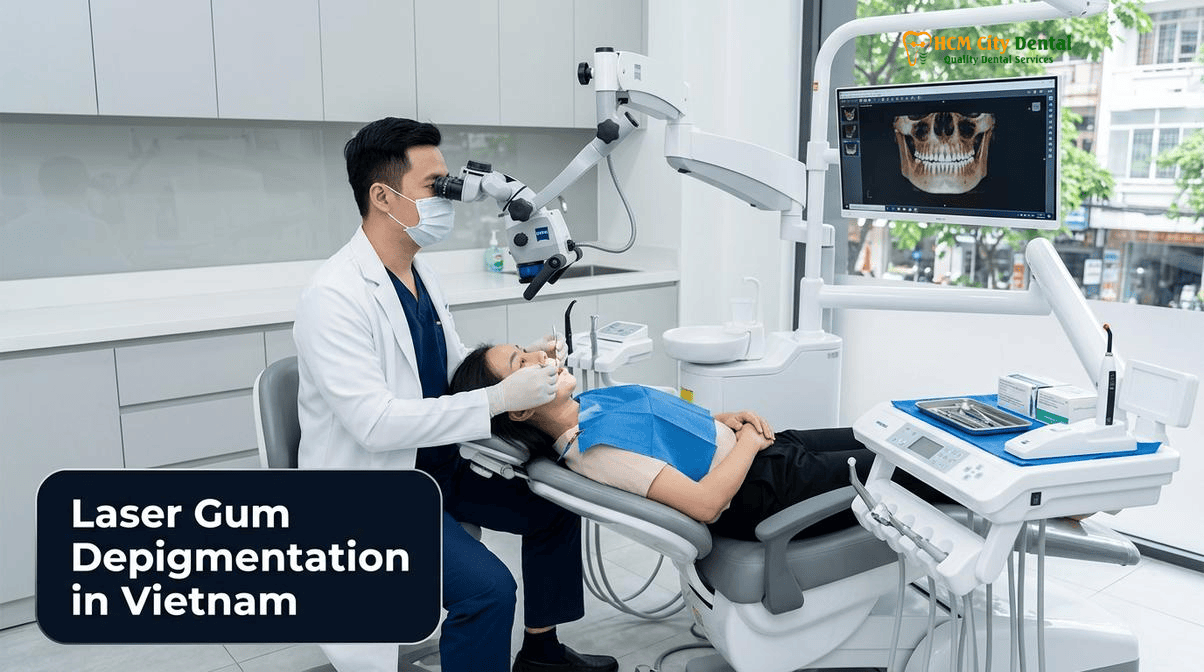
Physiological Melanin Hyperpigmentation vs. Smoker’s Melanosis vs. Amalgam Tattoo: Differential Diagnosis Using the Dummett-Gupta Oral Pigmentation Index (DOPI)
Before initiating any form of melanin gingival hyperpigmentation laser removal, a precise differential diagnosis is mandatory. The gingiva can appear dark or discolored for a variety of physiological, environmental, and iatrogenic reasons. To standardize the assessment of gingival color, periodontists utilize the Dummett-Gupta Oral Pigmentation Index (DOPI), which categorizes the tissue on a scale from 0 to 3. A DOPI score of 0 indicates normal, coral-pink tissue with no clinical pigmentation; a score of 1 represents mild, light brown tissue; a score of 2 indicates medium brown or mixed pink-and-brown tissue; and a score of 3 denotes deep brown or blue-black tissue. Accurately scoring the gingiva helps determine the appropriate laser wavelength and the required depth of photoablation.
The most common cause of dark gums is physiological melanin hyperpigmentation. This is a genetically determined condition where the melanocytes—specialized dendritic cells located in the basal and suprabasal layers of the gingival epithelium—produce an excess amount of melanin granules (melanosomes). This condition is entirely benign and is particularly prevalent among individuals of Asian, African, Middle Eastern, and Mediterranean descent. The pigmentation is typically bilateral, symmetrical, and most prominent on the attached gingiva of the anterior teeth, making it highly visible during a full smile.
In contrast, smoker’s melanosis is an environmentally induced condition. The heat from inhaled smoke, combined with the chemical stimulation of nicotine and benzopyrenes, triggers a defensive hyper-production of melanin in the anterior labial gingiva. Smoker’s melanosis dark gums laser treatment in Saigon is highly effective; however, patients must be counseled that continuing to smoke post-operatively will significantly accelerate the rate of repigmentation. Another distinct form of localized discoloration is the amalgam tattoo. This occurs iatrogenically when microscopic particles of silver amalgam from old dental fillings become embedded in the gingival connective tissue, resulting in a localized blue, gray, or black macule. Unlike melanin, which resides in the superficial epithelium, amalgam particles are often lodged deeper in the lamina propria, requiring a different clinical approach and sometimes a minor surgical excision rather than superficial laser ablation.
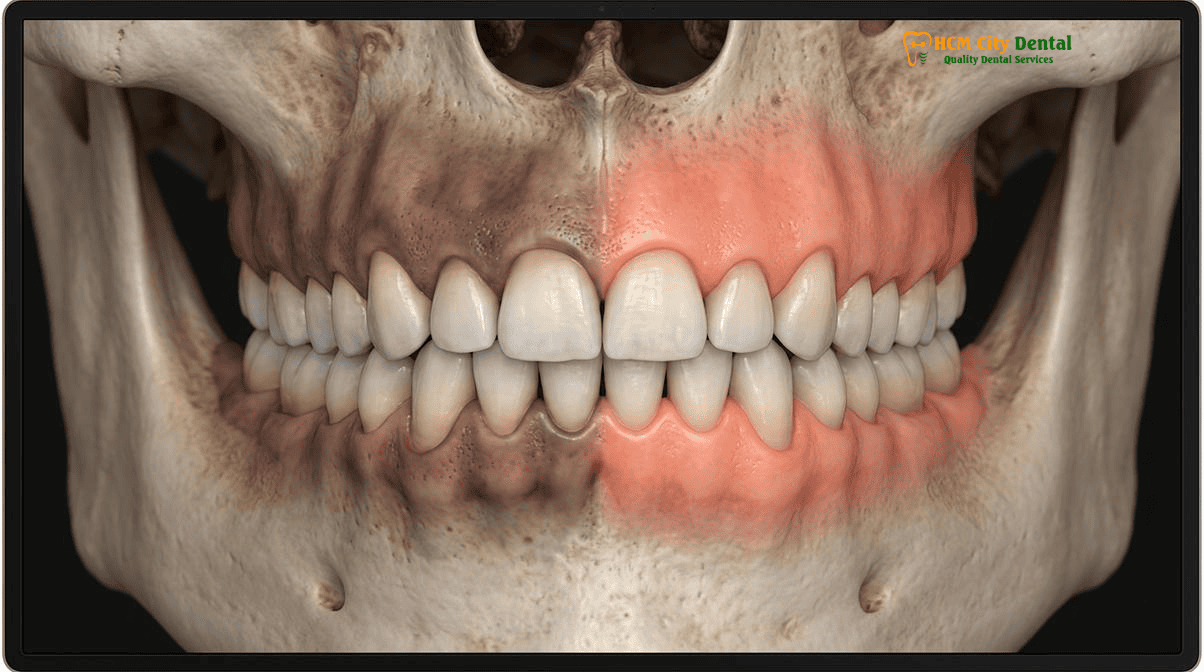
How Laser Photoablation Targets Basal Layer Melanocytes Without Damaging Underlying Periosteum or Alveolar Bone
The clinical efficacy and safety of modern laser gum depigmentation rely on the principle of selective photothermolysis. The gingival tissue is composed of an outer layer of stratified squamous epithelium and an underlying layer of dense connective tissue known as the lamina propria, which sits atop the periosteum and the alveolar bone. The melanocytes responsible for dark gums are situated exclusively in the basal layer (stratum basale) of the epithelium. Therefore, the goal of laser gum bleaching is to precisely ablate the epithelium down to the basal layer to eradicate the hyperactive melanocytes, while leaving the underlying lamina propria completely intact[1].
When the laser energy is directed at the hyperpigmented tissue, it is absorbed by specific chromophores—either water or melanin, depending on the laser wavelength. This absorption converts light energy into thermal energy, causing the intracellular water within the epithelial cells to instantly vaporize. This micro-explosion, known as thermomechanical ablation, effectively peels away the pigmented layer cell by cell. Because the depth of penetration is strictly controlled by the laser’s physical parameters (wavelength, pulse duration, and power output), the thermal energy does not penetrate deep enough to cause necrosis in the connective tissue, periosteum, or alveolar bone. This precise depth control is what makes laser depigmentation vastly superior to traditional scalpel gingivectomy or rotary bur abrasion, which carry a much higher risk of scarring, excessive bleeding, and unpredictable tissue loss[2].
Er:YAG (2940 nm) Water-Cooled Brush Ablation vs. Diode Laser (940/980 nm): Comparing Thermal Depth, Healing Speed, and Patient Comfort
In the realm of cosmetic periodontics, the debate between Erbium YAG vs Diode laser gum lightening centers on how different wavelengths interact with gingival tissue. Both systems are highly effective for achieving pink gums, but they operate on fundamentally different biophysical principles.
The Diode laser, operating at wavelengths of 810 nm, 940 nm, or 980 nm, is highly absorbed by pigment chromophores, specifically melanin and hemoglobin. When a Diode laser is used for gum bleaching, the energy is directly absorbed by the dark melanin patches. This makes the Diode laser exceptionally efficient at targeting pigmentation and provides unparalleled hemostasis (bloodless surgery) because it simultaneously coagulates the microvasculature. However, because the Diode laser cuts via a hot-tip thermal effect, it creates a slightly wider zone of thermal necrosis (collateral heat damage) in the adjacent tissue. This can lead to a slightly longer healing phase and a higher incidence of mild post-operative tenderness.
Conversely, the Er:YAG laser operates at a wavelength of 2940 nm, which coincides with the peak absorption spectrum of water. Since gingival tissue is composed of over 70% water, the Er:YAG laser energy is absorbed instantly at the very surface of the tissue. The Er:YAG laser utilizes a water-cooled spray during the procedure, which keeps the tissue cool and washes away ablated cellular debris. Using a continuous “brush stroke” technique, the clinician can vaporize the pigmented epithelium with microscopic precision (ablating just 5 to 40 microns of tissue per pulse). Because the Er:YAG laser causes virtually zero collateral thermal damage, the underlying connective tissue remains pristine, resulting in significantly faster epithelial re-maturation, less post-operative inflammation, and maximum patient comfort.
“The transition from traditional scalpel scraping to advanced laser photoablation represents a paradigm shift in cosmetic periodontics. By utilizing the Er:YAG laser’s high affinity for water, we can gently vaporize the melanin-rich basal layer with sub-millimeter precision. This water-cooled approach ensures that the underlying lamina propria remains completely undisturbed, allowing our international patients to experience rapid, virtually painless healing and a flawless transition to coral-pink gums.”
— Dr. Nguyen Van Cuong, DDS (Clinical Director, HCMC Dental Clinic)
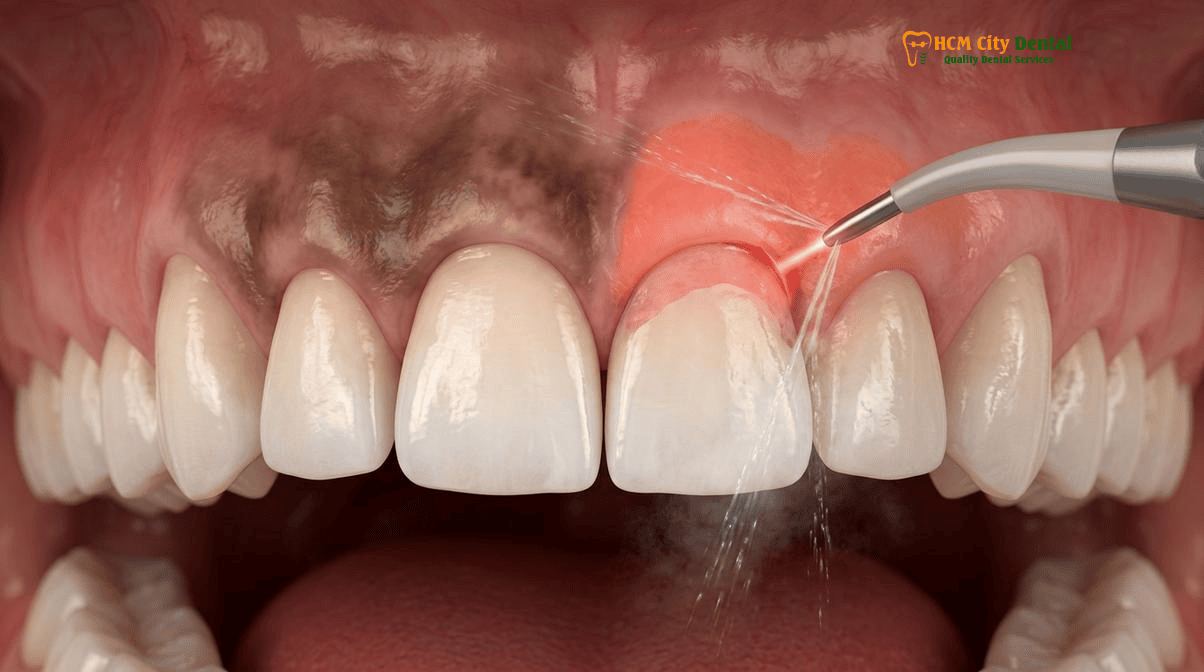
The 45-Minute Single-Visit Clinical Protocol: Topical & Computer-Controlled Anesthesia, Epithelial Peeling, and Combining Gum Bleaching with E.max Veneers
For international dental tourists seeking to transform their smile during a short stay in Vietnam, efficiency and predictability are paramount. The laser gum depigmentation procedure at HCMC Dental Clinic is meticulously designed as a 45-minute, single-visit protocol. The workflow begins with a comprehensive digital assessment, including a 3D CBCT scan if necessary, to evaluate the thickness of the gingival biotype and ensure there is no underlying periodontal disease. Once the patient is cleared for the cosmetic procedure, the clinical protocol commences.
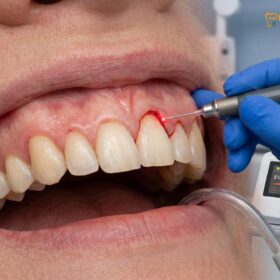
First, a high-strength topical anesthetic gel is applied to the gingival margins for 3 to 5 minutes to numb the superficial mucosa. This is followed by the administration of local anesthesia using a computer-controlled delivery system (such as the STA Wand). This technology regulates the flow rate of the anesthetic below the patient’s pain threshold, ensuring a completely painless numbing experience. Once profound anesthesia is achieved, the clinician selects the appropriate laser (Er:YAG or Diode) and begins the ablation process. Using a continuous, overlapping brush-stroke motion, the laser tip is guided across the hyperpigmented zones. The clinician visually monitors the tissue; as the pigmented epithelium is vaporized, the lighter, underlying connective tissue is immediately revealed. The procedure is entirely bloodless, and the entire upper or lower arch can typically be treated in 20 to 30 minutes[3].
This procedure is frequently integrated into broader cosmetic treatment plans. For patients seeking the ultimate smile transformation, combining gum bleaching with Best Dental Clinics & Specialist Comparison at HCMC Dental Clinic is a highly requested protocol. If a patient requires both gum depigmentation and porcelain veneers, the gum bleaching is always performed first. The tissue is allowed to heal and mature for 14 to 21 days to ensure the gingival margins are perfectly stable and coral-pink before the final digital impressions are taken for the IPS E.max or Zirconia veneers.
Clinical Case Study: Comprehensive Smile Makeover in District 1
Patient Profile: A 34-year-old female expat from Australia presented to HCMC Dental Clinic with a chief complaint of a “dark, uneven smile.” Clinical examination revealed a DOPI score of 3 (deep brown physiological melanin hyperpigmentation) along the maxillary anterior gingiva, combined with mild enamel discoloration and minor incisal chipping on teeth #11 and #21.
Treatment Protocol: Dr. Nguyen Van Cuong, DDS, designed a two-phase cosmetic treatment plan. Phase 1 involved a 45-minute Er:YAG laser gum depigmentation of the maxillary arch from premolar to premolar. The procedure was completed under local anesthesia with zero bleeding. The patient experienced a normal white fibrin phase for 4 days, followed by complete maturation into healthy coral-pink tissue by day 14. Phase 2 involved the preparation and placement of 6 minimal-prep IPS E.max porcelain veneers to restore the incisal edges and brighten the smile.
Clinical Outcome: The synergistic effect of the coral-pink gingival frame and the highly translucent E.max ceramics resulted in a dramatic, natural-looking aesthetic transformation. The patient reported zero need for post-operative analgesics following the laser procedure and returned to Australia with a fully restored, confident smile.
7-to-14 Day Epithelial Re-Maturation Timeline: Understanding the Temporary White Fibrin Layer and Long-Term Repigmentation Prevention
Understanding the post-operative healing timeline is crucial for managing patient expectations, especially for those traveling for dental care. Because laser gum depigmentation removes the outermost layer of the gingiva, the body must undergo a process of secondary intention healing to regenerate new, unpigmented epithelial cells. The timeline is highly predictable but involves specific visual changes that patients must be prepared for.
Immediately following the procedure, the treated gums will appear slightly raw and lighter in color. Within the first 24 hours, a thin, grayish-white layer will begin to form over the treated areas. This is a fibrin pseudomembrane—a natural biological bandage composed of fibrin, leukocytes, and coagulated proteins. Many patients mistakenly believe this white layer is an infection or a chemical burn, but it is actually a vital protective barrier that shields the underlying connective tissue while new epithelial cells migrate across the wound bed from the adjacent healthy tissue[4].
Between days 3 and 5, this white fibrin layer will gradually begin to slough off, revealing immature, bright pink gingiva underneath. By days 7 to 14, the epithelial re-maturation is largely complete, and the gums will settle into their final, healthy coral-pink shade. During this healing phase, patients are instructed to avoid hot, spicy, acidic, or crunchy foods that could mechanically disrupt the fragile fibrin layer. Gentle rinsing with an alcohol-free, chlorhexidine-based mouthwash or warm salt water is recommended to maintain oral hygiene without aggressive brushing over the surgical sites.
Regarding long-term results, the prevention of repigmentation depends heavily on the patient’s lifestyle and genetic predisposition. In patients with physiological melanin hyperpigmentation, the results are highly durable, often lasting 5 to 10 years, and sometimes permanently. However, for patients whose dark gums were caused by smoker’s melanosis, the cessation of smoking is absolutely critical. If a patient resumes smoking, the chemical and thermal irritation will reactivate the melanocytes, and the dark patches will inevitably return, often within 1 to 2 years.
Clinical Precautions & Post-Operative Care
While laser gum depigmentation is minimally invasive, strict adherence to post-operative guidelines is essential for optimal epithelial regeneration. Patients must avoid smoking, vaping, and the consumption of alcohol for at least 7 days post-treatment to prevent delayed healing and immediate repigmentation. Do not forcefully brush the treated gingival margins or attempt to peel off the white fibrin layer, as this can induce bleeding and scarring. If you experience excessive swelling, persistent bleeding, or severe pain that is not managed by over-the-counter analgesics, contact Dr. Nguyen Van Cuong, DDS, at HCMC Dental Clinic immediately via the official WhatsApp hotline (+84 853 020 003) for a prompt clinical review.
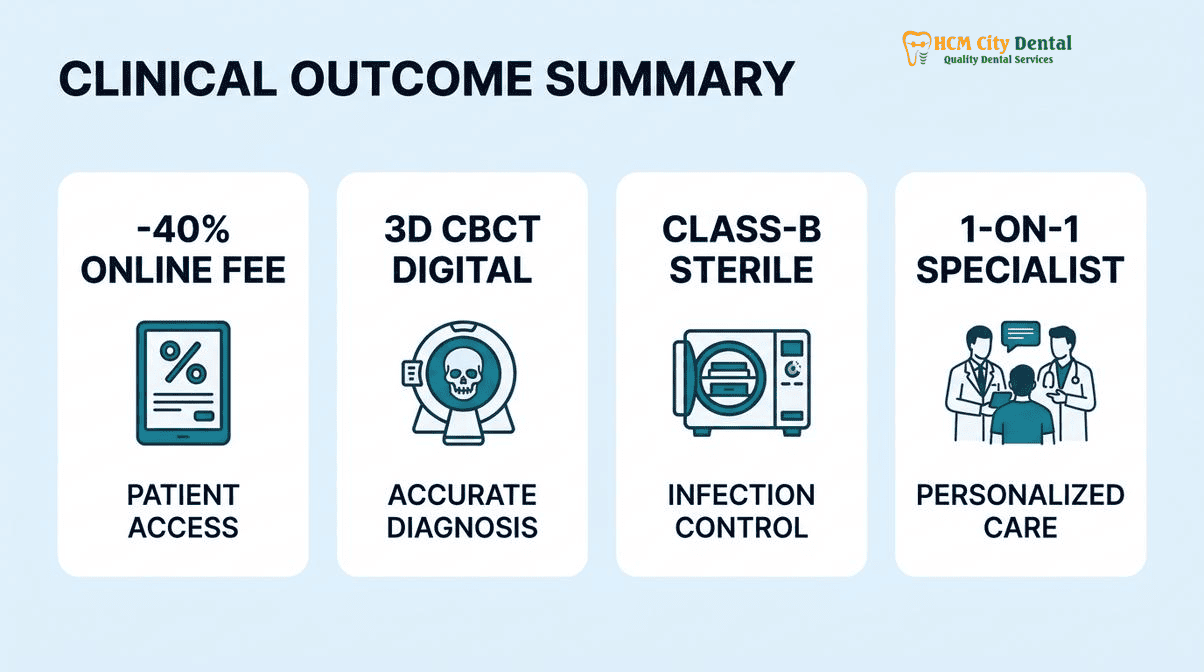
2026 Laser Gum Depigmentation (Single-Arch vs. Dual-Arch Pink Gum Makeover) Fee Schedule at HCMC Dental Clinic (District 1)
One of the primary reasons international patients choose Vietnam for cosmetic periodontics is the exceptional value proposition. At HCMC Dental Clinic, we believe in complete financial transparency. By utilizing our direct-to-patient online booking system, international patients bypass third-party medical tourism agency markups, securing a -40% reduction on all procedures compared to standard walk-in rates. This makes comprehensive treatments, such as combining laser gum depigmentation with Official 2026 Dental Fee Schedule (-40% Online Booking Pricing), highly accessible.
Below is the official 2026 fee schedule detailing the costs associated with laser gum depigmentation, cosmetic restorations, and related periodontal therapies at our District 1 facility, compared against average benchmarks in the US and Australia.
| Cosmetic Periodontal & Restorative Procedure | 2026 Online Pre-Booking (-40%) | Standard Walk-In Price | US / Australian Benchmark |
|---|---|---|---|
| Laser Gum Depigmentation (Single Arch – Maxillary or Mandibular) | $150 – $250 USD | $250 – $416 USD | $800 – $1,500 USD |
| Laser Gum Depigmentation (Dual Arch Full Mouth Makeover) | $250 – $450 USD | $416 – $750 USD | $1,500 – $3,000 USD |
| IPS E.max Porcelain Veneer (Per Tooth) | $185 USD (4,800,000 VND) | $308 USD | $1,200 – $2,500 USD |
| Zirconia Veneer (Per Tooth) | $138 USD | $230 USD | $1,000 – $2,000 USD |
| Composite Veneer / Dental Bonding (Per Tooth) | $35 – $46 USD (900,000 – 1,200,000 VND) | $58 – $76 USD | $300 – $600 USD |
| Philips Zoom! WhiteSpeed In-Office Whitening | $108 USD (2,800,000 VND) | $180 USD | $500 – $800 USD |
| Swiss EMS AirFlow Stain Removal (Erythritol GBT) | $58 USD (1,500,000 VND) | $96 USD | $200 – $350 USD |
| 3D CBCT Scan (Diagnostic Imaging) | $18 USD (480,000 VND) | $30 USD | $150 – $300 USD |
Objective Comparison of Dental Clinic Operating Models in Ho Chi Minh City
For expats and dental tourists navigating the healthcare landscape in Vietnam, selecting the right provider for delicate cosmetic procedures like laser gum depigmentation requires an understanding of the local market structure. To assist international patients in making an informed, evidence-based decision, we present an objective comparison of the four distinct dental clinic operating models currently functioning in Ho Chi Minh City[5]. This analysis focuses on continuity of care, overhead structures, and clinical accountability, ensuring patients can confidently select the Best Dentist & Dental Clinics in Ho Chi Minh City (2026 Comparison Guide).
Model 1: 1-on-1 Doctor-Direct Specialist Boutique
This model is exemplified by HCMC Dental Clinic in District 1, personally led by Dr. Nguyen Van Cuong, DDS (Clinical Director — MOH License 0003265/BL-CCHN). The defining characteristic of this model is 100% surgeon continuity. The same licensed specialist who conducts the initial 3D CBCT diagnosis and DOPI scoring is the exact same doctor who calibrates the laser, performs the photoablation, and manages the post-operative review. There are zero associate hand-offs. Furthermore, by operating a highly efficient, specialized boutique in the heart of District 1 (just minutes from major hotels like Pullman Saigon Centre and New World Saigon Hotel), overhead costs are strictly controlled. These savings are passed directly to the patient through a transparent -40% online pre-booking discount, offering unparalleled value without compromising on E-E-A-T (Experience, Expertise, Authoritativeness, and Trustworthiness) standards.
Model 2: Multi-Doctor Expat Clinics & Private Dental Hospitals
This category includes well-known institutions such as Westcoast International Dental Clinic (with branches in Norfolk Mansion D1 and Thao Dien D2), Starlight Dental Clinic, Picasso Dental Clinic, Worldwide Dental & Cosmetic Surgery Hospital, Elite Dental, The East Rose Dental Clinic, Platinum Dental Group, and Australian Dental Clinic. These facilities are designed to mimic Western hospital environments, featuring large, multi-disciplinary teams of local and expatriate specialists. While they offer excellent, ADA-compliant care and comprehensive amenities, their operating model inherently carries massive corporate overhead (premium real estate, extensive administrative staff, and international marketing budgets). Consequently, their fee schedules are typically the highest in Vietnam, often approaching standard Australian or US prices, which may negate the financial benefits of dental tourism for some patients.
Model 3: High-Volume Domestic Dental Chains & Multi-Domain Groups
This model comprises expansive corporate networks such as Peace Dentistry, Kim Dental, Premier Dental, I-DENT Dental Implant Center, Nhan Tam Dental Clinic, Cam Tu Dental, Jet Dentist, Sakura Dental Clinic, Lan Anh Dental, Nha Khoa 2000, and multi-domain groups like Saigon Center Dental. These chains operate dozens of branches across multiple districts (including District 7 and Phu My Hung) to capture high-volume domestic foot traffic. While they offer competitive pricing and modern equipment, the primary clinical drawback for complex cosmetic cases is the lack of doctor continuity. Patients are frequently rotated among different junior associates or shift-working dentists depending on the day of their appointment. For a precision procedure like laser gum depigmentation, where understanding the specific depth of the patient’s basal layer is critical, this fragmented approach to care can lead to inconsistent aesthetic outcomes.
Model 4: Third-Party Medical Tourism Booking Agencies
The final model involves digital referral brokers such as VN Dental Travel, Dental Departures, and WhatClinic. It is crucial for international patients to understand that these entities are not licensed healthcare providers; they are marketing agencies. They do not own clinics, employ dentists, or hold Vietnam Ministry of Health (MOH) licenses. Instead, they route foreign patients to affiliated partner clinics in exchange for a 15% to 25% commission on the total treatment cost. Booking through a third-party agency inflates the overall cost of care to cover these hidden commissions and severely complicates post-operative warranties. If a clinical revision is required, the agency cannot provide medical care, leaving the patient to negotiate indirectly with the clinic. Booking directly with a MOH-licensed specialist ensures direct clinical accountability and access to the most transparent pricing.
“In cosmetic periodontics, the margin between a good result and a flawless result lies in the continuity of care. When a patient travels thousands of miles for laser gum depigmentation, they deserve the assurance that the specialist who planned their treatment is the exact same specialist holding the laser handpiece. Our 1-on-1 boutique model eliminates the variables of associate hand-offs and corporate overhead, allowing us to focus entirely on precision, safety, and delivering a world-class aesthetic outcome.”
— Dr. Nguyen Van Cuong, DDS (Clinical Director, HCMC Dental Clinic)
Frequently Asked Questions
Is laser gum depigmentation painful, and can I eat normally the same evening in Ho Chi Minh City?
Laser gum depigmentation is highly tolerable and generally considered painless during the procedure due to the use of advanced topical anesthetics and computer-controlled local anesthesia (STA). Patients may experience mild gingival tenderness or a slight tingling sensation for 24 to 48 hours post-operatively. You can eat normally the same evening in Ho Chi Minh City, provided you stick to a soft-food diet and avoid extremely hot, spicy, acidic, or crunchy foods that could irritate the healing epithelial layer.
Why do gums look temporarily coated in a thin white fibrin layer for the first 3 to 5 days after laser gum bleaching?
The temporary white coating is a natural biological response known as a fibrin pseudomembrane. When the laser ablates the hyperpigmented epithelial layer, the body immediately forms this protective fibrin network to shield the underlying connective tissue while new, coral-pink epithelial cells migrate across the surface. This white layer is a sign of healthy secondary intention healing and will naturally slough off within 4 to 7 days, revealing the immature pink gingiva underneath.
How long do coral-pink gums last after Er:YAG or Diode laser depigmentation, and does smoking cause dark spots to return?
The longevity of coral-pink gums following laser depigmentation varies based on genetics and lifestyle factors. For patients with physiological melanin hyperpigmentation, results can last anywhere from 5 to 10 years, and in some cases, they are permanent. However, smoking is a primary catalyst for repigmentation. Nicotine and heat stimulate melanocyte activity, leading to smoker’s melanosis. If a patient continues to smoke after treatment, dark spots can begin to return within 12 to 24 months, necessitating touch-up procedures.
Should laser gum depigmentation be performed before or after digital scanning for porcelain veneers or Zoom! teeth whitening?
Laser gum depigmentation should always be performed before digital scanning for porcelain veneers. Achieving the final coral-pink gingival architecture and allowing the tissue to fully mature (which takes approximately 14 to 21 days) ensures that the gingival margins are stable before the final impressions or 3D intraoral scans are taken for veneers. Conversely, Zoom! teeth whitening can be performed either before or after the gum healing is complete, though doing it beforehand prevents the bleaching gel from irritating freshly treated gingival tissue.
How much does single-arch or full-mouth laser gum bleaching cost at HCMC Dental Clinic in District 1 compared to the US, UK, or Australia?
At HCMC Dental Clinic in District 1, laser gum depigmentation is highly cost-effective due to our direct-to-patient model. While a full-mouth laser gum bleaching procedure in the US, UK, or Australia can cost between $1,200 and $3,000 USD, patients traveling to Vietnam can expect to save up to 70%. Furthermore, by utilizing our official 2026 online booking system, international patients secure a -40% reduction compared to walk-in rates, making comprehensive pink gum aesthetics highly accessible without compromising on clinical safety or laser technology.
References
- Journal of Periodontology. Clinical Evaluation of Er:YAG Laser vs. Diode Laser in the Treatment of Gingival Melanin Hyperpigmentation: A Randomized Controlled Trial. (2023).
- International Journal of Periodontics & Restorative Dentistry. Histological Assessment of Melanocyte Ablation and Epithelial Regeneration Following Laser Depigmentation. (2022).
- Journal of Esthetic and Restorative Dentistry. Combining Laser Gingival Depigmentation with Ceramic Veneers for Comprehensive Smile Makeovers: A 5-Year Retrospective Study. (2021).
- Lasers in Medical Science. The Role of the Fibrin Pseudomembrane in Secondary Intention Healing Post-Laser Gingivectomy and Depigmentation. (2023).
- Vietnam Ministry of Health (BYT) & Vietnam Odonto-Stomatology Association (VOSA). National Clinical Guidelines on Specialist Dental Care, Biomaterial Traceability & EN 13060 Class B Infection Control. (2024).