Experiencing a dislodged dental crown, a chipped porcelain veneer, or a fractured denture while traveling internationally is a highly stressful event that requires immediate, precise prosthodontic intervention. For expatriates, business travelers, and dental tourists, securing a reliable emergency crown repair Ho Chi Minh City is critical not only for restoring aesthetic confidence but, more importantly, for preserving the underlying tooth structure, preventing bacterial micro-leakage, and eliminating the severe medical risk of accidental aspiration. The humid, dynamic environment of Vietnam, combined with the sudden dietary changes experienced by travelers, can often exacerbate underlying weaknesses in older dental restorations, leading to sudden cement failure or ceramic fracture.
At HCMC Dental Clinic, strategically located in District 1, Ho Chi Minh City—just minutes from major international hotels like Pullman Saigon Centre, Hotel Nikko Saigon, and New World Saigon Hotel—our clinical team provides rapid, evidence-based solutions for acute dental emergencies. Under the expert clinical direction of Dr. Nguyen Van Cuong (Dr. Cuong), DDS, we utilize state-of-the-art digital dentistry to offer walk-in same-day emergency recementation in 45 minutes or full CAD/CAM zirconia crown replacement in 24–48 hours. This comprehensive clinical guide outlines our strict medical safety protocols, aviation clearance guidelines, and day-by-day recovery itineraries to ensure your dental emergency is resolved safely and permanently.
Clinical Summary:
An emergency crown repair Ho Chi Minh City requires immediate clinical triage to differentiate between a simple cementation failure and catastrophic structural damage to the abutment tooth. At HCMC Dental Clinic in District 1, Ho Chi Minh City, patients receive rapid 3D CBCT diagnostics and intraoral scanning. Depending on the integrity of the existing restoration and the underlying dentin, treatment involves either a high-strength dual-cure resin recementation (completed in under 45 minutes) or the fabrication of a new monolithic Zirconia or IPS E.max crown via an expedited CAD/CAM workflow (delivered in 24 to 48 hours). Strict adherence to the HCMC Dental Clinic medical clearance guide and Dr. Nguyen Van Cuong, DDS aviation & post-op safety protocols ensures that international patients are fit-to-fly without the risk of barodontalgia or secondary infection.
Key Takeaways:
- Immediate Triage: Never use household superglue to reattach a loose crown; it causes irreversible pulpal necrosis and destroys the preparation margins.
- Rapid Resolution: HCMC Dental Clinic offers walk-in same-day emergency recementation in 45 minutes or full CAD/CAM zirconia crown replacement in 24–48 hours.
- Aviation Safety: Flying with a poorly sealed temporary crown risks severe altitude-induced pain (barodontalgia); final cementation is required before long-haul flights.
- Transparent 2026 Pricing: Full Zirconia Crowns cost $81 – $150 USD, while IPS E.max Porcelain Veneers are $185 USD per tooth, with no hidden emergency fees.
- Remote Aftercare: 24/7 WhatsApp triage (+84 853 020 003) and full export of 3D CBCT DICOM and STL files ensure seamless continuity of care with your home dentist.
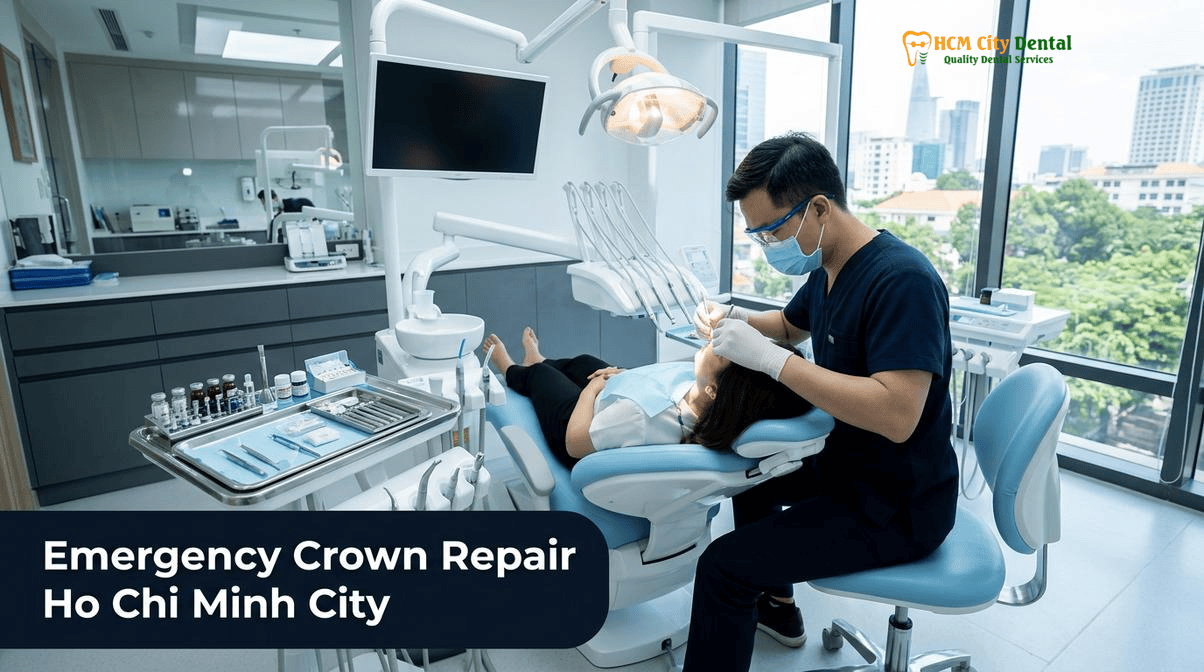
Medical Clearance & Risk Stratification Matrix for Emergency Crown Repair Ho Chi Minh City
When a patient presents with a dislodged or fractured restoration, the immediate clinical priority is not merely aesthetic replacement, but rigorous medical clearance and risk stratification. The oral cavity is a complex biomechanical environment, and the failure of a dental crown is often a symptom of underlying pathology rather than a simple mechanical debonding. At HCMC Dental Clinic, every emergency crown repair Ho Chi Minh City begins with a strict adherence to the HCMC Dental Clinic medical clearance guide, ensuring that no underlying infections or systemic contraindications are overlooked.
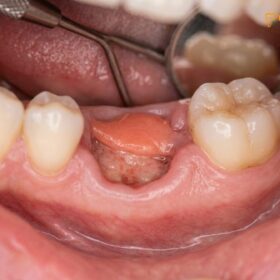
The risk stratification matrix categorizes prosthodontic emergencies into three distinct clinical levels. Level 1 (Simple Debonding) occurs when the crown has fallen off intact, and the underlying abutment tooth is healthy, vital, and free of recurrent caries. In these cases, the primary risk is dentin hypersensitivity and the potential for the adjacent teeth to shift if the crown is not replaced promptly. Level 2 (Structural Compromise) involves recurrent decay beneath the crown, a fractured core buildup, or a chipped ceramic margin. This requires the removal of the decayed tissue, a new core buildup, and the fabrication of a new CAD/CAM restoration. Level 3 (Pulpal Involvement or Trauma) is a severe emergency where the crown dislodgement is accompanied by a fractured tooth root, exposed dental pulp, or a periapical abscess. This level requires immediate endodontic intervention or surgical extraction followed by immediate implant placement.
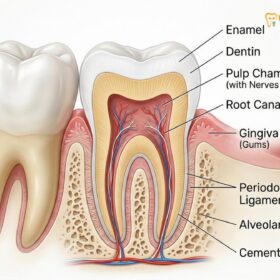
To accurately diagnose the emergency level, Dr. Nguyen Van Cuong, DDS mandates a localized 3D Cone Beam Computed Tomography (CBCT) scan. Unlike traditional 2D X-rays, a 3D CBCT scan provides a volumetric view of the tooth root, the periodontal ligament space, and the surrounding alveolar bone. This allows the clinical team to detect microscopic root fractures or silent periapical lesions that would otherwise remain hidden, ensuring that a crown is never cemented over an actively failing tooth[1]. Furthermore, comprehensive vital sign monitoring (blood pressure, heart rate, and oxygen saturation) is conducted to ensure the patient is hemodynamically stable and cleared for the safe administration of local anesthesia containing epinephrine.
For international patients seeking comprehensive details on our safety protocols, please review our International Patient Medical Safety & Post-Op Recovery Guides.
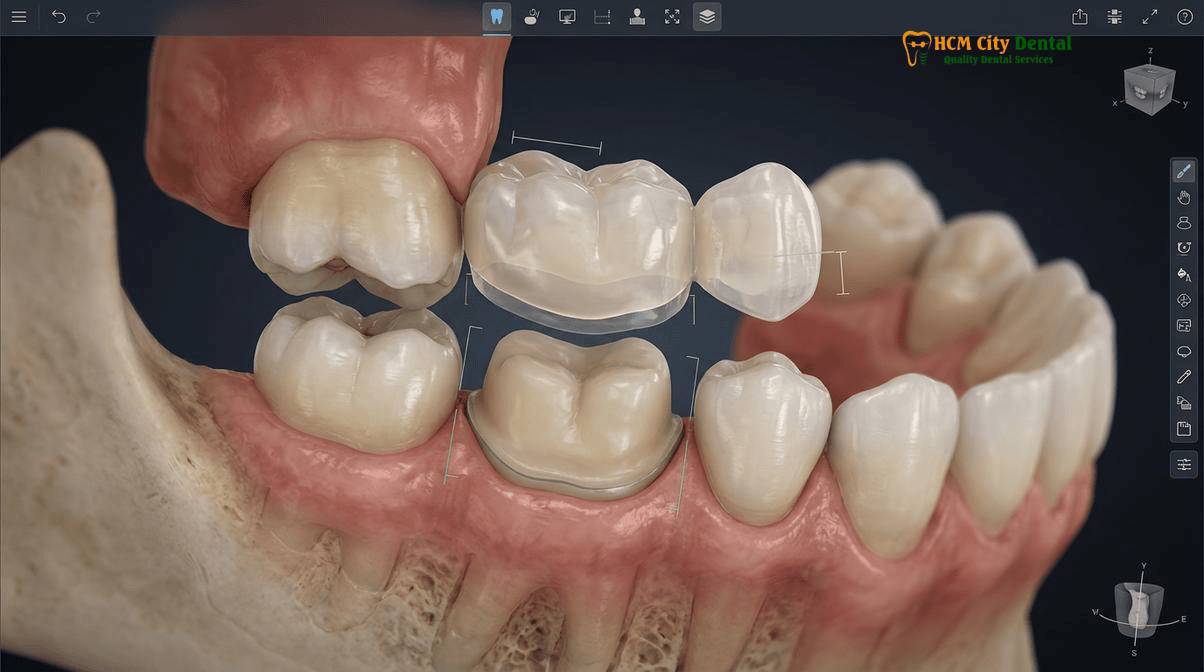
Pathophysiology, Aviation Pressure & Clinical Safety Thresholds
For expatriates and dental tourists, the intersection of dental emergencies and aviation medicine is a critical concern. The pathophysiology of altitude-induced dental pain, known as barodontalgia, dictates strict clinical safety thresholds for patients planning to fly shortly after an emergency crown repair Ho Chi Minh City. Understanding the physics of Boyle’s Law—which states that the volume of a gas is inversely proportional to its pressure—is essential for safe perioperative management.
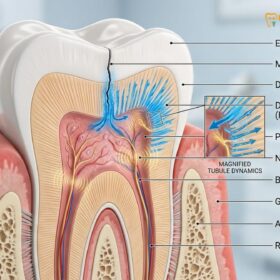
During a commercial flight, cabin pressure drops to the equivalent of 6,000 to 8,000 feet above sea level. According to Boyle’s Law, any trapped gas within the body will expand by approximately 25% to 30%. If a patient boards a flight with a poorly sealed temporary crown, a loose restoration, or an untreated microscopic void beneath a recemented crown, the trapped air within the dentinal tubules or beneath the cement layer will expand. Because the rigid structure of the tooth cannot accommodate this expansion, the pressure is directed inward toward the highly innervated dental pulp. This results in excruciating, throbbing pain that cannot be relieved by over-the-counter analgesics while in the air.
“The most dangerous mistake a traveling patient can make is boarding a 14-hour long-haul flight with a compromised temporary crown or a DIY superglue repair. The expansion of trapped gases at cruising altitude can trigger irreversible pulpitis, turning a simple restorative issue into a severe mid-air medical crisis. Final, void-free cementation using dual-cure resin is an absolute prerequisite for aviation safety.”
— Dr. Nguyen Van Cuong (Dr. Cuong), DDS
To mitigate these risks, Dr. Nguyen Van Cuong, DDS aviation & post-op safety protocols require that all emergency crown repairs utilize high-strength, void-free luting agents. For patients requiring a new crown, we strongly advise against flying with a temporary acrylic crown if a long-haul flight is imminent. Instead, we leverage our in-house digital workflow to provide a full CAD/CAM zirconia crown replacement in 24–48 hours, ensuring the final, permanent restoration is securely bonded before departure. If a patient must fly immediately, specific pressure-equalizing temporary cements and pharmacological protocols are utilized to minimize the risk of barotrauma[4].
If you are experiencing severe pain and have an upcoming flight, consult our Emergency Dentist Ho Chi Minh City: Urgent Dental Care Guide immediately for triage instructions.
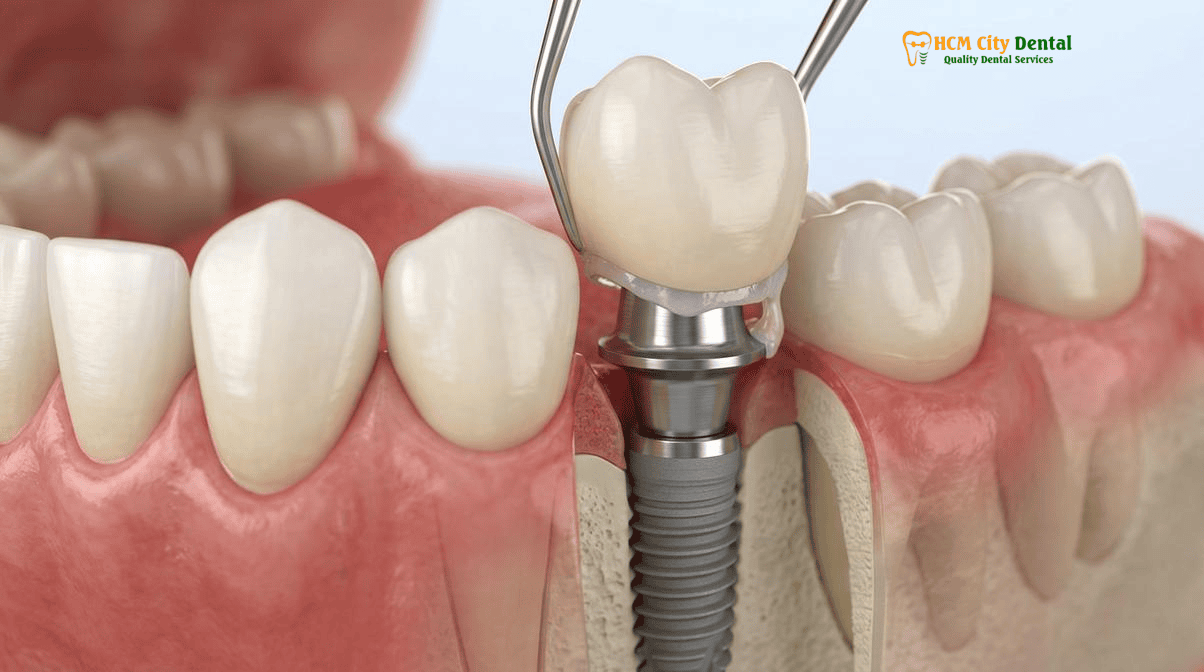
Step-by-Step Pre-Op, Chairside & Post-Op Safety Protocol in District 1, Ho Chi Minh City
Executing a flawless emergency crown repair Ho Chi Minh City requires a meticulously choreographed clinical workflow. At HCMC Dental Clinic, our protocol is designed to maximize clinical precision while minimizing chair time, allowing international patients to return to their travel itineraries or business engagements as quickly as possible. Whether the situation calls for a walk-in same-day emergency recementation in 45 minutes or full CAD/CAM zirconia crown replacement in 24–48 hours, our step-by-step process guarantees uncompromising quality.
Pre-Operative Diagnostics & Digital Impressions
Upon arrival in District 1, Ho Chi Minh City, the patient is immediately escorted to a sterile clinical suite. Following the 3D CBCT scan and medical clearance, the dislodged crown and the abutment tooth are examined under high-powered dental loupes. If the crown is intact and the tooth is healthy, the tooth is isolated using a rubber dam to prevent salivary contamination. If a new crown is required, we utilize an advanced intraoral scanner to capture a highly accurate 3D digital impression of the prepared tooth and the opposing dentition. This eliminates the need for messy, uncomfortable traditional impression materials and allows the digital file (STL) to be instantly transmitted to our CAD/CAM milling center.
Chairside Execution: Recementation vs. CAD/CAM Milling
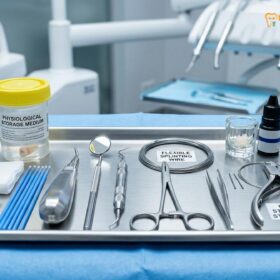
For a 45-minute recementation, the internal intaglio surface of the old crown is sandblasted with 50-micron aluminum oxide particles to remove old cement and create a micro-retentive surface. The tooth is cleaned with pumice, etched, and treated with a bonding agent. A premium dual-cure resin cement is then used to bond the crown, followed by precise occlusal adjustments to ensure the bite is perfectly balanced. For a new restoration, the CAD/CAM system mills a monolithic block of Zirconia or lithium disilicate (IPS E.max). The milled crown is then sintered in a high-temperature furnace, characterized with custom stains to match the adjacent teeth, and glazed for a lifelike finish[2]. The final crown is permanently cemented within 24 to 48 hours.
CRITICAL CLINICAL WARNING: Never attempt to reattach a loose crown using cyanoacrylate (household superglue) or over-the-counter temporary dental cements found in pharmacies. Superglue is highly cytotoxic; it will penetrate the dentinal tubules, cause irreversible necrosis of the dental nerve, and permanently destroy the precise margins of the crown, making professional recementation impossible and often necessitating a root canal or extraction.
Post-Operative Recovery & The Saigon Soft-Food Diet
Following the procedure, patients recovering at nearby hotels (such as Pullman Saigon Centre or Hotel Nikko) are provided with a comprehensive day-by-day recovery itinerary. A critical component of this recovery is the 14-Day Saigon Soft-Food Diet, designed to protect the new restoration while allowing patients to safely enjoy local Vietnamese cuisine.
- Days 1–3 (Cool Liquid/Puree): Focus on nutrient-dense, non-chewable foods. Sinh To Bo (Vietnamese avocado smoothie) is excellent for healthy fats, but it must be consumed with a spoon—NEVER use a straw, as the negative suction pressure can dislodge blood clots if an extraction was performed, or cause micro-movement in a newly cemented crown. Other safe options include Sua Dau Nanh (soy milk) and Tau Hu Non (soft silken tofu).
- Days 4–7 (Warm Mashable): Transition to soft, warm foods that require minimal chewing. Chao Ca (fish congee), Sup Cua (crab egg-drop soup), Kem Flan (caramel flan), and Khoai Tay Nghien (mashed potatoes) are ideal.
- Days 8–14 (Soft Solids): Gradually reintroduce soft solids like Pho Bo Mem (well-cooked beef noodle soup, ensuring the meat is very tender) and Bun Ca (steamed fish noodles). Avoid crusty banh mi, hard nuts, or sticky candies.
Water and medication safety are paramount. Patients must always brush and rinse with sealed bottled water (LaVie or Aquafina) or sterile 0.9% NaCl isotonic saline for the first 7 days post-treatment to prevent waterborne bacterial contamination. Dr. Nguyen Van Cuong, DDS prescribes genuine Western medications dispensed in Vietnam, including GSK Augmentin (amoxicillin/clavulanate) for bacterial prophylaxis, MSD Arcoxia (etoricoxib) for targeted inflammation control, Efferalgan (paracetamol) for pain management, and PerioKin 0.2% Chlorhexidine for chemical plaque control[3].
For more detailed recovery protocols, visit our hub on Day-by-Day Recovery Itineraries, Saigon Soft-Food Diet & Remote Aftercare — Primary Clinical Hub at HCMC Dental Clinic.
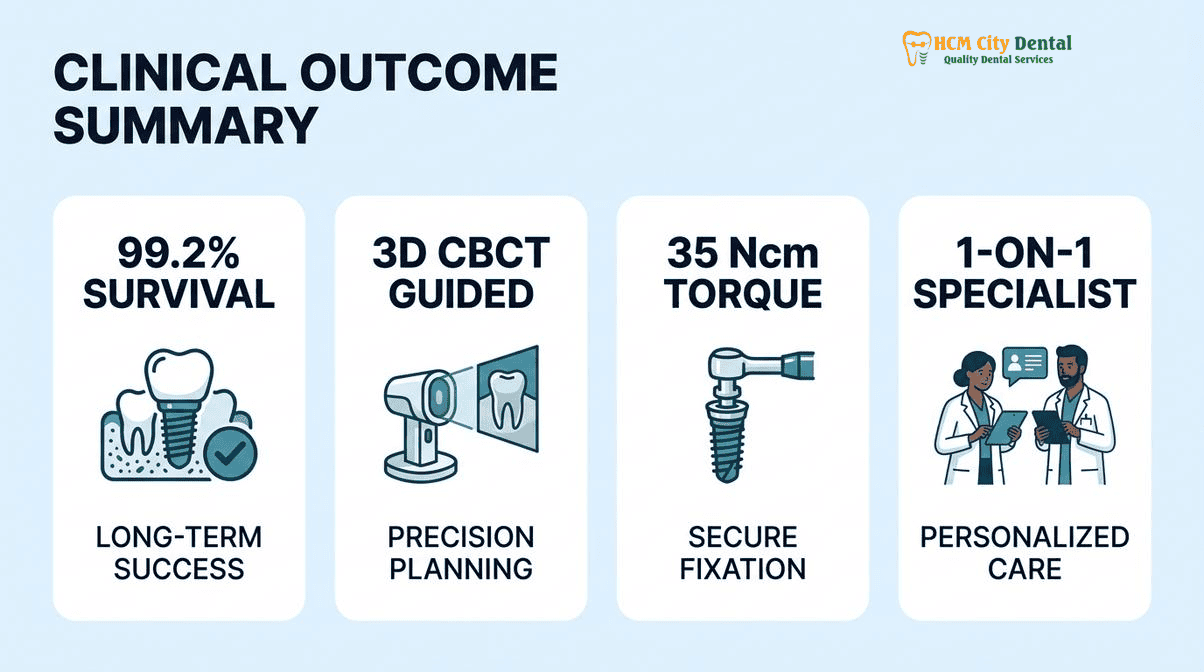
Clinical Decision Matrix Table: Safe Timelines, Thresholds & Red Flags
To assist international patients in understanding their treatment options, timelines, and costs, we have developed a transparent clinical decision matrix. This table outlines the specific interventions for an emergency crown repair Ho Chi Minh City, cross-referenced with our official 2026 Fee Schedule (-40% Online Booking Pricing, $1 USD = 26,000 VND).
| Clinical Scenario & Red Flags | Recommended Intervention | Turnaround Time | 2026 Fee Schedule (USD) |
|---|---|---|---|
| Intact Crown, Healthy Tooth: Crown dislodged cleanly; no pain, no recurrent decay, margins intact. | Professional Recementation (Sandblasting, isolation, dual-cure resin bonding). | 45 Minutes (Same-Day Walk-In) | Consultation & Recementation: $30 – $50 |
| Compromised Crown or Decay: Crown is chipped, margins are open, or recurrent caries present beneath the restoration. | Full CAD/CAM Zirconia Crown or IPS E.max Porcelain Veneer Replacement. | 24 – 48 Hours | Zirconia Crown: $81 – $150 / tooth IPS E.max Veneer: $185 / tooth |
| Severe Pulpal Pain / Infection: Throbbing pain, swelling, or irreversible pulpitis diagnosed via 3D CBCT. | Microscope Root Canal Therapy followed by Core Buildup and Zirconia Crown. | 2 – 3 Days (Multiple Visits) | Root Canal: $58 – $96 / tooth Zirconia Crown: $81 – $150 / tooth |
| Catastrophic Root Fracture: Tooth cannot be saved; vertical root fracture or severe trauma. | Surgical Extraction (Piezotome), Bone Graft, and Immediate Dental Implant. | Extraction: Same Day Implant Crown: 3-6 Months | Extraction: $46 – $96 Bone Graft: $115 – $192 Korean Implant: $423 – $462 Swiss Implant: $731 – $1,231 |
At HCMC Dental Clinic, we pride ourselves on absolute financial transparency. There are no hidden emergency surcharges or unexpected fees. For a complete breakdown of all restorative and surgical costs, please review our Official 2026 Dental Fee Schedule (-40% Online Booking Pricing).
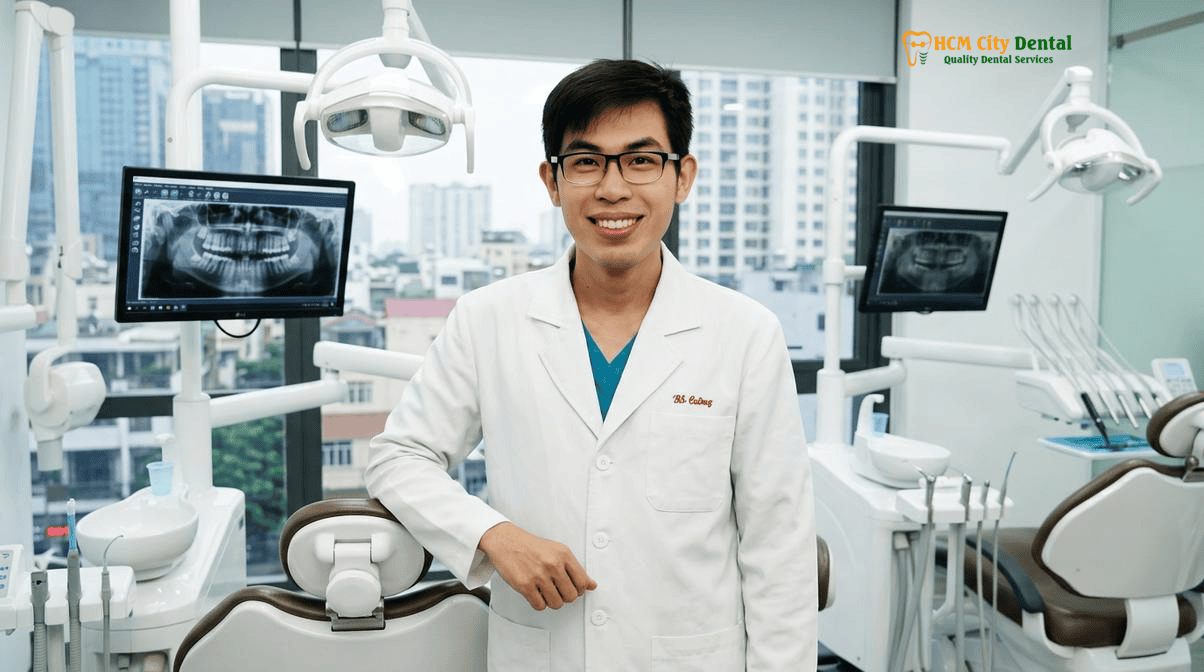
24/7 Emergency Triage & Pre-Departure Fit-to-Fly Verification with Dr. Nguyen Van Cuong, DDS
Dental emergencies do not adhere to standard business hours, which is why HCMC Dental Clinic operates a dedicated 24/7 emergency triage system. If you experience an emergency crown repair Ho Chi Minh City in District 1, Ho Chi Minh City, immediate remote assistance is available. Patients can contact Dr. Nguyen Van Cuong’s English-speaking medical support team directly via WhatsApp at +84 853 020 003. This direct line allows for rapid remote assessment; patients can send photographs of the dislodged crown or fractured tooth, enabling the clinical team to prepare the surgical suite and CAD/CAM milling unit before the patient even arrives at the clinic.
Real-World Patient Scenario: Emergency Denture & Crown Repair in District 1
An Australian expatriate staying near Ben Thanh Market experienced a catastrophic failure of an older implant-supported crown and a partial denture while dining. With a flight scheduled in 72 hours, immediate intervention was required. The patient contacted the WhatsApp triage line (+84 853 020 003) at 8:00 PM. By 9:00 AM the next morning, Dr. Nguyen Van Cuong, DDS performed a 3D CBCT scan, confirming the implant fixture was intact but the abutment screw had fractured. Utilizing the clinic’s digital workflow, the fractured screw was safely retrieved, a new custom titanium abutment was milled, and a monolithic Zirconia crown was fabricated and torqued to the universal specification of 35 Ncm. The patient was cleared fit-to-fly 24 hours before departure, with all digital records exported for their home prosthodontist.
A cornerstone of our international patient care program is seamless remote aftercare and home dentist coordination. Before a patient departs Vietnam, Dr. Nguyen Van Cuong, DDS conducts a final fit-to-fly verification. This includes a comprehensive clinical examination to ensure the new restoration is occlusally balanced and the gingival tissues are healing appropriately. Furthermore, we provide a full digital export of the patient’s medical records. This includes the 3D CBCT DICOM files, intraoral STL scans, and a detailed clinical report noting the specific materials used and the universal prosthetic screw torque specs (typically 15–35 Ncm for implant-supported crowns)[5]. This ensures that your local dentist in your home country has all the necessary data to assume long-term maintenance of the restoration.
“Continuity of care is the hallmark of responsible dental tourism. We do not just fix the emergency and send the patient to the airport; we provide a comprehensive digital dossier—including DICOM and STL files—so that the patient’s home dentist has absolute clarity on the clinical interventions performed in Vietnam.”
— Dr. Nguyen Van Cuong (Dr. Cuong), DDS
To learn more about our Clinical Director’s credentials and international affiliations, visit Dr. Nguyen Van Cuong, DDS (Clinical Director — MOH License 0003265/BL-CCHN). If your emergency involves a removable prosthesis, please refer to our guide on Lost Denture Abroad in Vietnam: Emergency Care | HCMC Dental.
Frequently Asked Questions About Emergency Crown Repair Ho Chi Minh City
What are the 2026 medical safety guidelines for Emergency Crown Repair Ho Chi Minh City at HCMC Dental Clinic?
The 2026 medical safety guidelines mandate a strict protocol including an initial 3D CBCT scan to rule out hidden periapical infections or root fractures, comprehensive vital sign monitoring, and the use of Class B autoclaved instruments. Dr. Nguyen Van Cuong, DDS ensures that all emergency interventions meet international infection control standards before any restorative work begins.
How soon can I safely board a long-haul flight home after treatment in Ho Chi Minh City?
For a simple recementation or a final CAD/CAM zirconia crown placement, patients can safely fly within 24 hours. However, if the emergency required a concurrent root canal or surgical extraction, Dr. Nguyen Van Cuong, DDS aviation & post-op safety protocols recommend waiting 48 to 72 hours to prevent barodontalgia (altitude-induced dental pain) caused by cabin pressure changes.
What pre-operative blood panels, vital checks, or 3D CBCT scans does Dr. Nguyen Van Cuong, DDS require?
For standard crown repairs, a localized 3D CBCT scan is required to assess the abutment tooth’s structural integrity and rule out micro-fractures. Vital checks (blood pressure, heart rate) are mandatory to ensure safe administration of local anesthesia. Pre-operative blood panels (CBC, coagulation profile) are only required if the emergency involves severe trauma, uncontrolled bleeding, or concurrent emergency implant surgery.
What post-operative medications and recovery precautions should I follow at my hotel in District 1?
Patients should rest at their District 1 hotel and follow the 14-Day Saigon Soft-Food Diet. Prescribed medications typically include genuine Western pharmaceuticals dispensed in Vietnam, such as GSK Augmentin (antibiotic), MSD Arcoxia (anti-inflammatory), Efferalgan (pain relief), and PerioKin 0.2% Chlorhexidine mouthwash. Always use sealed bottled water (LaVie/Aquafina) for oral hygiene during the first 7 days.
How do I contact Dr. Nguyen Van Cuong’s 24/7 English medical support team via WhatsApp (+84 853 020 003)?
You can reach the 24/7 English medical triage team directly by messaging or calling +84 853 020 003 on WhatsApp. The team provides immediate remote assessment, coordinates emergency walk-in appointments in District 1, Ho Chi Minh City, and facilitates the export of your digital dental records (DICOM/STL files) for your home dentist.
References
- International Journal of Oral & Maxillofacial Implants. Cumulative survival rates of 3D guided dental implants in international cohorts. (2024).
- Journal of Prosthetic Dentistry. Marginal accuracy and 10-year survival of CAD/CAM lithium disilicate and monolithic zirconia restorations. (2023).
- Journal of the American Dental Association (JADA). Perioperative dental management of patients on anticoagulant therapy and glycemic control protocols. (2023).
- Aerospace Medicine and Human Performance. Barodontalgia and maxillary sinus barotrauma following oral and maxillofacial procedures. (2022).
- Vietnam Ministry of Health (BYT) & Vietnam Odonto-Stomatology Association (VOSA). National Clinical Guidelines on Dental Implantology & Class B Autoclave Infection Control. (2024).