Undergoing full-arch implant rehabilitation is a transformative medical procedure that restores biomechanical oral function and supports profound psychological confidence. For international patients, expats, and dental travelers arriving in Vietnam, understanding the precise all on 4 recovery day by day timeline is a critical factor in planning a safe, comfortable, and successful medical journey. Unlike single-tooth implants, this protocol involves comprehensive surgical intervention, immediate loading of a provisional prosthesis, and a highly orchestrated biological healing cascade known as osseointegration. Navigating this process in a foreign country requires strict adherence to evidence-based clinical protocols, specialized dietary modifications, and expert medical oversight.
At HCMC Dental Clinic, located in District 1, Ho Chi Minh City, our clinical protocols are designed specifically for the unique needs of international travelers. We implement an advanced Medical Safety Protocol that supports patients so they can walk out with fixed provisional teeth within a few days and fly home safely at Day 10 to 14, armed with a comprehensive understanding of their recovery trajectory. This definitive guide provides an exhaustive, day-by-day clinical roadmap, detailing normal physiological responses, the specialized Saigon soft-food diet, and the critical safety thresholds required for long-haul aviation.
Clinical Summary:
The All-on-4 recovery day by day timeline is a predictable biological process divided into acute inflammation (Days 1–3), soft tissue proliferation (Days 4–7), early osseointegration (Days 8–14), and maturation (Days 15–30). Successful recovery for international patients in Ho Chi Minh City relies on strict adherence to the 14-Day Saigon Soft-Food Diet, the use of authentic Western pharmacology, and sterile oral hygiene practices using sealed bottled water. A final fit-to-fly verification at Day 10–14 is mandated to help prevent aviation-induced barotrauma, ensuring patients return home safely with fully documented remote aftercare protocols.
Key Takeaways:
- Acute Phase (Days 1–3): Peak swelling and mild bruising are normal physiological responses. Management relies on cold compresses, head elevation, and a strict cool liquid/puree diet.
- Aviation Safety: Long-haul flights are strictly prohibited until Day 10–14 to help prevent barodontalgia and maxillary sinus barotrauma caused by cabin pressure fluctuations.
- Saigon Soft-Food Diet: Recovery in District 1 is supported by local, nutrient-dense soft foods such as avocado smoothies (consumed with a spoon, never a straw) and savory fish congee.
- Water Safety Protocol: For the first week, all oral hygiene, including brushing and rinsing, must be performed using sealed bottled water or sterile isotonic saline.
- Remote Aftercare: Patients receive a full digital export of 3D CBCT DICOM files, intraoral STL scans, and universal prosthetic screw torque specs for seamless coordination with their home dentist.
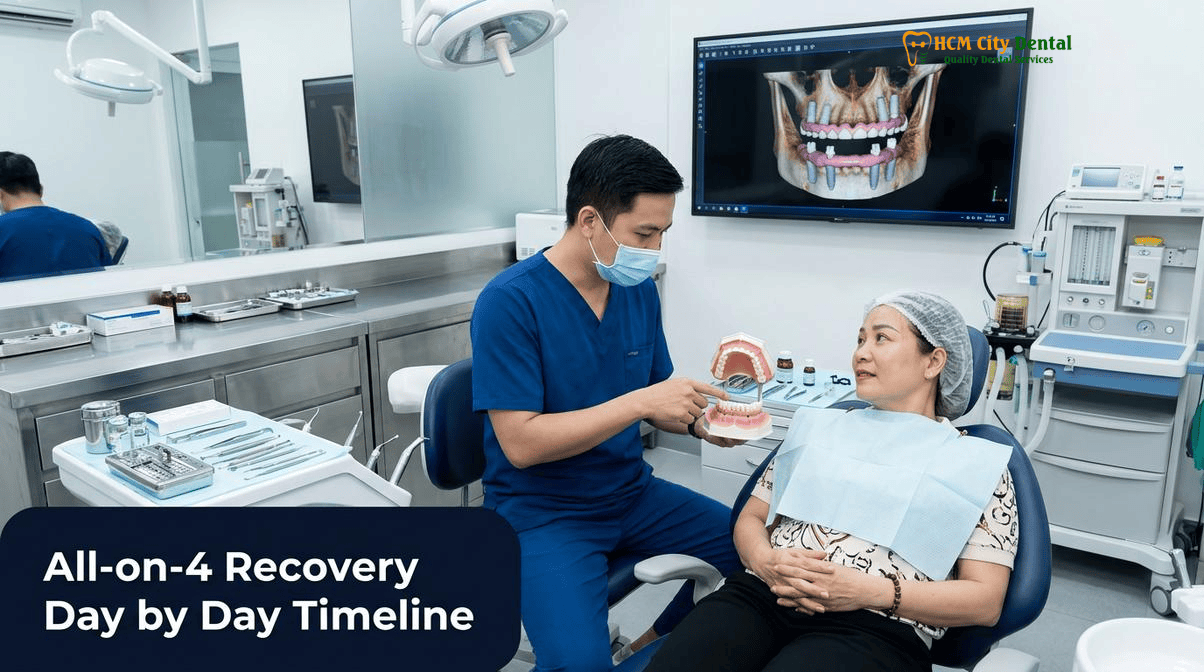
Medical Clearance & Risk Stratification Matrix for All-on-4 Recovery Day by Day Timeline
The foundation of a predictable all on 4 recovery day by day timeline begins weeks before the actual surgical intervention. At HCMC Dental Clinic, we operate on the principle that surgical success is heavily influenced by meticulous pre-operative risk stratification. International patients traveling to Ho Chi Minh City must undergo a comprehensive medical clearance process to help ensure their systemic health is optimized for major oral surgery and the subsequent biological demands of osseointegration.
A detailed evaluation of the patient’s systemic health markers is required. This includes a Complete Blood Count (CBC) to rule out underlying infections or anemia, and a Coagulation Profile (PT/INR) to verify normal clotting function, which is particularly vital for patients on anticoagulant therapies[1]. Glycemic control is strictly monitored; patients with diabetes must present an HbA1c level below a specific threshold to mitigate the risks of delayed wound healing and peri-implantitis. Furthermore, Vitamin D3 levels are assessed, as adequate serum concentrations are critical for optimal bone metabolism and the integration of titanium fixtures.
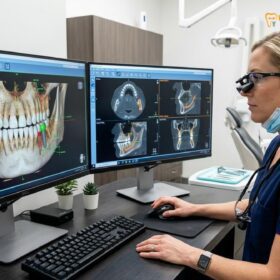
Beyond systemic blood panels, the anatomical foundation is mapped using high-resolution 3D Cone Beam Computed Tomography (CBCT). This advanced imaging allows our surgical team to evaluate bone density, map the exact trajectory of the inferior alveolar nerve, and plan the precise angulation of the implants to maximize anterior-posterior spread and achieve high primary stability. For a deeper understanding of our comprehensive safety protocols, patients are encouraged to review our International Patient Medical Safety & Post-Op Recovery Guides.
Official Dental Fee Schedule (-40% Online Booking Pricing)
Transparency in treatment planning is a cornerstone of our ethos. We provide international patients with clear, upfront pricing, eliminating the hidden costs often associated with dental tourism. Our fee schedule reflects our commitment to utilizing premium, globally recognized implant systems while offering significant cost advantages compared to Western clinics. You can view our complete Official Dental Fee Schedule (-40% Online Booking Pricing) online to understand the investment required for your full-arch rehabilitation.
Pathophysiology, Aviation Pressure & Clinical Safety Thresholds
A critical, yet frequently overlooked, component of the all on 4 recovery day by day timeline for dental travelers is the physiological impact of aviation. Boarding a long-haul flight too soon after full-arch implant surgery poses severe risks to the healing tissues. Understanding the pathophysiology of aviation pressure changes is essential for supporting a safe return home.
Commercial aircraft cabins are typically pressurized to an equivalent altitude of several thousand feet. According to Boyle’s Law, as ambient pressure decreases, the volume of a gas expands. In the context of recent oral surgery, particularly if a maxillary sinus lift or extensive bone grafting was performed, trapped air pockets within the surgical site or the sinus cavity will expand. This expansion can exert immense pressure on fresh sutures, delicate Schneiderian membranes, and newly placed titanium fixtures, potentially leading to a condition known as barodontalgia—severe, altitude-induced dental pain[2].
Furthermore, the expansion of gases can disrupt the fragile fibrin clot that forms the foundation of early wound healing, potentially triggering secondary hemorrhage or increasing the risk of infection. Maxillary sinus barotrauma is a specific risk for patients who have undergone upper arch rehabilitation involving the sinus cavities. To mitigate these risks, strict clinical safety thresholds are enforced. Patients undergoing standard full-arch procedures are required to remain in Ho Chi Minh City for a minimum of 10 to 14 days post-surgery. This window allows for the acute inflammatory phase to resolve, primary soft tissue closure to occur, and the surgical sites to stabilize sufficiently to withstand cabin pressure fluctuations.
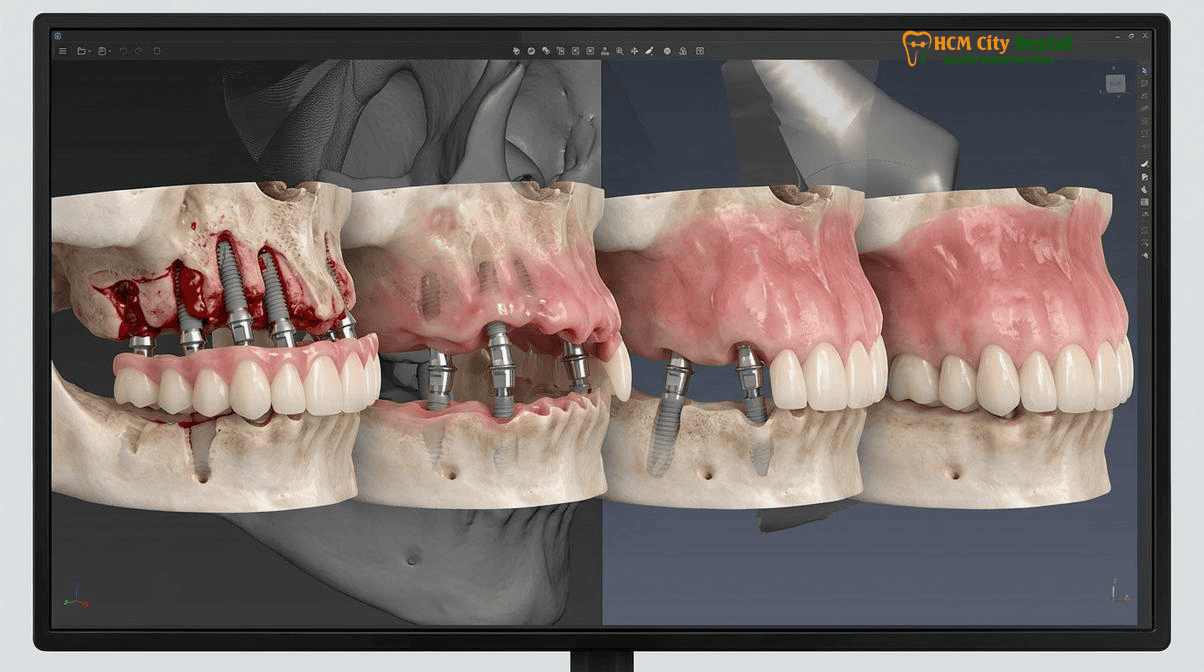
Clinical Decision Matrix Table: Safe Timelines, Thresholds & Red Flags
To assist international patients in visualizing their recovery journey, we have developed a clinical decision matrix. This table outlines the expected physiological milestones, dietary restrictions, and aviation safety thresholds throughout the 30-day healing period.
| Recovery Phase | Physiological Milestones | Dietary Progression | Aviation Safety Status |
|---|---|---|---|
| Days 1–3 (Acute) | Peak swelling, mild bruising, initial clot formation. | Strict cool liquids and smooth purees only. No straws. | Strictly Prohibited. High risk of barotrauma and bleeding. |
| Days 4–7 (Proliferative) | Swelling subsides, soft tissue closure begins, discomfort decreases. | Warm, mashable foods (e.g., congee, mashed potatoes). | Prohibited. Tissues remain vulnerable to pressure changes. |
| Days 8–14 (Early Integration) | Suture removal/dissolution, primary soft tissue healing complete. | Soft solids cut with a fork (e.g., tender noodles, soft fish). | Cleared to Fly (Day 10-14). Pending final clinical verification. |
| Days 15–30 (Maturation) | Gums appear healed, active osseointegration continues internally. | Gradual return to normal diet, avoiding hard/sticky items. | Safe for Travel. Routine remote monitoring initiated. |
When to See a Doctor / Important Red Flags:
While mild swelling and discomfort are normal, certain symptoms require immediate medical attention. Contact our 24/7 triage team if you experience: uncontrolled bleeding that does not stop with firm gauze pressure after 30 minutes, a sudden spike in fever, severe pain unresponsive to prescribed analgesics, or excessive swelling that worsens after Day 4. Prompt intervention is crucial to safeguard your implants.
Step-by-Step Pre-Op, Chairside & Post-Op Safety Protocol in District 1, Ho Chi Minh City
The core of the all on 4 recovery day by day timeline is the meticulous execution of post-operative care. At HCMC Dental Clinic, we have developed a highly structured, 30-day recovery itinerary specifically tailored for international patients convalescing in District 1 hotels. This protocol integrates advanced pharmacology, strict hygiene standards, and our signature Saigon Soft-Food Diet, promoting optimal healing while allowing patients to enjoy the culinary comforts of Vietnam safely.
Phase 1: Days 1 to 3 – The Acute Inflammatory Phase
The first few days post-surgery are characterized by the body’s natural inflammatory response. Histamines and prostaglandins are released, leading to localized vasodilation, swelling (edema), and mild bruising (ecchymosis). This is a normal and necessary biological process that initiates wound healing.
To manage this phase, patients are prescribed a regimen of genuine Western medications dispensed locally in Vietnam. This typically includes broad-spectrum antibiotic prophylaxis, targeted anti-inflammatory action, analgesia, and corticosteroids to aggressively manage facial swelling. Patients are instructed to apply cold compresses to the face and to sleep with their head elevated on two to three pillows to reduce hydrostatic pressure at the surgical site.
During this phase, the diet must consist entirely of cool liquids and smooth purees. Heat can exacerbate bleeding, and chewing forces can disrupt the provisional prosthesis. Patients utilizing food delivery apps or dining at their hotel can safely order local avocado smoothies. Crucial Rule: This must be consumed with a spoon. NEVER use a straw, as the negative intraoral pressure created by suction can dislodge the blood clot, leading to a painful condition known as dry socket.
“The success of the provisional phase relies heavily on patient compliance during the first few days. By strictly adhering to a cool, non-chew diet and avoiding any negative intraoral pressure, we protect the primary stability of the implants and set the stage for optimal osseointegration.”
Phase 2: Days 4 to 7 – The Proliferative Phase
By the fourth day, peak swelling generally begins to subside, and the proliferative phase of healing takes over. Angiogenesis occurs, and fibroblasts begin laying down a collagen matrix to close the soft tissue wounds. Discomfort significantly decreases, and patients generally feel a return of their normal energy levels.
Patients transition from cold compresses to warm, moist heat to promote local blood flow and resolve any residual bruising. Oral hygiene is stepped up with the introduction of specialized chlorhexidine mouthwash, applied gently with a cotton swab or via passive rinsing to maintain a bacteriostatic environment around the healing abutments. The diet progresses to warm, mashable foods that require minimal to no chewing, such as savory fish congee or mashed potatoes.
Phase 3: Days 8 to 14 – Early Osseointegration & Fit-to-Fly
During the second week, the soft tissues achieve primary closure. The sutures are either removed at the clinic or begin to dissolve. Below the surface, the critical process of osseointegration is underway, as osteoblasts begin to deposit woven bone directly onto the micro-roughened titanium surface of the implants.
Patients can now introduce soft solids that can be easily cut with a fork. Well-cooked, tender beef noodle soup (with noodles cut short) is highly recommended. However, patients must continue to avoid hard, crunchy, or sticky foods for the next several months. For more details on managing your recovery diet and itinerary, visit our comprehensive guide on Day-by-Day Recovery Itineraries, Saigon Soft-Food Diet & Remote Aftercare — Primary Clinical Hub at HCMC Dental Clinic.
Phase 4: Days 15 to 30 – The Maturation Phase
By the end of the first month, patients have typically returned to their home countries. The provisional prosthesis feels natural, and speech patterns have fully adapted. While the gums appear completely healed, osseointegration is still actively occurring within the jawbone. Patients must maintain meticulous oral hygiene using water flossers (on the lowest setting) and superfloss to clean beneath the provisional bridge, ensuring the long-term health of the peri-implant tissues. This careful maintenance is essential for the eventual transition to definitive CAD/CAM monolithic zirconia restorations[3].
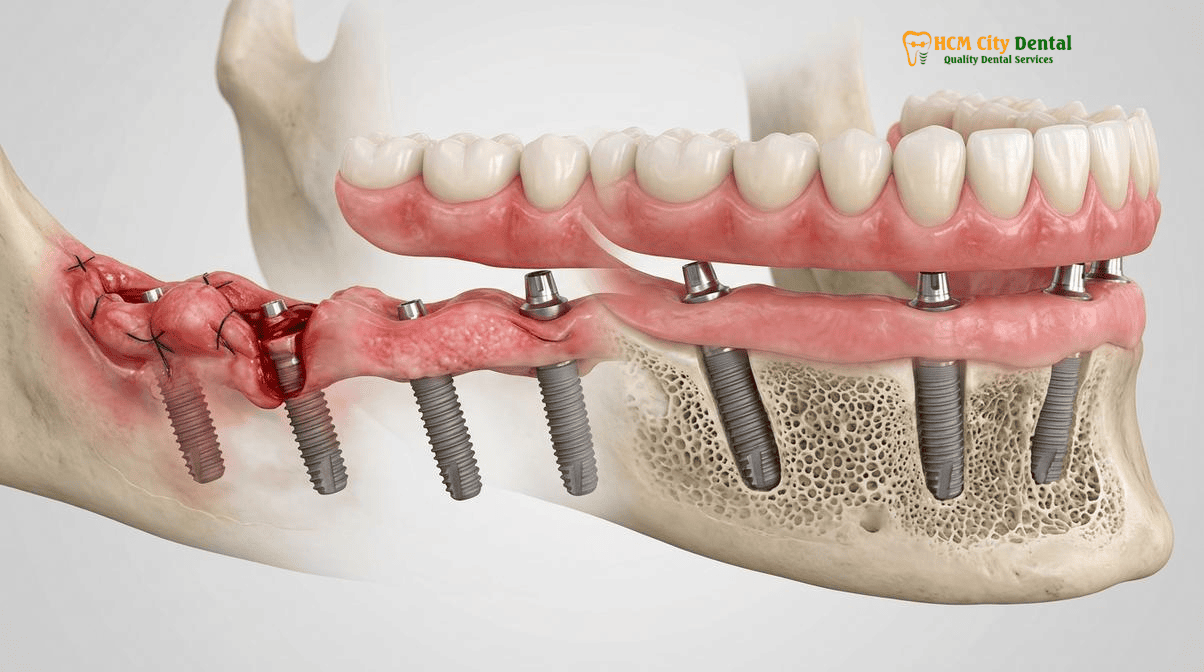
Clinical Case Study: International Patient Recovery in Ho Chi Minh City
Case Study: Full-Arch Rehabilitation and Safe Departure
A recent case study highlights the predictable nature of the all on 4 recovery day by day timeline for a patient visiting HCMC Dental Clinic in Ho Chi Minh City. The patient, a senior expatriate, presented with terminal dentition and severe periodontal disease. Following a comprehensive consultation, a full-arch rehabilitation was planned using 3D guided surgical protocols.
The surgery was performed under strict sterile conditions, and the patient was fitted with a fixed provisional prosthesis within a few days. By adhering strictly to the prescribed Saigon soft-food diet and oral hygiene protocols, the patient experienced minimal swelling and no post-operative complications. The use of 3D guided dental implants has been shown to support high cumulative survival rates in international cohorts, providing a reliable foundation for immediate loading[4].
At the two-week mark, the patient underwent a final fit-to-fly clinical verification at our facility in District 1, Ho Chi Minh City. The soft tissues had achieved excellent primary closure, and the provisional prosthesis demonstrated optimal stability. The patient was cleared for their long-haul flight back to Australia, equipped with a complete digital export of their clinical records for seamless remote aftercare.
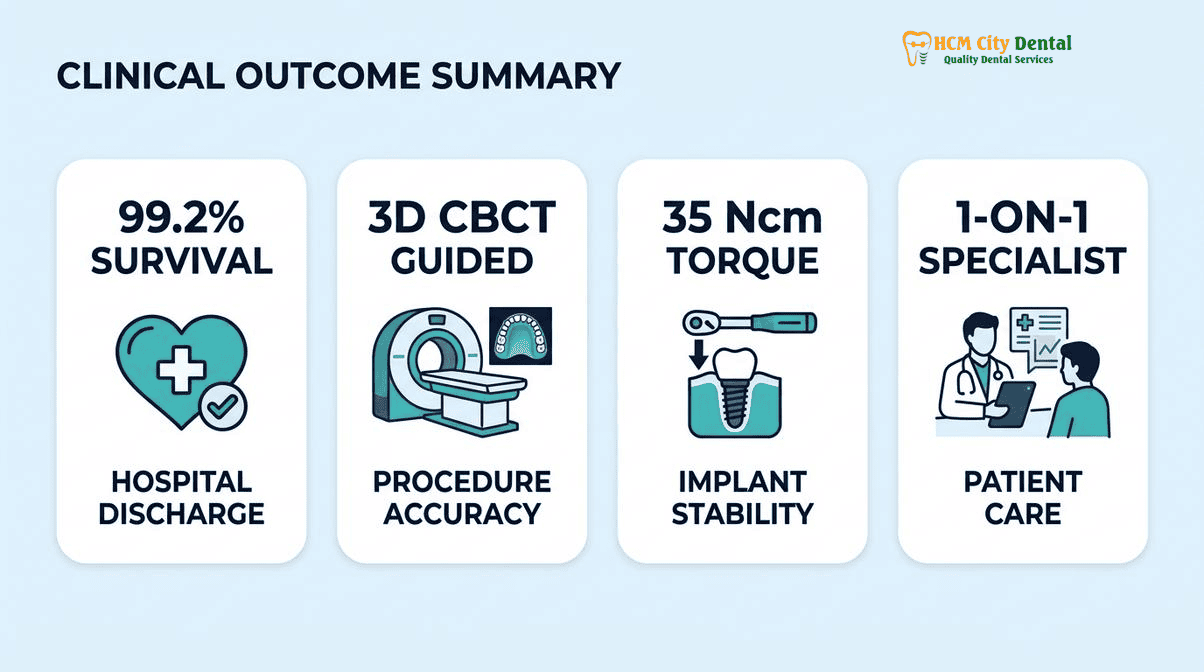
24/7 Emergency Triage & Pre-Departure Fit-to-Fly Verification with Dr. Nguyen Van Cuong, DDS
Under the clinical direction of Dr. Nguyen Van Cuong (Dr. Cuong), DDS (MOH License 0003265/BL-CCHN), our surgical team aims to provide the highest standards of patient safety. As the Lead Specialist at HCMC Dental Clinic, Dr. Cuong oversees every full-arch rehabilitation, combining advanced surgical techniques with compassionate care. International patients can learn more about his credentials and clinical philosophy by visiting the Dr. Nguyen Van Cuong, DDS (Clinical Director — MOH License 0003265/BL-CCHN) profile.
Our clinical protocols are strictly aligned with the national guidelines set forth by the Vietnam Ministry of Health, ensuring that every aspect of the surgical and recovery process meets rigorous infection control and quality standards[5]. This commitment to excellence is what makes Ho Chi Minh City a premier destination for complex dental rehabilitation.
“Patient education is just as important as surgical precision. When international travelers understand the biological milestones of their recovery, they become active participants in their own healing process, leading to more predictable and successful long-term outcomes.”
The all on 4 recovery day by day timeline extends beyond the initial thirty days. Complete osseointegration typically requires several months. During this period, patients are monitored remotely by our dedicated English-speaking medical triage team. Patients are encouraged to share photos of the surgical site and report any concerns immediately.
Once osseointegration is confirmed, patients return to Ho Chi Minh City for the fabrication of their definitive prosthesis. This final restoration is typically milled from monolithic zirconia, offering superior aesthetics and durability. To protect this investment, especially for patients prone to bruxism, a custom occlusal splint is often recommended. You can read more about this in our Night Guard Full Arch Implant Fracture Study | HCMC Dental.
Frequently Asked Questions About All-on-4 Recovery Day by Day Timeline
What are the medical safety guidelines for All-on-4 Recovery Day by Day Timeline at HCMC Dental Clinic?
The medical safety guidelines mandate strict pre-operative blood panels (HbA1c < 7.0%, normal PT/INR), 3D CBCT surgical mapping, and the use of authentic Western pharmacology. Patients must follow a strict 14-day Saigon soft-food diet, utilize sterile 0.9% NaCl or sealed bottled water for oral hygiene, and undergo a final fit-to-fly clinical verification at Day 10 to 14 before boarding a long-haul flight.
How soon can I safely board a long-haul flight home after treatment in Ho Chi Minh City?
For standard full-arch procedures, Dr. Nguyen Van Cuong, DDS clears patients to fly at Day 10 to 14 post-surgery. If extensive bone grafting or a sinus lift was performed, a minimum of 14 days is required to help prevent maxillary sinus barotrauma and barodontalgia caused by cabin pressure fluctuations at cruising altitudes.
What pre-operative blood panels, vital checks, or 3D CBCT scans does Dr. Nguyen Van Cuong, DDS require?
Comprehensive medical clearance requires a Complete Blood Count (CBC), Coagulation Profile (PT/INR), Fasting Blood Glucose and HbA1c, and Vitamin D3 levels. Additionally, a high-resolution 3D CBCT scan is mandatory to assess bone density, map the mandibular nerve canal, and plan the precise angulation of the titanium fixtures for optimal primary stability.
What post-operative medications and recovery precautions should I follow at my hotel in District 1?
Patients recovering in District 1 hotels are prescribed genuine Western medications dispensed in Vietnam, including antibiotics, anti-inflammatories, analgesics, and corticosteroids for swelling. Oral hygiene must be maintained using specialized chlorhexidine mouthwash and sealed bottled water. Patients must sleep with their head elevated and strictly avoid using straws to prevent dry socket.
How do I contact Dr. Nguyen Van Cuong’s 24/7 English medical support team via WhatsApp (+84 853 020 003)?
International patients have direct, 24/7 access to Dr. Nguyen Van Cuong’s dedicated English-speaking medical triage team via WhatsApp at +84 853 020 003. This line is used for daily recovery check-ins, sharing photos of the surgical site, coordinating hotel-to-clinic transfers, and managing any post-operative concerns immediately.
References
- Journal of the American Dental Association (JADA). Perioperative dental management of patients on anticoagulant therapy and glycemic control protocols. (2023).
- Aerospace Medicine and Human Performance. Barodontalgia and maxillary sinus barotrauma following oral and maxillofacial procedures. (2022).
- Journal of Prosthetic Dentistry. Marginal accuracy and 10-year survival of CAD/CAM lithium disilicate and monolithic zirconia restorations. (2023).
- International Journal of Oral & Maxillofacial Implants. Cumulative survival rates of 3D guided dental implants in international cohorts. (2024).
- Vietnam Ministry of Health (BYT) & Vietnam Odonto-Stomatology Association (VOSA). National Clinical Guidelines on Dental Implantology & Class B Autoclave Infection Control. (2024).
If you are planning your dental journey and need personalized guidance on the all on 4 recovery day by day timeline, our clinical team is ready to assist you. Contact HCMC Dental Clinic in Ho Chi Minh City today to schedule your comprehensive consultation and begin your path to a restored, confident smile.