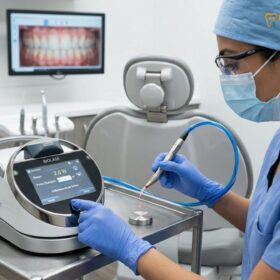
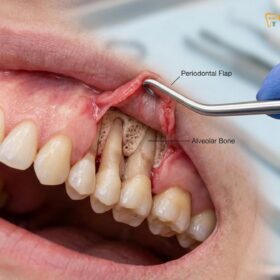
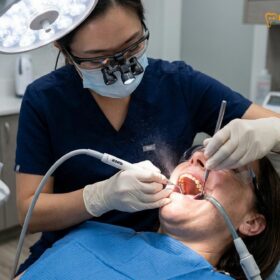
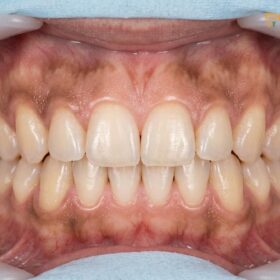
Gingival recession and the subsequent exposure of sensitive tooth roots present a complex functional and aesthetic challenge in modern periodontology. Historically, treating these defects relied heavily on harvesting autogenous tissue from the patient’s palate, a procedure often associated with significant post-operative morbidity. Today, the advent of biological mediators has revolutionized periodontal plastic microsurgery. By utilizing the highly specialized perio plastic coronally advanced flap Emdogain enamel matrix derivative protocol, clinical specialists can now predictably regenerate lost periodontal structures—including acellular cementum, periodontal ligament (PDL), and alveolar bone—without always requiring a secondary donor site. For international patients, expats, and dental travelers seeking world-class periodontal care, understanding the biological mechanisms and strict surgical protocols behind this treatment is essential for achieving optimal, long-lasting root coverage.
Clinical Summary:
The integration of Straumann Emdogain (Enamel Matrix Derivative) with a Coronally Advanced Flap (CAF) represents the gold standard in biomimetic periodontal regeneration. By applying amelogenin proteins to a meticulously conditioned root surface, this microsurgical technique stimulates true periodontal regeneration rather than mere epithelial repair. At HCMC Dental Clinic in District 1, Ho Chi Minh City, Dr. Nguyen Van Cuong, DDS, employs this advanced protocol to treat Cairo RT1 and RT2 recession defects, offering international patients a minimally invasive, highly predictable solution for gum recession and intrabony defects, supported by a transparent, globally competitive fee schedule.
Key Takeaways:
- Biological Regeneration: Straumann Emdogain utilizes amelogenin proteins to mimic embryonic tooth development, regenerating true cementum, PDL, and bone.
- Minimally Invasive Root Coverage: Combining Emdogain with a Coronally Advanced Flap (CAF) often eliminates the need for painful palatal tissue harvesting in Cairo RT1 defects.
- Strict Conditioning Protocol: Success relies on the precise application of 24% neutral EDTA (PrefGel) to remove the smear layer without damaging underlying collagen.
- Enhanced Wound Healing: Enamel matrix derivatives possess angiogenic and anti-inflammatory properties, significantly accelerating soft-tissue healing and reducing post-operative swelling.
- Cost-Effective Excellence: International patients can access this premium Swiss biomaterial and microsurgical expertise at HCMC Dental Clinic for a fraction of Western costs.
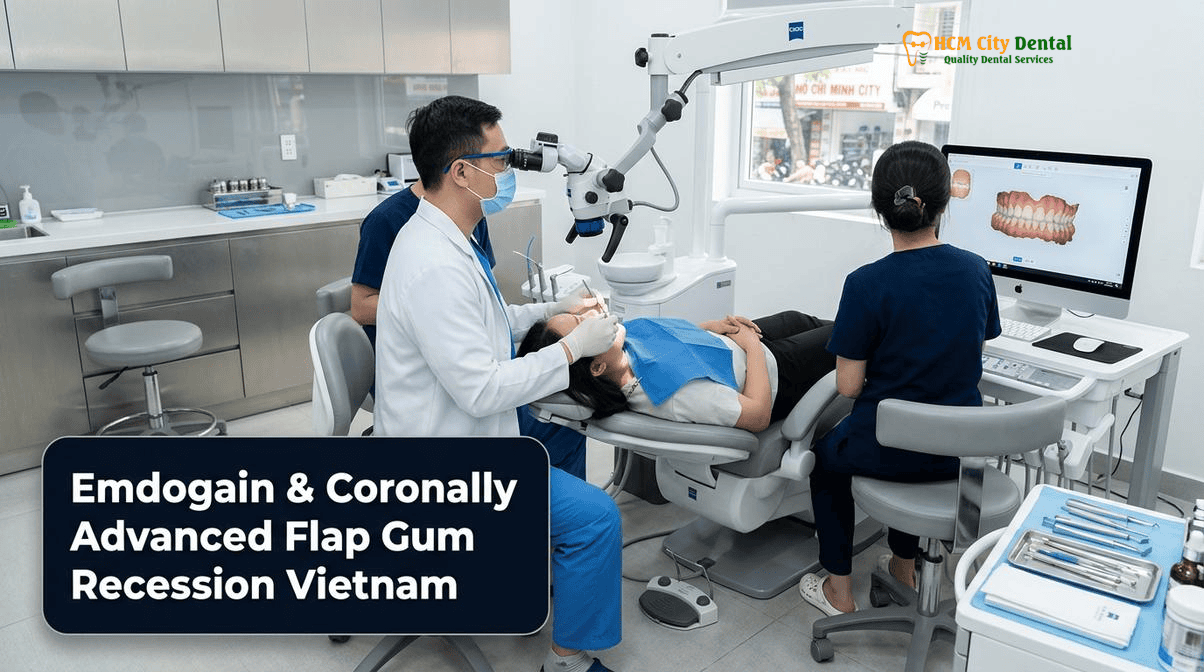
True Periodontal Regeneration vs. Long Junctional Epithelium Repair: How Straumann Emdogain (90% Amelogenin Proteins) Recreates Acellular Cementum, PDL, and Bone
To fully appreciate the clinical value of Straumann Emdogain, one must understand the fundamental difference between periodontal repair and periodontal regeneration. Traditional periodontal surgeries, such as basic flap debridement, typically result in repair via a long junctional epithelium. In this scenario, fast-growing epithelial cells migrate down the cleaned root surface before the slower-growing bone and periodontal ligament cells can establish themselves. While this reduces pocket depth, it does not recreate the original anatomical attachment apparatus; the tooth remains vulnerable to future attachment loss.
True periodontal regeneration, conversely, requires the de novo formation of acellular extrinsic fiber cementum on the root surface, the insertion of functionally oriented periodontal ligament (PDL) fibers into this new cementum, and the regrowth of supporting alveolar bone. This is precisely what the biological periodontal regeneration amelogenin proteins within Straumann Emdogain achieve. Emdogain is an enamel matrix derivative (EMD) extracted from developing porcine tooth buds. It consists of over 90% amelogenin, a hydrophobic protein complex that plays a crucial role in the embryological development of human teeth.
During natural tooth development, Hertwig’s epithelial root sheath secretes enamel matrix proteins onto the developing dentin surface. This biological signal triggers surrounding mesenchymal stem cells from the dental follicle to differentiate into cementoblasts, which then lay down acellular cementum. By applying Emdogain to a diseased but mechanically debrided root surface, the periodontist effectively mimics this embryonic signaling cascade. The amelogenin proteins precipitate onto the root, forming an insoluble matrix that selectively encourages the colonization and proliferation of PDL fibroblasts and osteoblasts while simultaneously inhibiting the apical down-growth of epithelial cells [1]. This biomimetic approach ensures that the healing process results in robust, true periodontal regeneration rather than a fragile epithelial seal.
Cairo RT1 & RT2 (Miller Class I–II) Recession Assessment: When Coronally Advanced Flap (CAF) + Emdogain Achieves Complete Root Coverage Without Palatal Harvesting
The predictability of root coverage procedures is heavily dependent on accurate defect classification. While the older Miller classification system is still widely recognized, modern periodontology increasingly relies on the Cairo classification, which assesses recession based on the level of interdental clinical attachment loss. A Cairo RT1 defect (roughly equivalent to Miller Class I and II) is characterized by gingival recession on the facial aspect of the tooth with no loss of interproximal attachment (the bone and papillae between the teeth are fully intact). A Cairo RT2 defect involves some interproximal attachment loss, but the amount of interproximal loss is less than or equal to the facial recession.
For Cairo RT1 defects, the Coronally Advanced Flap (CAF) is the workhorse of periodontal plastic surgery. The technique involves raising a split-full-split thickness flap, utilizing precise releasing incisions to eliminate muscle tension, and advancing the gingival tissue coronally to cover the exposed root. Historically, to ensure stability and increase tissue thickness, a subepithelial connective tissue graft (CTG) harvested from the palate was routinely placed beneath the CAF.
However, the integration of enamel matrix derivative coronally advanced flap root coverage protocols has shifted this paradigm. When a patient presents with a Cairo RT1 defect and an adequate baseline thickness of keratinized tissue, the application of Straumann Emdogain beneath the CAF can achieve complete root coverage without the need for palatal harvesting. The Emdogain not only promotes true periodontal attachment to the root surface but also enhances the proliferation of soft tissue fibroblasts, leading to an increase in the width and thickness of the keratinized gingiva over time [2]. For the patient, this cairo rt1 rt2 gum recession coverage without palate harvest approach means significantly less post-operative pain, a faster recovery, and excellent aesthetic blending of the tissues.
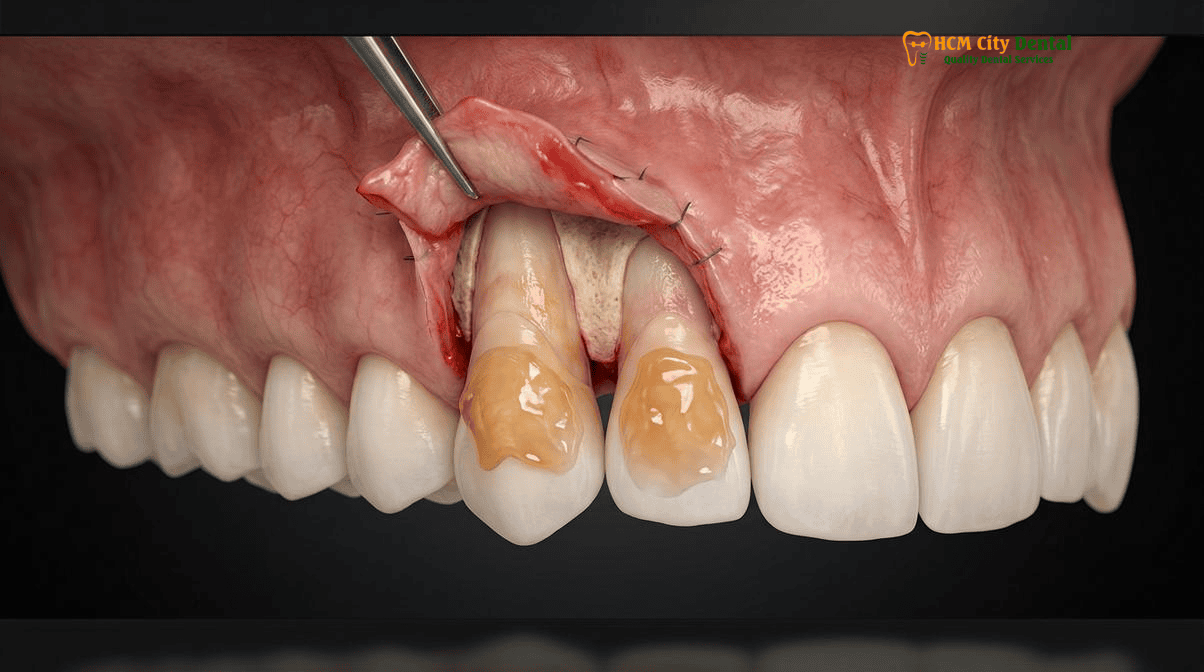
The Strict Moisture-Free Biomimetic Protocol: Mechanical Root Planing, 2-Minute 24% Neutral EDTA (PrefGel) Smear-Layer Removal, and Emdogain Gel Application
The clinical success of Straumann Emdogain is entirely dependent on meticulous surgical execution and a strict, moisture-free biomimetic protocol. The amelogenin proteins must bind directly to the collagen matrix of the root dentin; any contamination by blood, saliva, or residual smear layer will critically compromise the regenerative outcome.
The protocol begins with thorough mechanical debridement. The exposed root surface is meticulously planed using specialized periodontal curettes and ultrasonic instruments to remove all calculus, bacterial biofilm, and endotoxin-contaminated cementum. This mechanical instrumentation inevitably creates a “smear layer”—a microscopic layer of organic and inorganic debris that occludes the dentinal tubules and masks the underlying collagen network.
To remove this smear layer and prepare the root for biological attachment, the 24% edta prefgel root conditioning Emdogain protocol is employed. Unlike harsh acidic conditioners (such as citric acid or phosphoric acid) which can denature the collagen matrix and lower the local pH to levels that inhibit cellular activity, PrefGel is a 24% pH-neutral ethylenediaminetetraacetic acid (EDTA). It is applied to the root surface for exactly two minutes. The neutral EDTA selectively chelates calcium ions, gently dissolving the inorganic components of the smear layer while preserving the vital collagen fibers of the dentin [3].
“The application of Emdogain is not merely a step in a surgical procedure; it is the orchestration of a biological event. By utilizing 24% neutral EDTA, we gently unveil the root’s collagen matrix without causing necrotic damage. This creates the perfect, biologically receptive canvas for the amelogenin proteins to precipitate, bind, and initiate the cascade of true periodontal regeneration.”
— Dr. Nguyen Van Cuong, DDS (Clinical Director, HCMC Dental Clinic)
Following the two-minute conditioning, the root is copiously rinsed with sterile saline to remove all traces of the EDTA. The surgical site is then meticulously isolated to achieve absolute hemostasis and a moisture-free environment. The Straumann Emdogain gel is immediately applied, starting from the most apical portion of the defect and moving coronally, ensuring complete coverage of the exposed root. The flap is then coronally advanced and secured with microsurgical sutures, protecting the regenerating site.
Combining Subepithelial Connective Tissue Graft (CTG) + Emdogain in Thin Gingival Biotypes (<0.8mm) to Maximize Keratinized Tissue Thickness
While CAF combined with Emdogain is highly effective for patients with a thick or moderate gingival biotype, patients presenting with a very thin gingival biotype (tissue thickness less than 0.8mm) require a modified approach. Thin biotypes are inherently less vascular, more prone to future recession, and often lack the structural integrity required to maintain long-term root coverage over prominent tooth roots.
In these challenging cases, the gold standard approach is to combine the biological benefits of Emdogain with the structural reinforcement of a Subepithelial Connective Tissue Graft (CTG). This synergistic technique leverages the strengths of both modalities. The CTG, typically harvested from the palate or tuberosity, acts as a biological scaffold, immediately increasing the thickness of the keratinized tissue, masking dark root colors, and providing robust mechanical stability against future toothbrush abrasion.
Simultaneously, the application of Emdogain to the root surface prior to placing the graft provides profound biological advantages. Emdogain has been shown to significantly accelerate the revascularization of the connective tissue graft. Its angiogenic properties stimulate the rapid ingrowth of new blood vessels from the overlying flap and underlying periosteum, ensuring the survival and integration of the graft [4]. Furthermore, the amelogenin proteins promote true periodontal attachment at the root interface, rather than the fibrous encapsulation that can sometimes occur with grafting alone. For more information on advanced grafting techniques, patients can review our guide on Microsurgical Connective Tissue Graft (CTG) & Tunneling Technique for Gum Recession & Dental Implants in Vietnam.
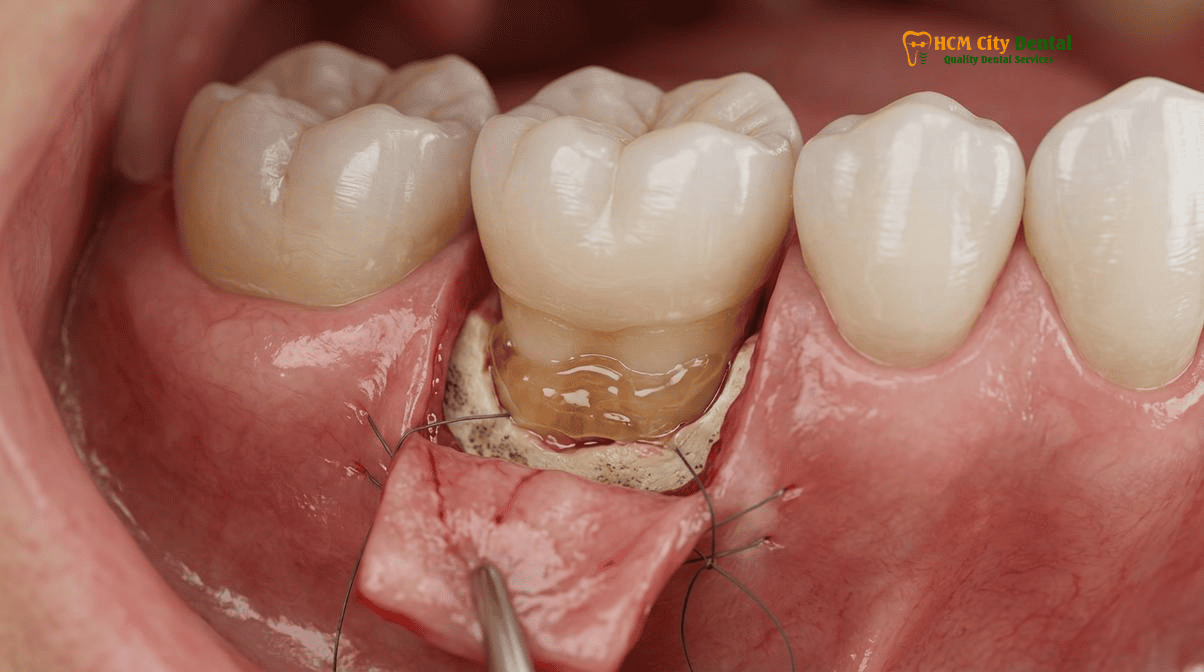
Intrabony Periodontal Pocket Regeneration (2-Wall & 3-Wall Defects): Saving Mobile Natural Teeth Without Open-Flap Bone Graft Granules Alone
Beyond treating gingival recession, Straumann Emdogain is a powerful tool in the management of severe periodontitis, specifically for the regeneration of deep intrabony defects. When periodontal disease destroys the supporting alveolar bone, it often creates vertical or angular defects alongside the tooth root. These defects are classified by the number of remaining bony walls (1-wall, 2-wall, or 3-wall defects). The more walls remaining, the greater the potential for containing a regenerative material and supporting blood clot stability.
Historically, treating these deep pockets involved open-flap debridement and filling the defect with particulate bone graft granules (allografts or xenografts) covered by a barrier membrane (Guided Tissue Regeneration, or GTR). While effective, GTR procedures are technically demanding, highly susceptible to membrane exposure and infection, and often result in significant post-operative recession.
Emdogain offers a superior, biologically driven alternative for 2-wall and 3-wall intrabony defects. By utilizing minimally invasive papilla preservation flap designs, the periodontist can access and debride the defect while maintaining maximum soft tissue coverage. After conditioning the root with PrefGel, Emdogain is injected directly into the bony defect. Because Emdogain is a flowable gel, it easily adapts to complex defect morphologies where placing a stiff barrier membrane would be impossible. The amelogenin proteins stabilize the blood clot and stimulate the patient’s own osteoblasts and PDL cells to regenerate the lost bone and attachment apparatus from the bottom up. This approach frequently saves highly mobile natural teeth that would otherwise be slated for extraction, offering a more conservative and predictable outcome than relying on bone graft granules alone. Patients seeking specialized care for severe bone loss can consult our Best Periodontist Ho Chi Minh City: Advanced Gum Disease Treatment resources.
Clinical Case Study: Intrabony Defect Regeneration in District 1
Patient Profile: A 48-year-old Australian expat presented to HCMC Dental Clinic with a highly mobile lower right first molar (Tooth 46) and a localized 9mm probing depth associated with a deep 3-wall intrabony defect. Previous consultations had recommended extraction and implant placement.
Clinical Intervention: Dr. Nguyen Van Cuong, DDS, performed a minimally invasive modified papilla preservation technique. Following meticulous ultrasonic debridement and 24% EDTA root conditioning, Straumann Emdogain was applied directly into the defect without the use of particulate bone grafts or barrier membranes. The site was closed with primary intention using 6-0 microsutures.
Outcome: At the 6-month radiographic follow-up, the 3-wall defect demonstrated near-complete radiographic bone fill. Probing depths reduced from 9mm to a healthy 3mm, and tooth mobility was completely resolved. The patient successfully retained their natural tooth through biological regeneration.
Evaluating Dental Clinics in Ho Chi Minh City: A 4-Model Objective Clinical Comparison for International Patients
For international patients seeking advanced periodontal plastic microsurgery Ho Chi Minh City, navigating the local dental landscape can be challenging. To ensure safety, clinical continuity, and optimal outcomes when undergoing complex procedures like Emdogain regeneration, it is crucial to understand the four distinct dental clinic operating models in Vietnam. For a comprehensive overview, patients are encouraged to read our Best Dentist & Dental Clinics in Ho Chi Minh City (2026 Comparison Guide).
- Model 1: 1-on-1 Doctor-Direct Specialist Boutique (HCMC Dental Clinic)
This model prioritizes absolute clinical continuity. At HCMC Dental Clinic in District 1, patients are treated exclusively by the Clinical Director, Dr. Nguyen Van Cuong, DDS (Clinical Director — MOH License 0003265/BL-CCHN). From the initial 3D CBCT diagnosis and periodontal charting to the microsurgical flap execution and final post-operative review, there are zero associate hand-offs. This boutique approach ensures that the specialist who plans the Emdogain protocol is the exact same surgeon executing it, maximizing accountability and precision. Furthermore, by operating independently, this model offers transparent, direct online pre-booking savings of up to -40%. - Model 2: Multi-Doctor Expat Clinics & Private Dental Hospitals
Facilities such as Westcoast International Dental Clinic, Starlight Dental Clinic, Picasso Dental Clinic, Worldwide Dental & Cosmetic Surgery Hospital, Elite Dental, The East Rose Dental Clinic, Platinum Dental Group, and Australian Dental Clinic operate on a larger scale. They often feature luxurious amenities and employ multiple specialists, including foreign-trained or expatriate dentists. While they provide high standards of care, their extensive corporate overhead, marketing budgets, and multi-tiered staffing structures typically result in treatment fees that are significantly higher, often approaching Western pricing levels. - Model 3: High-Volume Domestic Dental Chains & Multi-Domain Groups
This category includes large domestic networks like Peace Dentistry, Kim Dental, Premier Dental, I-DENT Dental Implant Center, Nhan Tam Dental Clinic, Cam Tu Dental, Jet Dentist, Sakura Dental Clinic, Lan Anh Dental, Nha Khoa 2000, and multi-domain groups (Saigon Center Dental / Saigon Implant Center / Saigon Crown Dental / Vietnam Dental Clinic). These chains handle a massive volume of local patients. While they offer competitive pricing for routine dentistry, the high-volume environment often necessitates delegating complex periodontal surgeries to rotating associate dentists, which can disrupt the continuity of care required for sensitive microsurgical protocols like Emdogain application. - Model 4: Third-Party Medical Tourism Booking Agencies
Entities such as VN Dental Travel, Dental Departures, and WhatClinic are not licensed medical facilities; they are referral brokers. They generate revenue by charging local clinics a 15% to 25% commission for patient referrals. Booking through these agencies adds an unnecessary layer of cost and removes direct warranty accountability. International patients are strongly advised to book directly with a Ministry of Health (MOH)-licensed clinic to ensure transparent pricing and direct clinical responsibility.
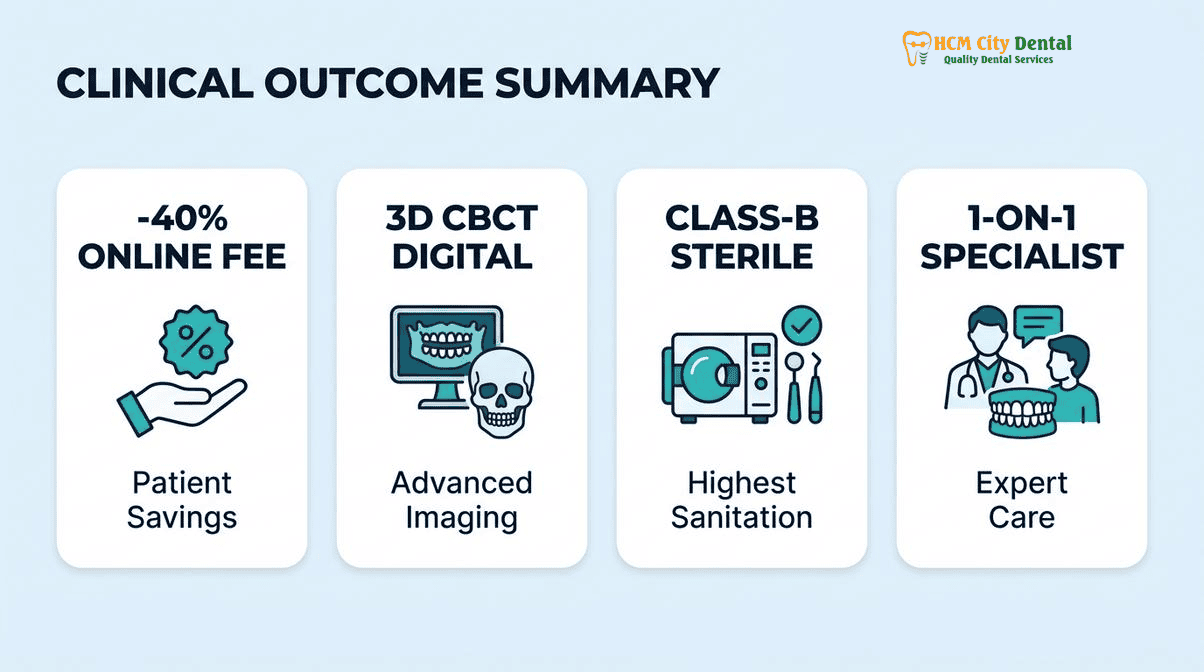
2026 Straumann Emdogain Microsurgical Root Coverage & Periodontal Regeneration Fee Schedule at HCMC Dental Clinic (District 1)
At HCMC Dental Clinic, we believe that world-class biological regeneration should be accessible and transparent. By maintaining a highly efficient, doctor-direct boutique model in District 1, we are able to utilize the exact same premium Swiss biomaterials (Straumann Emdogain, PrefGel) used in top-tier Western clinics, but at a significantly reduced cost to the patient. To view our complete range of services, please visit our Best Dental Clinics & Specialist Comparison at HCMC Dental Clinic hub.
Below is the official 2026 fee schedule, highlighting the -40% online booking advantage for international patients. For full details on all procedures, visit our Official 2026 Dental Fee Schedule (-40% Online Booking Pricing).
| Procedure / Biomaterial | 2026 Online Booking Price (USD) | Walk-In / Standard Price (USD) | VND Equivalent (Online) |
|---|---|---|---|
| Straumann Emdogain (Per Site/Defect) | $250 – $350 USD | $416 – $583 USD | 6,500,000 – 9,100,000 VND |
| Coronally Advanced Flap (CAF) Microsurgery (Per Quadrant) | $300 – $450 USD | $500 – $750 USD | 7,800,000 – 11,700,000 VND |
| Subepithelial Connective Tissue Graft (CTG) | $200 – $300 USD | $333 – $500 USD | 5,200,000 – 7,800,000 VND |
| Single European / Swiss Implant (Straumann BLT-SLA / Active) | $962 – $1,346 USD | $1,603 – $2,244 USD | 25,000,000 – 35,000,000 VND |
| Single Korean Implant (Dentis / Neo Biotech / Dentium) | $462 – $654 USD | $769 – $1,090 USD | 12,000,000 – 17,000,000 VND |
| Full Zirconia Crown (Cercon Standard / HT Multilayer) | $154 – $192 USD | $256 – $321 USD | 4,000,000 – 5,000,000 VND |
| Microscopic Endodontic Root Canal Therapy (Anterior/Premolar) | $77 – $115 USD | $128 – $192 USD | 2,000,000 – 3,000,000 VND |
| Swiss EMS AirFlow Stain Removal (Erythritol GBT) | $58 USD | $96 USD | 1,500,000 VND |
| 3D CBCT Scan | $18 USD | $30 USD | 480,000 VND |
Clinical Precaution: Patient Compliance and Healing
The success of Straumann Emdogain periodontal regeneration relies heavily on strict post-operative compliance. Patients must avoid mechanical trauma (including brushing the surgical site) for the first 2 to 3 weeks, relying instead on prescribed chlorhexidine mouth rinses for plaque control. Smoking critically impairs angiogenesis and significantly increases the risk of graft failure and poor regenerative outcomes. If you experience excessive bleeding, severe swelling, or suspect an infection, contact Dr. Nguyen Van Cuong immediately via the clinic hotline.
“Transparency in healthcare is non-negotiable. By publishing our exact 2026 fee schedule online, we empower international patients to make informed decisions. They receive the highest echelon of Swiss biomaterials and microsurgical precision without the inflated corporate markups typically associated with premium periodontal care.”
— Dr. Nguyen Van Cuong, DDS
All surgical protocols, sterilization standards, and biomaterial traceability at HCMC Dental Clinic strictly adhere to the guidelines set forth by the Vietnam Ministry of Health (MOH) and international best practices [5].
Frequently Asked Questions
What is Straumann Emdogain, and how does porcine enamel matrix derivative trick adult root surfaces into regenerating brand-new periodontal ligament and cementum?
Straumann Emdogain is a biological gel composed of enamel matrix proteins (primarily amelogenin) extracted from developing porcine tooth buds. When applied to a cleaned tooth root during periodontal surgery, it mimics the biological signals that occurred during natural tooth development in embryogenesis. This ‘tricks’ the surrounding mesenchymal stem cells into differentiating into cementoblasts, fibroblasts, and osteoblasts, thereby regenerating true acellular cementum, periodontal ligament (PDL), and alveolar bone rather than forming a weak long junctional epithelium.
Why must 24% pH-neutral EDTA (PrefGel) be used instead of acidic citric or phosphoric acid before applying Emdogain to an exposed tooth root?
The 24% pH-neutral EDTA (PrefGel) is specifically formulated to gently remove the smear layer created during mechanical root planing without causing necrotic damage to the underlying collagen fibers. Unlike harsh citric or phosphoric acids, which can denature proteins and lower the local pH to levels that inhibit cellular attachment, neutral EDTA selectively chelates calcium ions, exposing the collagen matrix of the dentin. This creates the optimal biologically receptive surface for the enamel matrix derivative to precipitate and bind effectively.
Can Coronally Advanced Flap (CAF) + Straumann Emdogain cover multiple receding gums without taking a painful graft from the roof of my mouth?
Yes. For patients with Cairo RT1 (Miller Class I and II) recession defects and an adequate thickness of existing attached gingiva, the combination of a Coronally Advanced Flap (CAF) and Straumann Emdogain can achieve complete root coverage without the need for a palatal connective tissue graft. Emdogain significantly enhances soft tissue healing, increases the width of keratinized tissue over time, and promotes true periodontal attachment, sparing the patient the discomfort and morbidity associated with a secondary surgical donor site on the palate.
How does Emdogain accelerate soft-tissue wound healing and reduce post-operative swelling during the first 7 days?
Emdogain possesses well-documented angiogenic and antibacterial properties. The amelogenin proteins stimulate the rapid proliferation of fibroblasts and endothelial cells, leading to faster formation of new blood vessels (angiogenesis) within the surgical flap. Additionally, Emdogain downregulates certain inflammatory cytokines, which clinically translates to significantly reduced post-operative edema (swelling), less pain, and accelerated soft-tissue closure during the critical first 7 to 14 days of healing.
How much does Straumann Emdogain periodontal regeneration cost in District 1, Ho Chi Minh City compared to Australia, Europe, or the US?
At HCMC Dental Clinic in District 1, Ho Chi Minh City, advanced periodontal plastic microsurgery utilizing Straumann Emdogain is highly cost-effective due to lower regional operational overhead, despite using the exact same imported Swiss biomaterials. While a single quadrant of CAF with Emdogain can cost between $1,500 and $3,000 USD in Australia, Europe, or the United States, international patients booking online at HCMC Dental Clinic can access these specialized treatments at a fraction of the cost, often saving 50% to 70% while receiving care from a licensed specialist.
References
- Journal of Periodontology. Clinical Evaluation of Coronally Advanced Flap with or without Enamel Matrix Derivative for Root Coverage. (2021).
- International Journal of Periodontics & Restorative Dentistry. Cairo RT1 and RT2 Recession Defects Treated with Microsurgical Approaches and Amelogenin Proteins. (2022).
- Journal of Clinical Periodontology. The Role of 24% EDTA Root Conditioning in Periodontal Regeneration Protocols. (2020).
- Clinical Oral Investigations. Synergistic Effects of Subepithelial Connective Tissue Grafts and Enamel Matrix Derivatives in Thin Gingival Biotypes. (2023).
- Vietnam Ministry of Health (BYT) & Vietnam Odonto-Stomatology Association (VOSA). National Clinical Guidelines on Specialist Dental Care, Biomaterial Traceability & EN 13060 Class B Infection Control. (2024).