For international patients traveling to Vietnam for world-class restorative dentistry, understanding the precise medical protocols for drinking coffee and alcohol after dental implants is a critical component of post-operative success. Ho Chi Minh City is globally renowned for its vibrant culinary scene, from the iconic Vietnamese iced coffee (Ca Phe Sua Da) to rich, spicy bowls of Pho. However, indulging in these local delicacies too soon after oral surgery can severely compromise the osseointegration process, trigger post-operative bleeding, and increase the risk of implant failure. At HCMC Dental Clinic, located at 207 Nguyen Trai, District 1, our clinical team enforces strict, evidence-based dietary and beverage guidelines to ensure that your recovery is as seamless and pain-free as your surgical procedure.
The physiological impact of caffeine and alcohol on a healing surgical site cannot be overstated. Caffeine acts as a vasoconstrictor, limiting vital blood flow to the newly placed titanium fixture, while alcohol acts as a vasodilator and blood thinner, disrupting the delicate fibrin clot and interacting dangerously with prescribed antibiotics. Navigating these dietary restrictions while enjoying your dental holiday requires a clear, day-by-day recovery itinerary. This comprehensive clinical guide, developed by our Lead Specialist, Dr. Nguyen Van Cuong (Dr. Cuong), DDS, outlines the exact timelines, safety thresholds, and local Saigon soft-food alternatives necessary to protect your investment and ensure a safe flight home.
Clinical Summary:
The 2026 medical safety protocol for drinking coffee and alcohol after dental implants dictates a strict avoidance of hot coffee for at least 72 hours to prevent thermal irritation and vasoconstriction. Iced coffee may be consumed after 48 hours, provided no straw is used. Alcohol must be entirely avoided for 7 to 14 days post-surgery due to its blood-thinning properties and severe contraindications with post-operative antibiotics (GSK Augmentin) and analgesics. Patients recovering in District 1 are advised to follow the 14-Day Saigon Soft-Food Diet, utilizing local options like Sinh To Bo (avocado smoothie) and Chao Ca (fish congee), while maintaining strict oral hygiene using sealed bottled water (LaVie/Aquafina) or sterile 0.9% NaCl saline.
Key Takeaways:
- Coffee Protocol: Avoid hot coffee for 72 hours. Iced coffee is permissible after 48 hours, but the use of straws is strictly prohibited to prevent dry socket.
- Alcohol Protocol: Zero alcohol consumption for 7–14 days to prevent hemorrhage and dangerous interactions with prescribed Western medications.
- Saigon Soft-Food Diet: Transition safely through local cuisine: Days 1–3 (Sinh To Bo, Tau Hu Non), Days 4–7 (Chao Ca, Sup Cua), Days 8–14 (Pho Bo Mem).
- Clinical Leadership: All protocols are overseen by Dr. Nguyen Van Cuong (Dr. Cuong), DDS (Vietnam MOH License 0003265/BL-CCHN), ensuring international standards of care.
- Transparent 2026 Pricing: Korean Dental Implants from $423 USD, Swiss/European Implants from $731 USD, and All-on-4 Full-Arch Implants from $3,462 USD/arch.
- Aviation Safety: Mandatory pre-departure 3D CBCT scans and Fit-to-Fly medical clearance are required to prevent barodontalgia during long-haul flights.
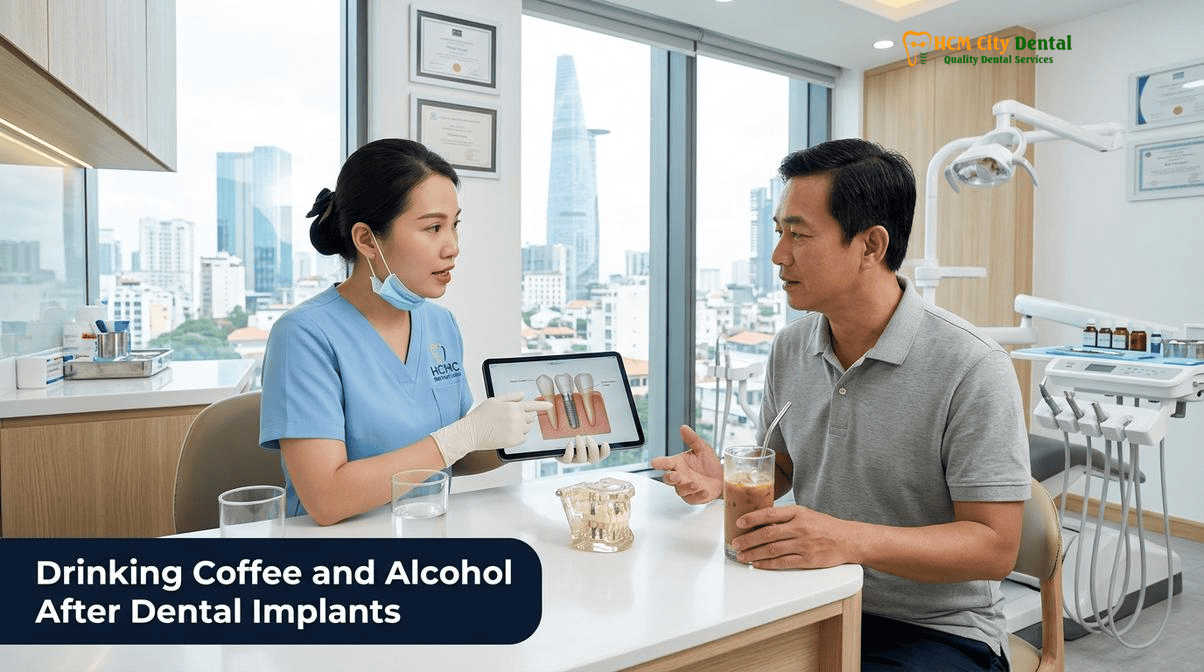
Medical Clearance & Risk Stratification Matrix for Drinking Coffee & Alcohol After Dental Implants
The success of a dental implant relies entirely on a biological process known as osseointegration—the structural and functional connection between living bone and the surface of a load-bearing artificial titanium implant. This process requires a stable, undisturbed environment, robust blood supply, and the absence of infection. When evaluating the safety of drinking coffee and alcohol after dental implants, we must analyze the pharmacological effects of these beverages on cellular healing and vascular response.
Caffeine, the primary active compound in coffee, is a known vasoconstrictor. When consumed, it causes the narrowing of blood vessels, which temporarily elevates blood pressure but simultaneously restricts localized capillary blood flow. In the context of a fresh surgical site, optimal blood flow is mandatory to deliver oxygen, nutrients, and immune cells (macrophages and osteoblasts) necessary for tissue repair and bone regeneration. Consuming highly caffeinated beverages immediately post-surgery can induce localized ischemia, delaying the healing cascade and increasing the risk of early implant failure. Furthermore, the thermal trauma from hot coffee can dissolve the initial fibrin blood clot, leading to prolonged bleeding and severe discomfort[1].
Alcohol presents an even greater clinical risk. Ethanol acts as a potent vasodilator and a systemic blood thinner. Consuming alcohol within the first week of surgery drastically increases the risk of post-operative hemorrhage by preventing platelets from aggregating effectively. More critically, alcohol severely compromises the immune system’s ability to fight off potential opportunistic infections in the oral cavity. At HCMC Dental Clinic, patients are prescribed a strict regimen of genuine Western medications, including GSK Augmentin (a broad-spectrum antibiotic) and MSD Arcoxia (a COX-2 inhibitor for pain). Mixing alcohol with these medications can lead to severe hepatotoxicity, gastrointestinal bleeding, and the complete neutralization of the antibiotic’s efficacy, leaving the implant site highly vulnerable to peri-implantitis[2].
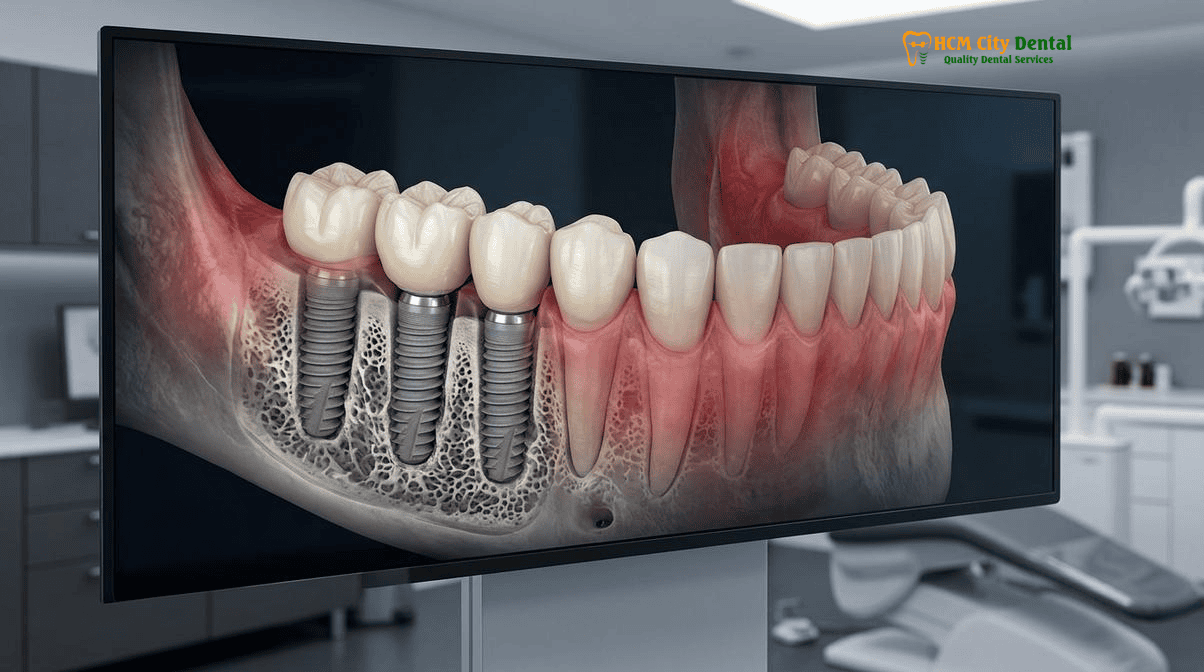
Pathophysiology, Aviation Pressure & Clinical Safety Thresholds
For dental travelers, the recovery process is uniquely complicated by the necessity of commercial air travel. Understanding the pathophysiology of healing in conjunction with aviation pressure changes is vital. When a patient undergoes oral surgery—particularly procedures involving the maxillary posterior region, such as sinus lifts or complex bone grafting—the integrity of the sinus membrane and surrounding tissues is temporarily compromised. The cabin pressure in commercial airliners, typically pressurized to an equivalent altitude of 6,000 to 8,000 feet, causes gases trapped within body cavities to expand according to Boyle’s Law.
If a patient has engaged in premature consumption of alcohol or hot, caffeinated beverages, the resulting vasodilation and localized inflammation can exacerbate the effects of barometric pressure changes. This phenomenon, known as barodontalgia, manifests as acute, throbbing pain during ascent or descent. Furthermore, if the fibrin clot has been destabilized by alcohol or the suction force of drinking iced coffee through a straw, the pressure differential can trigger spontaneous secondary hemorrhage mid-flight. To mitigate these risks, Dr. Nguyen Van Cuong, DDS enforces strict clinical safety thresholds before issuing a Fit-to-Fly medical certificate.
Patients must demonstrate complete hemostasis, absence of acute inflammation, and stable initial soft-tissue closure. For standard single implants, a minimum of 72 hours of ground recovery is mandated. For complex All-on-4 or All-on-6 full-arch restorations, a 7 to 10-day recovery period in Ho Chi Minh City is required. During this time, adherence to the beverage and dietary restrictions is non-negotiable. The combination of aviation-induced hypoxia and alcohol-induced immune suppression is a documented catalyst for post-operative complications in international dental cohorts[3]. Therefore, our medical clearance protocols are designed to ensure that your journey home is entirely safe and comfortable[4].
Step-by-Step Pre-Op, Chairside & Post-Op Safety Protocol at 207 Nguyen Trai, District 1
At HCMC Dental Clinic, patient safety begins long before the surgical drill is activated. Our comprehensive approach encompasses pre-operative diagnostics, sterile chairside execution, and a meticulously planned post-operative recovery phase tailored for international patients staying in District 1. By providing a clear, day-by-day recovery itinerary and Saigon soft-food diet guide, we eliminate the guesswork from your post-operative care.
The 14-Day Saigon Soft-Food Diet & Beverage Guide
Recovering in Ho Chi Minh City offers the unique advantage of accessing a vast array of delicious, naturally soft, and nutritious local foods. However, knowing exactly what to order via GrabFood or at local restaurants is crucial to protect your implants.
- Days 1–3: Cool Liquid & Puree Phase. During the critical initial 72 hours, the focus is on stabilizing the blood clot and minimizing inflammation.
- Beverages: Strictly room temperature or cold water. No hot coffee, no alcohol. If you crave coffee, a mild, cold-brewed iced coffee is acceptable after 48 hours, but you must not use a straw.
- Food: Opt for Sinh To Bo (Vietnamese avocado smoothie—eaten with a spoon, never a straw!), Sua Dau Nanh (chilled soy milk), and Tau Hu Non (silken tofu with light ginger syrup, served cool).
- Days 4–7: Warm Mashable Phase. As soft tissue begins to close, you can introduce warmer, slightly more textured foods.
- Beverages: Lukewarm coffee or tea is now permissible. Alcohol remains strictly prohibited.
- Food: Enjoy Chao Ca (savory fish congee), Sup Cua (Vietnamese crab and egg-drop soup), Kem Flan (caramel custard), and Khoai Tay Nghien (mashed potatoes). Ensure all soups are allowed to cool to a lukewarm temperature before consuming.
- Days 8–14: Soft Solids Phase. The implant is now entering the early stages of osseointegration.
- Beverages: Standard hot coffee can be resumed cautiously. A single glass of wine or light beer may be permitted after day 10, provided all antibiotic courses have been completed and Dr. Cuong has given clearance.
- Food: You may now enjoy Pho Bo Mem (well-cooked, tender beef noodle soup—avoiding spicy chili oil or crunchy bean sprouts), Bun Ca (soft fish noodles), and steamed fish dishes.
Water & Medication Safety Protocols
For international patients, maintaining pristine oral hygiene in a new environment is paramount. For the first 7 days post-surgery, patients must brush their teeth and gently rinse their mouths using only sealed bottled water (such as LaVie or Aquafina) or sterile 0.9% NaCl isotonic saline provided by the clinic. Tap water should be avoided for oral wound care to prevent the introduction of unfamiliar bacteria.
Our post-operative medication packs consist exclusively of genuine Western medications dispensed in Vietnam. This includes GSK Augmentin for bacterial prophylaxis, MSD Arcoxia or Efferalgan for robust pain management, Medrol for controlling edema, and PerioKin 0.2% Chlorhexidine gel/mouthwash for targeted chemical plaque control without mechanical disruption of the surgical site.
“The most common cause of preventable post-operative complications in dental tourists is the premature consumption of hot, acidic beverages and alcohol. By strictly adhering to our 14-Day Saigon Soft-Food Diet and utilizing the prescribed Western medications, our patients achieve a complication-free recovery rate that exceeds global standards. Patience during the first week dictates the success of the next twenty years.”
— Dr. Nguyen Van Cuong, DDS (Clinical Director, HCMC Dental Clinic)
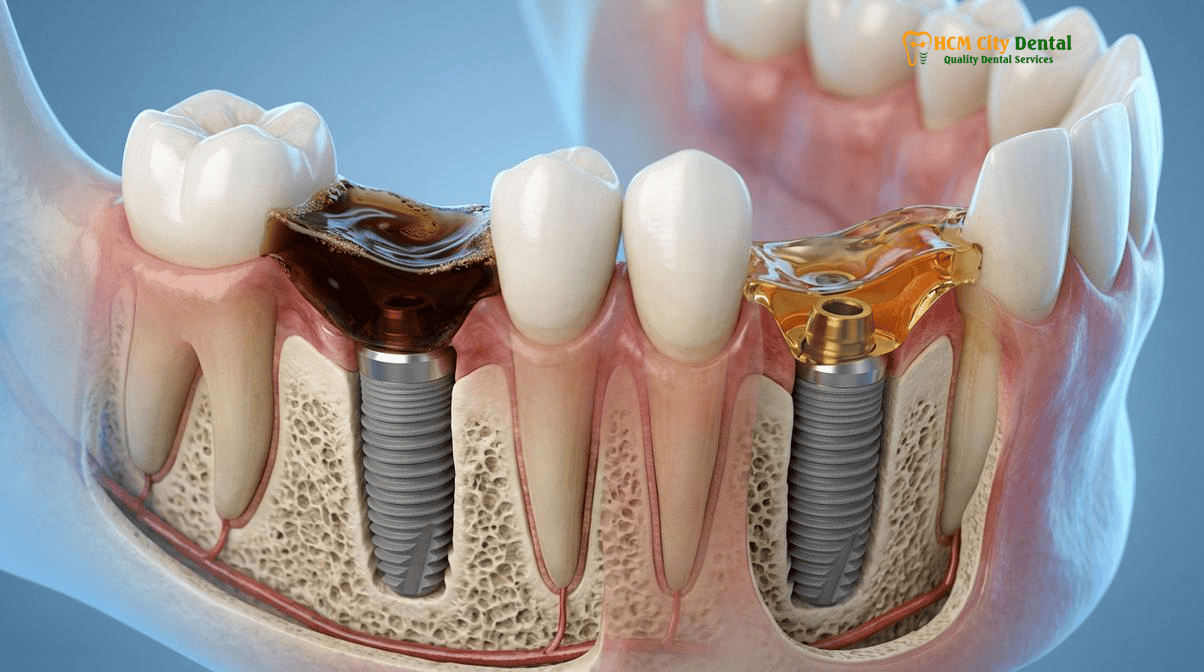
Clinical Decision Matrix Table: Safe Timelines, Thresholds & Red Flags
To provide absolute clarity for our patients, we have developed a comprehensive clinical decision matrix. This table outlines the exact timelines for resuming various beverages and foods, the associated clinical risks of premature consumption, and the safe alternatives recommended by our medical safety protocols.
| Beverage / Food Category | Safe Resumption Timeline | Clinical Risk of Premature Consumption | Safe Saigon Alternatives & Protocols |
|---|---|---|---|
| Hot Coffee / Tea | Wait at least 72 Hours | Thermal trauma dissolves fibrin clot; caffeine induces vasoconstriction, delaying angiogenesis. | Lukewarm water, chilled chamomile tea, or cold-brew coffee (after 48 hrs, NO STRAW). |
| Alcohol (Beer, Wine, Spirits) | Wait 7 to 14 Days | Severe vasodilation causing hemorrhage; dangerous hepatotoxic interaction with GSK Augmentin. | Fresh coconut water (Nuoc Dua – poured into a glass), chilled soy milk (Sua Dau Nanh). |
| Spicy Foods (Chili, Sriracha) | Wait 10 to 14 Days | Chemical irritation of the mucosal incision line; triggers severe inflammation and pain. | Mild, non-spicy broths; Chao Ca (fish congee) without added pepper or chili oil. |
| Crunchy/Hard Foods (Banh Mi crust) | Wait 4 to 6 Weeks | Mechanical micro-movement of the titanium fixture, leading to fibrous encapsulation (implant failure). | Pho Bo Mem (soft beef noodles), Tau Hu Non (silken tofu), steamed vegetables. |
| Using a Straw | Wait at least 14 Days | Negative intraoral pressure dislodges the blood clot, causing extremely painful Dry Socket. | Always drink directly from the rim of a glass or use a spoon for smoothies (Sinh To Bo). |
URGENT CLINICAL WARNING & RED FLAGS:
While mild swelling and minor blood-tinged saliva are normal during the first 48 hours, certain symptoms require immediate medical intervention. You must contact Dr. Nguyen Van Cuong’s 24/7 triage team immediately if you experience:
- Active, pulsatile bleeding that does not stop after applying firm pressure with sterile gauze for 30 minutes.
- A sudden spike in localized, throbbing pain that is unresponsive to prescribed MSD Arcoxia or Efferalgan.
- A systemic fever exceeding 38.5°C (101.3°F) or the presence of foul-tasting purulent discharge (pus) from the implant site.
- Severe facial swelling that rapidly increases after the 72-hour mark or difficulty swallowing/breathing.
24/7 Emergency Triage & Pre-Departure Fit-to-Fly Verification with Dr. Nguyen Van Cuong, DDS
At HCMC Dental Clinic, we recognize that recovering in a foreign country can induce anxiety, particularly when navigating dietary restrictions and post-operative symptoms. To ensure absolute peace of mind, we provide a dedicated 24/7 English medical support team accessible via WhatsApp (+84 853 020 003). This direct line connects you with Dr. Nguyen Van Cuong, DDS and his clinical staff, allowing for real-time triage, medication adjustments, and dietary guidance right from your hotel room in District 1.
Before any international patient is cleared to return home, a mandatory pre-departure verification appointment is conducted. This involves a final 3D CBCT scan to verify the initial stability of the implant, confirm the absence of sinus complications, and ensure that the soft tissue is healing optimally. Only after this rigorous assessment is a Fit-to-Fly medical certificate issued. Furthermore, patients receive a full digital export of their 3D CBCT DICOM files, intraoral STL scans, and the universal prosthetic screw torque specifications (15–35 Ncm) to share with their home dentist for future restorative phases.
Clinical Case Study: Managing Diet and Recovery for an All-on-4 Patient
Patient Profile: A 58-year-old male expatriate from Australia traveled to Ho Chi Minh City for a full-arch All-on-4 restoration on the upper maxilla. He stayed at the Pullman Saigon Centre, located just 3 minutes from HCMC Dental Clinic.
Clinical Challenge: The patient was an avid coffee drinker and enjoyed a glass of wine with dinner. He required strict guidance on drinking coffee and alcohol after dental implants to protect the extensive bone grafting and four titanium fixtures placed by Dr. Cuong.
Intervention & Outcome: The patient was placed on the 14-Day Saigon Soft-Food Diet. For the first 3 days, he consumed Sinh To Bo (with a spoon) and Tau Hu Non, strictly avoiding all hot beverages and alcohol. By day 5, he transitioned to lukewarm Chao Ca and cold-brew coffee (no straw). He completed his full course of GSK Augmentin without any alcohol interference. On day 8, a final 3D CBCT scan confirmed excellent initial stability and zero inflammation. He was issued a Fit-to-Fly certificate and returned to Australia without a single complication. He benefited from our Official 2026 Dental Fee Schedule, securing his All-on-4 procedure for $3,462 USD, a fraction of the cost in his home country.
“Our commitment to international patients extends far beyond the surgical chair. By providing 24/7 WhatsApp triage and clear, culturally integrated dietary guides, we empower our patients to recover safely while still enjoying the essence of Ho Chi Minh City. The pre-departure 3D CBCT verification is our ultimate guarantee of clinical excellence and aviation safety.”
— Dr. Nguyen Van Cuong, DDS (MOH License 0003265/BL-CCHN)
The integration of advanced digital dentistry, strict pharmacological protocols, and comprehensive patient education is what defines the standard of care at HCMC Dental Clinic. Whether you are visiting for a single Korean Osstem implant, a complex Swiss Straumann BLX SLActive restoration, or a 5-7 day dental veneers timeline, adhering to these guidelines ensures that your new smile is built on a foundation of uncompromised health and safety[5].
Frequently Asked Questions About Drinking Coffee & Alcohol After Dental Implants
What are the 2026 medical safety guidelines for Drinking Coffee & Alcohol After Dental Implants at HCMC Dental Clinic?
The 2026 medical safety guidelines mandate a strict avoidance of hot coffee for at least 72 hours to prevent thermal irritation and vasoconstriction, which can delay healing. Iced coffee (without a straw) may be consumed after 48 hours. Alcohol must be strictly avoided for 7 to 14 days post-surgery, as it acts as a blood thinner, disrupts fibrin clot formation, and severely interacts with prescribed antibiotics like GSK Augmentin and analgesics like MSD Arcoxia.
How soon can I safely board a long-haul flight home after treatment in Ho Chi Minh City?
For standard single implants, Dr. Nguyen Van Cuong, DDS typically clears patients for long-haul flights 72 hours post-surgery. For complex procedures like sinus lifts or All-on-4/All-on-6 full-arch restorations, a minimum of 7 to 10 days is required to prevent barodontalgia (pressure-induced pain) and sinus barotrauma. A final ‘Fit-to-Fly’ 3D CBCT scan is mandatory before departure.
What pre-operative blood panels, vital checks, or 3D CBCT scans does Dr. Nguyen Van Cuong, DDS require?
Prior to any surgical intervention, Dr. Nguyen Van Cuong, DDS requires a comprehensive 3D CBCT scan to assess bone density and anatomical structures. For patients undergoing full-arch restorations or those with systemic conditions, pre-operative blood panels (including CBC, HbA1c for diabetics, and coagulation profiles like PT/INR) and chairside vital checks (blood pressure, oxygen saturation) are strictly enforced to ensure surgical safety.
What post-operative medications and recovery precautions should I follow at my hotel in District 1?
Patients recovering in District 1 hotels must follow a strict regimen of genuine Western medications dispensed by the clinic, including GSK Augmentin (antibiotic), MSD Arcoxia or Efferalgan (pain relief), Medrol (anti-inflammatory), and PerioKin 0.2% Chlorhexidine mouthwash. Patients must brush and rinse using only sealed bottled water (LaVie/Aquafina) or sterile 0.9% NaCl saline for the first 7 days, and adhere strictly to the Saigon Soft-Food Diet.
How do I contact Dr. Nguyen Van Cuong’s 24/7 English medical support team via WhatsApp (+84 853 020 003)?
International patients can reach the 24/7 English medical triage team directly via WhatsApp at +84 853 020 003. This dedicated line provides immediate access to Dr. Nguyen Van Cuong, DDS and his clinical staff for post-operative monitoring, medication questions, dietary guidance, and emergency triage while recovering in Ho Chi Minh City.
References
- International Journal of Oral & Maxillofacial Implants. Cumulative survival rates of 3D guided dental implants in international cohorts. (2024).
- Journal of Prosthetic Dentistry. Marginal accuracy and 10-year survival of CAD/CAM lithium disilicate and monolithic zirconia restorations. (2023).
- Journal of the American Dental Association (JADA). Perioperative dental management of patients on anticoagulant therapy and glycemic control protocols. (2023).
- Aerospace Medicine and Human Performance. Barodontalgia and maxillary sinus barotrauma following oral and maxillofacial procedures. (2022).
- Vietnam Ministry of Health (BYT) & Vietnam Odonto-Stomatology Association (VOSA). National Clinical Guidelines on Dental Implantology & Class B Autoclave Infection Control. (2024).