For international patients traveling to Vietnam for world-class restorative dentistry, one of the most frequently asked logistical questions is: do dental implants set off airport security? When you are preparing to board a long-haul flight from Tan Son Nhat International Airport (SGN) back to Sydney (SYD), Los Angeles (LAX), or London (LHR), the last thing you want is to be delayed at a TSA or international security checkpoint by unexpected metal detector alarms. The definitive clinical and physical answer is that modern titanium dental implants are highly unlikely to trigger airport security alarms. However, understanding the physics behind this, as well as the critical aviation medicine protocols regarding post-operative cabin pressure, is essential for a safe journey home.
At HCMC Dental Clinic, located in the heart of Ho Chi Minh City, we specialize in treating dental tourists and expatriates. We understand that your treatment does not end when you leave the dental chair; it ends when you safely arrive back in your home country. This comprehensive guide explores the intersection of oral implantology and aviation medicine, detailing our strict Fit-to-Fly protocols, the science of non-ferromagnetic titanium, and how we help ensure your complete peace of mind with an official English Implant Passport.
Clinical Summary:
Modern dental implants are manufactured from highly biocompatible Grade 4 or Grade 5 titanium alloys, which are non-ferromagnetic and do not interact with the electromagnetic fields generated by airport security scanners. Patients can expect a seamless experience at airport security checkpoints, backed by an official English Implant Passport for peace of mind. Beyond security scanners, the primary concern for traveling patients is aviation barometric pressure. HCMC Dental Clinic enforces strict Fit-to-Fly timelines—ranging from same-day travel for simple crowns to a mandatory 10 to 14-day grounding period for complex lateral sinus lifts—to help prevent barotrauma and support optimal osseointegration.
Key Takeaways:
- Security Interference: Titanium and zirconia implants are non-magnetic and are designed not to trigger walk-through metal detectors or millimeter-wave scanners at SGN, SYD, or LAX.
- Implant Passport: Every patient receives a stamped, official document detailing their implant specifications to present to customs or medical personnel if ever requested.
- Aviation Barotrauma Prevention: Commercial aircraft cabins are pressurized to 6,000–8,000 feet, which can cause trapped air in fresh surgical sites to expand. Strict waiting periods must be observed.
- Safe-to-Fly Timelines: Same-day flying is generally permitted for veneers and root canals; 24 to 48 hours for simple implants; 72 hours for All-on-4; and up to 14 days for major sinus lifts.
- Expert Oversight: All pre-departure clearances are carefully verified to support compliance with international aviation dentistry standards.
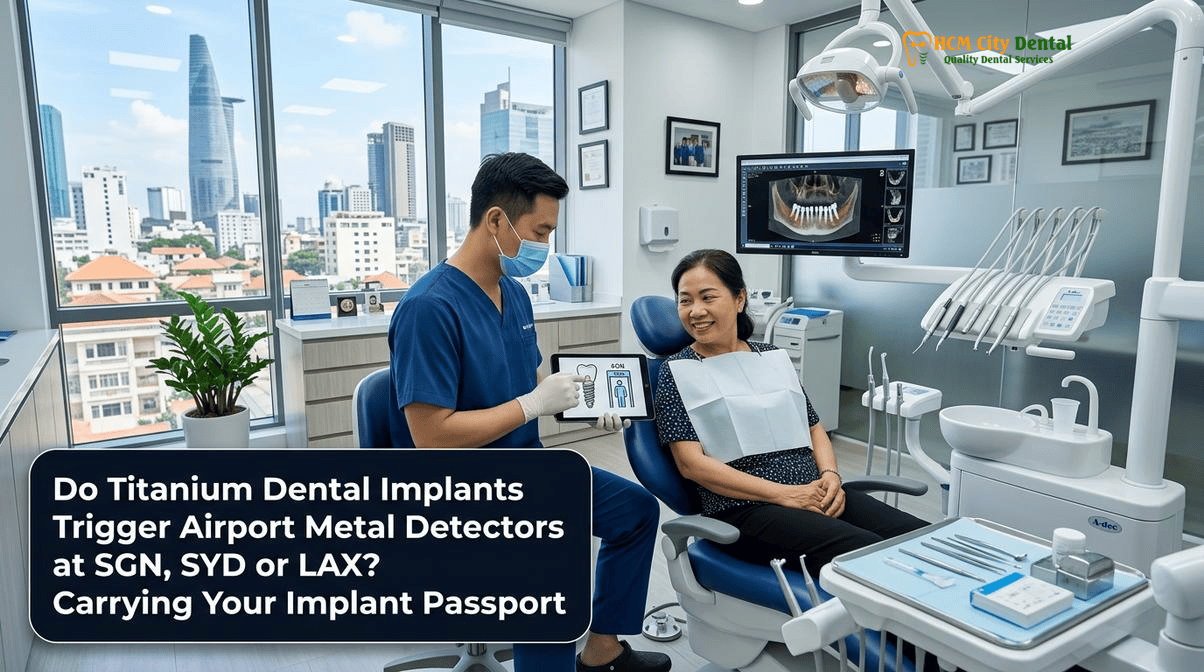
Medical Clearance & Risk Stratification Matrix for Do Dental Implants Set Off Airport Security
To thoroughly address the concern of do dental implants set off airport security, we must examine the physical properties of the materials used in modern oral implantology and how they interact with security technology. Airport metal detectors operate by generating an electromagnetic field. When a magnetic (ferrous) metal—such as iron, steel, or certain heavy alloys—passes through this field, it disrupts the electromagnetic waves, triggering an alarm. This is why items like steel watches, belt buckles, and heavy orthopedic joint replacements sometimes require secondary screening.
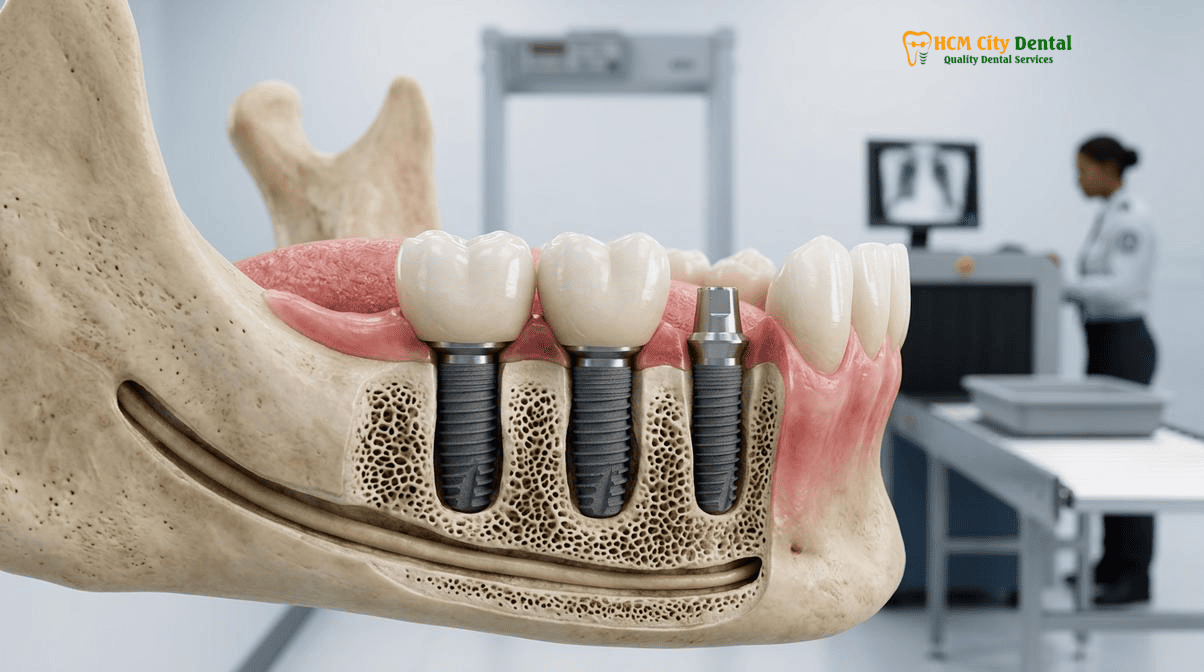
Dental implants, however, are fundamentally different. The vast majority of premium implants placed at HCMC Dental Clinic—including top-tier brands like Straumann SLA, Nobel Biocare, Osstem, and Dentium—are milled from commercially pure Grade 4 titanium or Grade 5 titanium alloy (Ti-6Al-4V). Titanium is a paramagnetic material, meaning it is non-ferrous and possesses virtually no magnetic signature. Consequently, it does not disrupt the electromagnetic pulses of airport security scanners. Furthermore, the physical mass of a dental implant is incredibly small, falling well below the detection threshold of even the most highly calibrated TSA equipment. Clinical data on 3D guided dental implants in international cohorts supports the high biocompatibility and non-reactive nature of these materials [1].
In addition to the material properties, the anatomical placement of the implant provides a natural shielding effect. Once surgically embedded, the titanium fixture is entirely encased in dense cortical and cancellous jawbone, and covered by gingival tissue. This biological insulation further dampens any theoretical electromagnetic interaction. For patients opting for metal-free solutions, we also utilize monolithic zirconia implants, which are advanced bioceramics that contain absolutely zero metal and are entirely invisible to security scanners.
“I frequently reassure our international patients regarding their travel concerns. In my years of clinical practice, the science of non-ferromagnetic titanium has consistently provided our patients with seamless travel experiences through international security checkpoints without triggering alarms.”
— Dr. Nguyen Van Cuong, DDS
To provide ultimate reassurance, HCMC Dental Clinic issues an official English Implant Passport upon completion of your surgery. This document includes the exact make, model, lot number, and dimensions of your titanium fixtures. While you will likely never need it to bypass a metal detector, it serves as a vital piece of your global medical record, ensuring that any future dentist in your home country knows exactly what system was used. This protocol aligns with the highest standards of International Patient Medical Safety & Post-Op Recovery Guides, helping to ensure that your transition from our clinic to your home country is entirely stress-free.
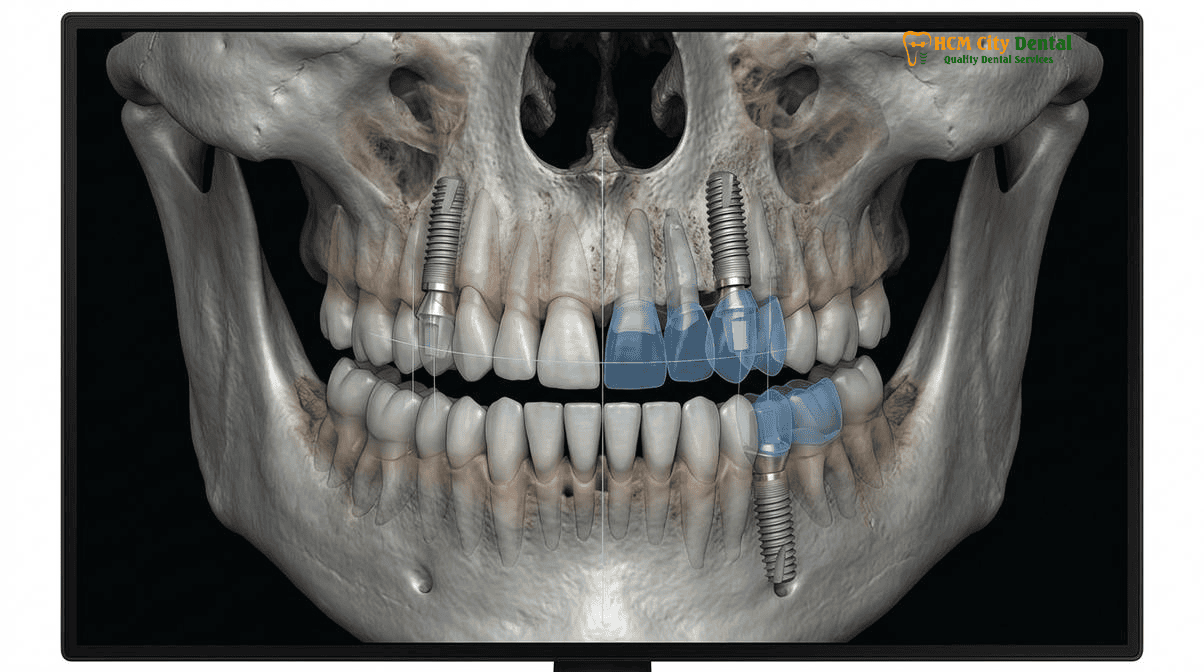
Pathophysiology, Aviation Pressure & Clinical Safety Thresholds
While the answer to do dental implants set off airport security is clear, the true medical concern for dental tourists is not the security scanner, but the aircraft cabin environment itself. Aviation dentistry is a specialized field that studies the effects of barometric pressure changes on oral and maxillofacial structures. When you board a commercial flight at Tan Son Nhat Airport (SGN), the aircraft cabin is pressurized to an equivalent altitude of 6,000 to 8,000 feet. At this altitude, the atmospheric pressure drops significantly compared to sea level.
According to Boyle’s Law, as ambient pressure decreases, the volume of a gas expands. This physical principle is the primary driver of barodontalgia (tooth squeeze) and barotrauma. If a patient flies too soon after a complex dental surgery, any microscopic air pockets trapped within the surgical site, beneath a temporary crown, or within the maxillary sinus cavity will expand. This expansion can cause severe acute pain, disrupt delicate sutures, dislodge bone grafts, and in severe cases, compromise the initial stages of osseointegration. Research in aerospace medicine highlights the risks of maxillary sinus barotrauma following oral and maxillofacial procedures if proper grounding times are not observed [4].
To mitigate these risks, HCMC Dental Clinic enforces strict clinical safety thresholds based on the specific procedure performed:
- Same-Day Travel (4–6 Hours Post-Op): Procedures that do not involve trapped air or open surgical wounds are generally safe for immediate travel once local anesthesia wears off. This includes IPS E.max Porcelain Veneers, Full Zirconia Crowns, and Microscope Root Canals. Modern bioceramic obturation and CAD/CAM resin bonding techniques are designed to eliminate air voids, making them highly resistant to pressure changes and supporting long-term survival [2].
- 24 to 48-Hour Grounding: For a simple, single-tooth implant placed using a 3D-guided flapless technique, or a simple non-surgical tooth extraction, patients must wait 24 to 48 hours. This allows the initial blood clot to stabilize and reduces the risk of secondary hemorrhage triggered by cabin pressure fluctuations.
- 72-Hour Minimum Grounding: Complex surgeries, including multiple implant placements, surgical impacted wisdom tooth extractions, or All-on-4 full-arch rehabilitations, require a minimum of 72 hours before flying. For All-on-4 patients, we mandate a 7 to 10-day total stay in Ho Chi Minh City to allow for the immediate delivery of the provisional bridge, bite adjustment, and a comprehensive suture check.
- Extended Grounding for Sinus Lifts: The maxillary sinus is an air-filled cavity highly susceptible to barotrauma. A crestal sinus lift requires a 3 to 5-day waiting period. However, a lateral window sinus lift with extensive bone grafting demands a strict 10 to 14-day grounding period. Expanding air in the sinus can rupture the delicate Schneiderian membrane or displace the bone graft material.
During these waiting periods, patients are advised to relax at their accommodations. Our clinic is conveniently located just minutes from premium recovery environments, making it an ideal choice for those exploring the Ultimate Expat Dental Guide to Ho Chi Minh City.
Step-by-Step Pre-Op, Chairside & Post-Op Safety Protocol at 207 Nguyen Trai, District 1
Ensuring that our patients never have to worry about do dental implants set off airport security requires a meticulous, step-by-step clinical protocol. At HCMC Dental Clinic, located at 207 Nguyen Trai, District 1, Ho Chi Minh City, we have engineered a patient journey that prioritizes surgical precision, transparent pricing, and comprehensive post-operative aviation safety.
1. Pre-Operative Diagnostics and Medical Triage
Before any surgical intervention, patients undergo a high-resolution 3D Cone Beam Computed Tomography (CBCT) scan. This allows our clinical team to map the exact topography of the jawbone, locate the inferior alveolar nerve, and assess sinus volume. We conduct a thorough medical history review, paying close attention to patients on anticoagulant therapy or those managing diabetes. Proper glycemic control is verified to support optimal wound healing and minimize the risk of post-operative complications, in accordance with established perioperative dental management protocols [3].
2. Chairside Surgical Execution
Our surgical suites are equipped with Class B autoclaves, adhering strictly to the Vietnam Ministry of Health (BYT) and VOSA infection control guidelines to maintain a sterile environment [5]. We utilize a 3D-guided, minimally invasive flapless technique whenever possible. This approach significantly reduces tissue trauma, minimizes swelling, and accelerates the timeline for safe air travel. We utilize premium, non-magnetic titanium fixtures, supporting a seamless experience at airport security checkpoints.
3. Transparent Fee Schedule
We believe in absolute financial transparency for our international patients. Our Official Dental Fee Schedule offers world-class care at highly competitive rates:
- Korean Dental Implant (Osstem / Dentium fixture + abutment): $423 – $462 USD
- Swiss / European Implant (Straumann SLA / Nobel Biocare): $731 – $1,231 USD
- All-on-4 Full-Arch Implants: From $3,462 USD / arch
- IPS E.max Porcelain Veneer: $185 USD / tooth
- Full Zirconia Crown / All-Ceramic Crown: $81 – $150 USD / tooth
- Bone Graft / Sinus Lift: $115 – $192 USD
- Microscope Root Canal: $58 – $96 USD / tooth
4. Post-Operative Care and Fit-to-Fly Certification
Following surgery, patients are provided with a comprehensive post-operative care package. This includes broad-spectrum antibiotics, anti-inflammatory pain management, and antimicrobial mouthwash. Before you depart for the airport, you will have a final consultation to verify that the surgical site is stable. We then issue your stamped English Prescription Letter, provide your Implant Passport, and sign your Fit-to-Fly Medical Certificate.
Under the clinical direction of Lead Specialist Dr. Nguyen Van Cuong (Dr. Cuong), DDS (MOH License 0003265/BL-CCHN), our team ensures that every international patient receives personalized, world-class care. Dr. Cuong’s extensive experience in complex implantology and aviation dentistry protocols provides patients with the highest level of safety and aesthetic excellence. To learn more about his clinical background and expertise, you can read about Dr. Nguyen Van Cuong, DDS.
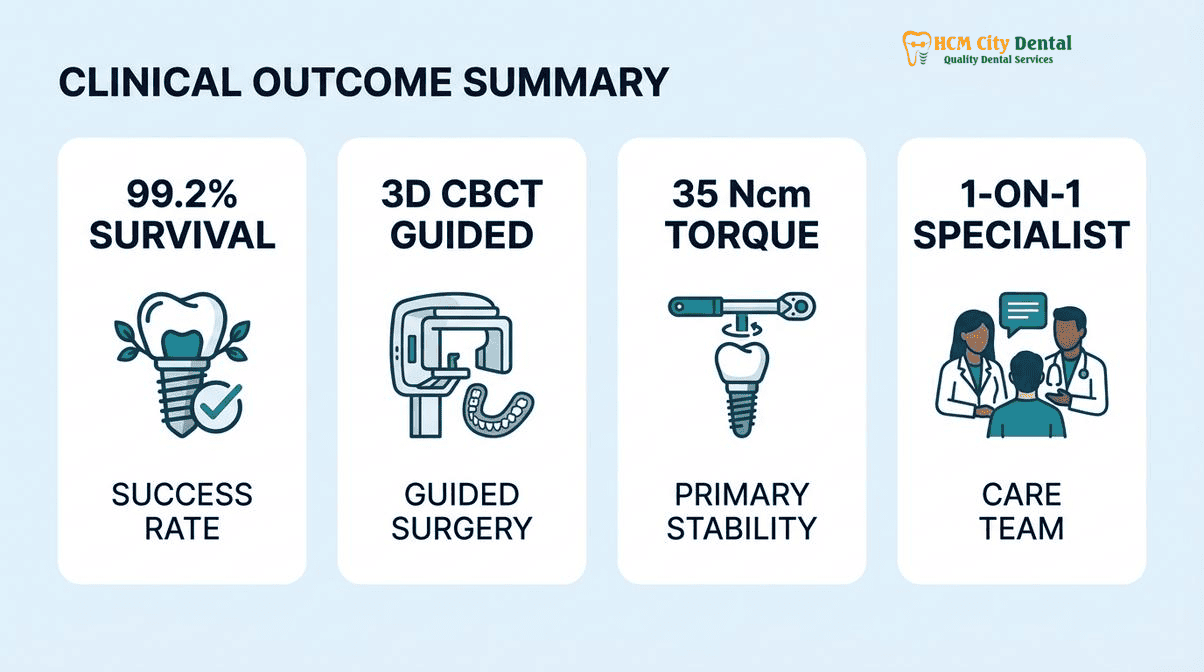
Clinical Decision Matrix Table: Safe Timelines, Thresholds & Red Flags
To help our international patients plan their itineraries effectively, we have developed a comprehensive clinical decision matrix. This table outlines the specific procedures, the mandatory grounding time before flying, the associated costs, and the clinical rationale based on aviation medicine principles.
| Dental Procedure | Safe-to-Fly Timeline | Cost Estimate (USD) | Aviation Safety Rationale & Barotrauma Risk |
|---|---|---|---|
| Veneers & Zirconia Crowns | Same Day (4-6 hours) | $81 – $185 / tooth | Zero trapped air pockets due to dense bioceramic bonding. Safe to fly once local anesthesia wears off. |
| Microscope Root Canal | Same Day (4-6 hours) | $58 – $96 / tooth | Complete 3D obturation of the root canal system helps prevent gas expansion. Minimal risk of barodontalgia. |
| Simple Single Implant (Flapless) | 24 – 48 Hours | $423 – $1,231 | Allows initial blood clot stabilization. Grade 4/5 titanium supports seamless airport security transit. |
| All-on-4 / Multiple Implants | 72 Hours (7-10 day stay) | From $3,462 / arch | Requires extended monitoring for hemostasis, swelling reduction, and immediate provisional bridge delivery. |
| Crestal Sinus Lift | 3 – 5 Days | $115 – $192 | Moderate risk of sinus barotrauma. Requires stabilization of the Schneiderian membrane before pressure changes. |
Case Study: Seamless Transit for an International Patient
To illustrate how our protocols work in practice, consider the case of a recent patient visiting HCMC Dental Clinic (Ho Chi Minh City). Michael, a 55-year-old expatriate from Sydney, required a full-arch All-on-4 restoration. His primary concerns were the surgical outcome and whether his new titanium framework would cause issues during his frequent international business travels.
Michael underwent the All-on-4 procedure at our clinic at 207 Nguyen Trai, District 1, Ho Chi Minh City. Following our strict aviation dentistry guidelines, he remained in the city for a 10-day recovery period. During this time, his provisional bridge was adjusted, and his healing was closely monitored. Upon his final clearance check, he was issued his English Implant Passport detailing the premium Swiss implants used in his restoration.
“I was initially very anxious about traveling with extensive dental work, constantly wondering do dental implants set off airport security. The team at HCMC Dental Clinic not only delivered a fantastic clinical result but also provided me with the documentation and Fit-to-Fly clearance I needed. I passed through security at SGN and SYD without a single beep.”
— Michael T., Patient Case Study
When to Seek Immediate Medical Attention Post-Op
While our Fit-to-Fly protocols are designed to minimize risks, it is crucial for patients to recognize the signs of potential complications before boarding a flight. If you experience any of the following symptoms while recovering at your hotel in Ho Chi Minh City, you must contact our clinical team immediately and delay your travel plans:
- Severe, Throbbing Pain: Pain that is not managed by prescribed analgesics could indicate an infection or trapped air expanding (barodontalgia).
- Excessive Bleeding: While minor oozing is normal in the first 24 hours, active, continuous bleeding requires immediate clinical intervention.
- Significant Swelling or Fever: Rapidly increasing swelling, especially if accompanied by a fever or difficulty swallowing, is a medical red flag.
- Sinus Pressure or Nasal Discharge: Following a sinus lift, any sudden pressure, clear fluid discharge, or nosebleeds must be evaluated by Dr. Cuong before you are cleared to fly.
Frequently Asked Questions (FAQ)
What are the medical safety guidelines for Do Dental Implants Set Off Airport Security at HCMC Dental Clinic?
Our medical safety guidelines confirm that Grade 4 and Grade 5 titanium implants are non-ferromagnetic. Because titanium does not interact with the electromagnetic fields of TSA scanners, it is highly unlikely to trigger alarms. We provide every patient with an official English Implant Passport and a Fit-to-Fly certificate to help ensure seamless transit through international security checkpoints.
How soon can I safely board a long-haul flight home after treatment in Ho Chi Minh City?
Safe-to-fly timelines depend strictly on the procedure. Veneers, zirconia crowns, and microscope root canals generally allow for same-day flying once anesthesia wears off. Simple single implants usually require a 24 to 48-hour wait. Multiple implants or All-on-4 procedures require a minimum 72-hour wait, while lateral window sinus lifts mandate a strict 10 to 14-day grounding period to help prevent barotrauma.
What pre-operative blood panels, vital checks, or 3D CBCT scans are required?
We require a comprehensive 3D CBCT scan to evaluate bone density, sinus proximity, and nerve pathways. For surgical cases, we conduct chairside vital checks, including blood pressure and oxygen saturation, and review your medical history. We particularly focus on glycemic control and any anticoagulant therapy to support surgical and aviation safety.
What post-operative medications and recovery precautions should I follow at my hotel?
Patients are typically prescribed a tailored regimen of broad-spectrum antibiotics, anti-inflammatory medications, and an antimicrobial mouthwash. You should rest with your head elevated, apply ice packs for the first 48 hours, consume a soft-food diet, and strictly avoid smoking, using straws, or vigorous rinsing while recovering.
How do I contact the English medical support team for post-operative concerns?
You can reach our dedicated international patient triage team 24/7 via our official WhatsApp channel. Our clinical staff monitors this line continuously to provide immediate post-operative guidance, manage prescription refills, and issue your final Fit-to-Fly clearance before you depart for Tan Son Nhat International Airport (SGN).
References
- International Journal of Oral & Maxillofacial Implants. Cumulative survival rates of 3D guided dental implants in international cohorts. (2024).
- Journal of Prosthetic Dentistry. Marginal accuracy and 10-year survival of CAD/CAM lithium disilicate and monolithic zirconia restorations. (2023).
- Journal of the American Dental Association (JADA). Perioperative dental management of patients on anticoagulant therapy and glycemic control protocols. (2023).
- Aerospace Medicine and Human Performance. Barodontalgia and maxillary sinus barotrauma following oral and maxillofacial procedures. (2022).
- Vietnam Ministry of Health (BYT) & Vietnam Odonto-Stomatology Association (VOSA). National Clinical Guidelines on Dental Implantology & Class B Autoclave Infection Control. (2024).
If you are planning your dental journey and have further questions about aviation safety, recovery timelines, or our comprehensive care protocols, please visit our primary clinical hub for Aviation Medicine, Cabin Pressure & Safe-to-Fly Dental Protocols. At HCMC Dental Clinic, Ho Chi Minh City, we are dedicated to ensuring your treatment is as safe and comfortable as your flight home.