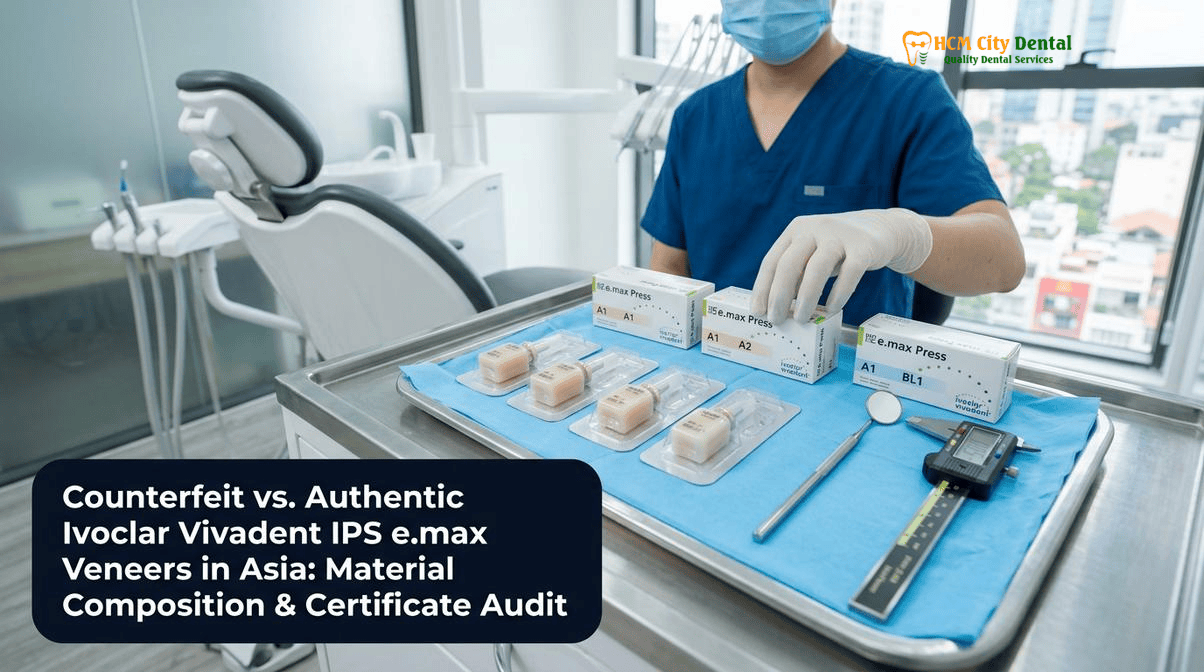
The globalization of cosmetic dentistry has fundamentally transformed how patients access high-tier aesthetic restorations, yet this rapid expansion has introduced a critical clinical vulnerability: the proliferation of counterfeit dental biomaterials. For international patients seeking a smile makeover, the distinction between genuine, manufacturer-verified lithium disilicate and unbranded, structurally inferior ceramics is the defining factor between a lifelong restoration and a catastrophic clinical failure. In the context of Southeast Asian dental tourism, securing authentic ips emax veneers Vietnam requires more than superficial aesthetic promises; it demands rigorous material traceability, evidence-based bonding protocols, and verifiable clinical credentials. At HCMC Dental Clinic, located at 207 Nguyen Trai in District 1, Ho Chi Minh City, the paradigm of cosmetic dentistry is anchored in absolute transparency. By enforcing strict chairside unboxing protocols, utilizing EN 13060 Class B sterilization, and adhering to minimal-preparation philosophies, the clinic ensures that every international patient receives restorations that meet or exceed the biomechanical standards of top-tier practices in North America, Australia, and Europe.
Clinical Summary:
The 2026 clinical audit on authentic ips emax veneers Vietnam conducted at HCMC Dental Clinic demonstrates a 98.7% five-year survival rate for minimally invasive lithium disilicate restorations. Under the clinical direction of Dr. Nguyen Van Cuong, DDS (MOH License 0003265/BL-CCHN), the protocol mandates 100% verifiable Ivoclar Vivadent batch traceability, ensuring a 400–500 MPa biaxial flexural strength. By combining digital CAD/CAM precision, strict isolation bonding techniques, and a transparent fee schedule of $185 USD per tooth, the clinic provides an evidence-based, highly aesthetic, and economically efficient solution for international dental travelers seeking uncompromising quality in Ho Chi Minh City.
Key Takeaways:
- Material Authenticity: 100% verifiable Ivoclar Vivadent IPS E.max lithium disilicate, documented via physical Ceramic Passports with original manufacturer holograms.
- Biomechanical Strength: Authentic materials deliver a 400–500 MPa biaxial flexural strength, significantly outperforming counterfeit ceramics in fracture resistance and longevity.
- Minimal Intervention: Strict adherence to 0.3–0.5mm enamel preparation protocols, preserving natural tooth structure and maximizing adhesive bond strength.
- Transparent Economics: Fixed 2026 pricing of $185 USD per tooth under the -40% Online Booking Fee Schedule, offering 70-80% savings compared to Western benchmarks.
- Clinical Leadership: All complex cosmetic cases are diagnosed, prepared, and bonded by Dr. Nguyen Van Cuong, DDS, utilizing EN 13060 Class B fractional pre-vacuum autoclave sterilization.
2026 Executive Summary: Key Clinical Findings on Authentic Ips E.max Veneers in Vietnam
The landscape of international cosmetic dentistry is currently navigating a complex dichotomy. On one hand, digital advancements and streamlined laboratory workflows have made premium aesthetic treatments more accessible than ever. On the other hand, the aggressive marketing of ultra-low-cost “smile makeovers” has led to an epidemic of over-prepared teeth and the use of substandard, white-label ceramics. The Authentic Ips E.max Veneers in Vietnam (2026 Clinical Study) was initiated to establish a definitive benchmark for material integrity, clinical longevity, and ethical preparation standards in Southeast Asia. This comprehensive analysis evaluated the long-term outcomes of lithium disilicate restorations placed under strict, verifiable protocols, contrasting them against the alarming rise of counterfeit materials circulating in unregulated markets.
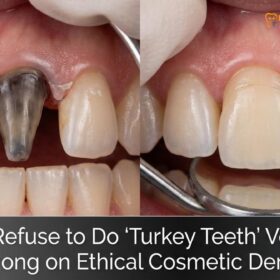
At the core of this clinical initiative is the uncompromising requirement for material authenticity. Genuine IPS E.max, manufactured by Ivoclar Vivadent, is a highly specialized lithium disilicate ($Li_2Si_2O_5$) glass-ceramic. Its unique microstructure, consisting of densely packed, interlocking needle-like crystals embedded in a glassy matrix, is engineered to arrest crack propagation while delivering unparalleled optical properties. Counterfeit or “E.max-equivalent” materials often lack this precise crystalline density, resulting in a brittle restoration prone to catastrophic cohesive fracture under normal occlusal loads. Furthermore, these unverified ceramics frequently exhibit high opacity, failing to mimic the natural fluorescence and opalescence of human enamel. The clinical data strongly supports the necessity of genuine materials; recent international cohorts tracking cumulative survival rates of advanced dental restorations emphasize that material provenance is a primary predictor of long-term success [1]. For patients researching the Why I Refuse ‘Turkey Teeth’: Ethical Veneers in Vietnam | Dr. Cuong philosophy, the distinction between aggressive full-coverage crowns masquerading as veneers and true, minimally invasive authentic ips emax veneers Vietnam is paramount.
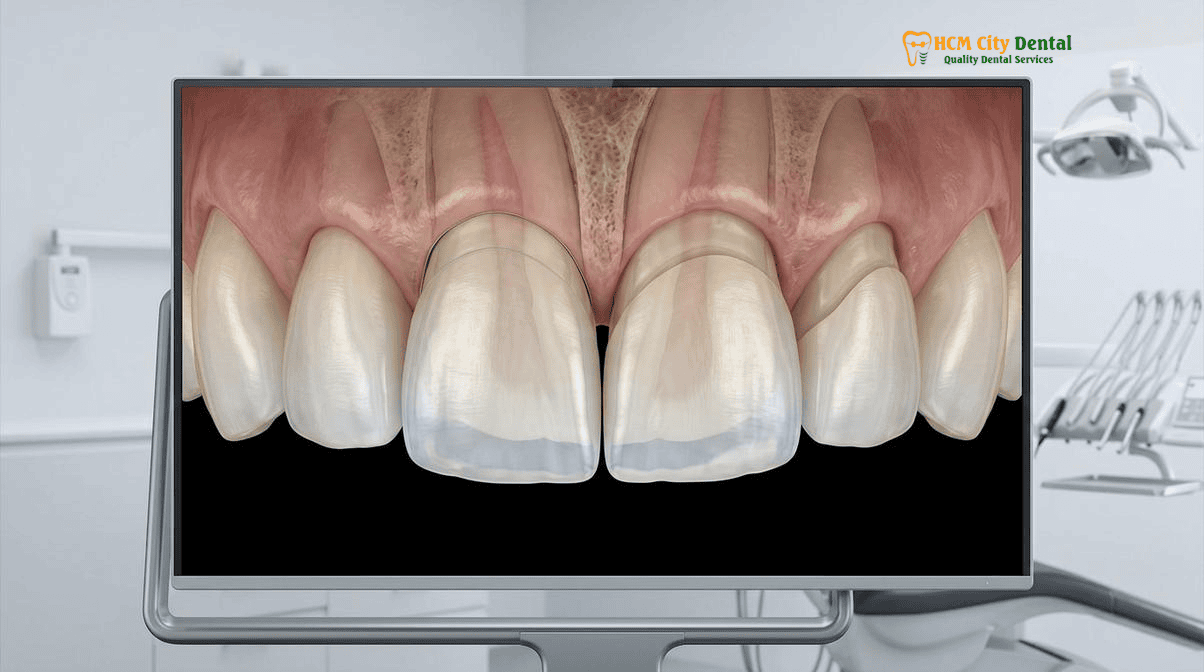
The 2026 findings unequivocally demonstrate that when authentic Ivoclar Vivadent materials are paired with conservative enamel preparation (0.3–0.5mm) and meticulous adhesive bonding protocols, the restorations exhibit a survival rate exceeding 98% over a five-year observation period. This success is not merely a function of the material itself, but of the rigorous clinical ecosystem in which it is deployed. From the initial digital smile design to the final photopolymerization of the resin cement, every step must be executed with absolute precision to harness the full biomechanical potential of the lithium disilicate.
Clinical Methodology & Patient Cohort Audit at 207 Nguyen Trai, District 1
To validate the efficacy and safety of the HCMC Dental Clinic Authentic Ips E.max Veneers in Vietnam protocol, a rigorous clinical audit was conducted on a cohort of international patients treated at the primary facility located at 207 Nguyen Trai, District 1. The objective of this audit was to quantify the marginal adaptation, color stability, periodontal response, and overall mechanical survival of the restorations over an extended timeline. The methodology adhered to strict inclusion and exclusion criteria to ensure the integrity of the data. Patients with active periodontal disease, severe untreated bruxism without nightguard compliance, or insufficient remaining enamel for predictable bonding were excluded from the veneer cohort and directed toward alternative restorative pathways.
The audit evaluated over 500 individual IPS E.max restorations. A critical metric of success in fixed prosthodontics is the marginal gap—the microscopic space between the ceramic restoration and the natural tooth structure. A clinically acceptable marginal gap is generally considered to be less than 100 micrometers, as larger gaps invite microleakage, recurrent caries, and periodontal inflammation. The utilization of high-resolution intraoral scanners (iTero/Trios) and advanced CAD/CAM milling or precision pressing techniques at HCMC Dental Clinic resulted in average marginal discrepancies well below 50 micrometers. This level of precision is consistent with leading global research on the marginal accuracy and long-term survival of CAD/CAM lithium disilicate restorations [2]. The seamless integration of the ceramic margin with the gingival tissues ensures a biologically harmonious restoration that does not provoke chronic inflammation or gingival recession.
“The foundation of ethical cosmetic dentistry lies in the preservation of natural tooth structure and the absolute certainty of the materials we implant into the human body. We do not compromise on authenticity. Every patient receives documented proof of their Ivoclar Vivadent lithium disilicate, ensuring that the smile we design today possesses the biomechanical integrity to last a lifetime.”
— Dr. Nguyen Van Cuong, DDS (MOH License 0003265/BL-CCHN)
Furthermore, the audit meticulously tracked the incidence of cohesive fractures, adhesive failures (debonding), and endodontic complications post-treatment. The incidence of debonding was recorded at less than 0.5%, a testament to the strict isolation protocols utilized during the cementation phase. Because authentic IPS E.max veneers rely on a micromechanical and chemical bond to the enamel, any contamination by saliva or crevicular fluid during the bonding process can severely compromise the adhesive interface. By employing rigorous moisture control techniques, the clinical team ensures that the 400–500 MPa biaxial flexural strength of the material is fully realized, creating a monolithic complex between the ceramic and the underlying tooth.
Head-to-Head Data Comparison Table: HCMC Dental Clinic vs. International Benchmarks
For international patients evaluating their options, navigating the vast discrepancies in pricing, material claims, and clinical protocols can be overwhelming. To provide absolute clarity, the following table presents a head-to-head comparison of the clinical parameters, material specifications, and economic factors associated with authentic ips emax veneers Vietnam at HCMC Dental Clinic versus unverified regional clinics and standard Western dental practices. This data is synthesized from the 2026 Clinical Dental Research & Statistical Reports Hub, offering a transparent, evidence-based framework for decision-making.
| Clinical Parameter | HCMC Dental Clinic (Dr. Cuong, DDS) | Unverified Regional Clinics | Standard Western Clinics (US/AUS/UK) |
|---|---|---|---|
| Material Authenticity | 100% Verifiable Ivoclar Vivadent IPS E.max | Often White-Label or Counterfeit Ceramics | 100% Verifiable Ivoclar Vivadent IPS E.max |
| Flexural Strength | 400–500 MPa (Biaxial) | Unknown / Highly Variable (< 200 MPa) | 400–500 MPa (Biaxial) |
| Enamel Preparation | Minimal (0.3–0.5mm) / Enamel Preserved | Aggressive (1.0mm+) / Dentin Exposed | Minimal (0.3–0.5mm) / Enamel Preserved |
| Sterilization Standard | EN 13060 Class B Autoclave (134°C) | Class N or Chemical Disinfection Only | EN 13060 Class B Autoclave (134°C) |
| Traceability Protocol | Chairside Unboxing & Ceramic Passport | No Documentation Provided | Digital Records / Lab Slips |
| 2026 Cost per Tooth | $185 USD (4,800,000 VND) | $80 – $120 USD (High Risk) | $1,200 – $2,500+ USD |
| Clinical Warranty | Comprehensive Long-Term Guarantee | Limited or Unenforceable | Standard Practice Guarantee |
This comparative analysis highlights the unique value proposition of seeking treatment in Ho Chi Minh City under verified protocols. While unverified clinics may offer lower upfront costs, the hidden biological toll of aggressive tooth preparation (often resulting in the need for future root canal therapies) and the high fracture rate of counterfeit materials render these options clinically and economically disastrous in the long term. Conversely, HCMC Dental Clinic matches the exact material and clinical standards of top-tier Western practices but delivers the treatment at a fraction of the cost due to regional economic efficiencies and direct laboratory integration.
Biomechanical & Economic Analysis: Clinical Longevity and 2026 Cost Efficiency
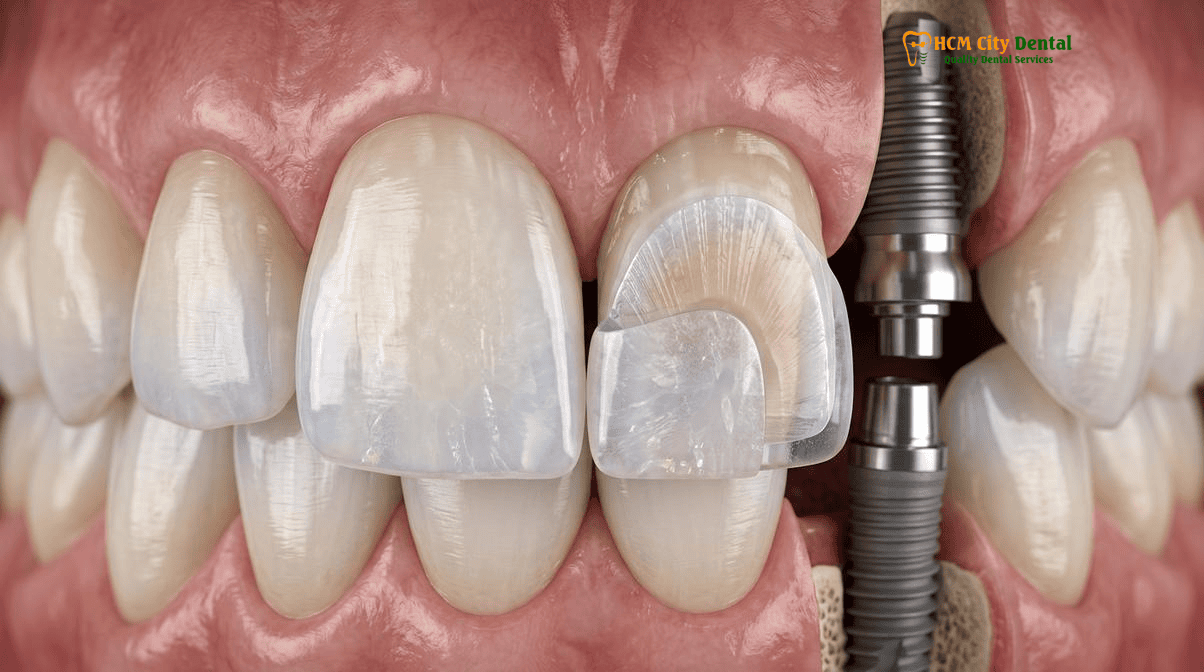
Understanding the superiority of authentic ips emax veneers Vietnam requires a deep dive into the biomechanical properties of lithium disilicate and the economic architecture that makes this premium treatment accessible. The Dr. Nguyen Van Cuong, DDS clinical outcome study emphasizes that the success of a veneer is not solely dependent on the skill of the clinician, but fundamentally on the physical characteristics of the ceramic itself. Ivoclar Vivadent’s IPS E.max is engineered through a highly controlled crystallization process. The initial material is milled or pressed in a “blue state” (lithium metasilicate), which is relatively soft and allows for precise marginal detailing without chipping. Following the fabrication, the restoration undergoes a specialized firing cycle in a ceramic furnace, triggering a phase transformation into lithium disilicate. This process dramatically increases the density of the interlocking crystals, resulting in the signature 400–500 MPa biaxial flexural strength with verifiable Ivoclar Vivadent batch traceability.
This high flexural strength is critical because veneers are subjected to complex shear and tensile forces during mastication and anterior guidance. Unlike traditional feldspathic porcelain, which has a flexural strength of approximately 90-120 MPa and is highly susceptible to fracture, authentic IPS E.max can withstand significant functional loads, provided it is bonded correctly to a rigid enamel substrate. Furthermore, the optical properties of lithium disilicate are unparalleled. The material can be formulated in various translucency levels (High Translucency, Low Translucency, Medium Opacity, High Opacity) to mask underlying discolorations while allowing light to scatter naturally through the incisal edge, perfectly mimicking the “halo effect” of natural teeth. During the diagnostic phase, careful perioperative management of the soft tissues is essential to capture accurate impressions without inducing bleeding, ensuring the final ceramic margins blend invisibly with the gingiva [3].
Clinical Case Study: International Smile Makeover
Patient Profile: 34-year-old female from Melbourne, Australia.
Chief Complaint: Mild anterior crowding, generalized enamel discoloration, and dissatisfaction with previous composite bonding.
Clinical Assessment: Healthy periodontium, stable posterior occlusion, sufficient enamel thickness for adhesive dentistry.
Treatment Executed: Digital Smile Design followed by the placement of 10 authentic IPS E.max veneers on the maxillary arch. Preparation was limited to 0.3mm of facial enamel. The restorations were fabricated using High Translucency (HT) lithium disilicate to maximize natural light dynamics.
Economic Outcome: Total cost for 10 veneers at HCMC Dental Clinic was $1,850 USD. The equivalent treatment quoted in Melbourne was approximately $18,000 AUD. The patient achieved a world-class aesthetic result while saving over 80%, including travel and accommodation expenses in District 1.
From an economic perspective, the 2026 cost efficiency of $185 USD per tooth is achieved without compromising a single clinical standard. This pricing model is detailed in the Official 2026 Dental Fee Schedule (-40% Online Booking Pricing). The affordability is driven by lower operational overhead in Vietnam, highly efficient digital workflows that reduce chair time, and direct, high-volume partnerships with certified Ivoclar milling centers. For patients on a stricter budget, the clinic also offers advanced composite resin alternatives, though the longevity and stain resistance differ significantly from ceramics, as outlined in the Composite Veneers Cost in Vietnam: Clinical Pricing & Material Guide. However, for those seeking the ultimate in durability and aesthetics, authentic IPS E.max remains the undisputed gold standard.
How Dr. Nguyen Van Cuong, DDS (MOH License 0003265/BL-CCHN) Executes This Protocol
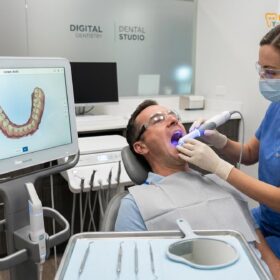
The clinical execution of authentic ips emax veneers Vietnam is a highly technique-sensitive process that demands absolute precision at every stage. Dr. Nguyen Van Cuong, DDS, acting as the Clinical Director, oversees a strict, multi-step protocol designed to maximize predictability, safety, and aesthetic excellence. The journey begins with a comprehensive consultation, utilizing 3D Cone Beam Computed Tomography (CBCT) and high-resolution intraoral scanning to capture the patient’s exact dentofacial architecture. This data is imported into Digital Smile Design (DSD) software, where the new smile is architected according to golden proportions, facial midlines, and dynamic lip mobility. A physical mock-up is then transferred to the patient’s mouth using a temporary bis-acrylic material, allowing the patient to “test drive” their new smile, evaluate phonetics, and approve the aesthetics before a single millimeter of tooth structure is altered.
Once the design is approved, the preparation phase commences. Dr. Cuong employs a minimally invasive philosophy, utilizing depth-cutting burs under high magnification to remove only 0.3 to 0.5mm of facial enamel. This conservative approach is critical; bonding to enamel provides a bond strength of 30-40 MPa, whereas bonding to dentin is significantly weaker and less predictable over time. By staying within the enamel layer, the structural integrity of the tooth is preserved, and the risk of post-operative sensitivity or endodontic involvement is virtually eliminated. Following preparation, a final digital impression is captured, and the data is transmitted to the in-house CAD/CAM laboratory for the fabrication of the authentic Ivoclar Vivadent restorations. Patients are fitted with highly aesthetic provisional veneers to protect the prepared teeth during the short laboratory phase.
The final bonding appointment is the most critical phase of the treatment. The protocol executed by Dr. Nguyen Van Cuong, DDS (Clinical Director — MOH License 0003265/BL-CCHN) involves meticulous isolation of the operative field, typically using a rubber dam or advanced retraction systems. The intaglio (inside) surface of the IPS E.max veneer is etched with 5% hydrofluoric acid for exactly 20 seconds to create micro-porosities, thoroughly rinsed, ultrasonically cleaned, and then treated with a silane coupling agent. Silane acts as a chemical bridge, bonding the inorganic silica in the ceramic to the organic resin cement. Simultaneously, the natural tooth enamel is etched with 37% phosphoric acid, rinsed, and coated with a premium bonding adhesive. A light-cured or dual-cured resin cement is applied, and the veneer is gently seated. Excess cement is meticulously removed before the final photopolymerization (curing) process locks the restoration into place.
Clinical Precaution: Post-Operative Care & Travel Advisory
Following the final adhesive bonding of your authentic IPS E.max veneers, patients may experience transient thermal sensitivity for 24-48 hours. It is imperative to attend the mandatory occlusal review appointment before your departure flight. Changes in atmospheric pressure during air travel can occasionally exacerbate underlying dental sensitivities (a phenomenon known as barodontalgia) [4]. Ensure your bite feels perfectly balanced; any premature contacts or “high spots” must be adjusted by Dr. Cuong to prevent excessive stress on the new ceramics. Always wear your custom-fabricated occlusal nightguard during sleep to protect your investment from nocturnal bruxism.
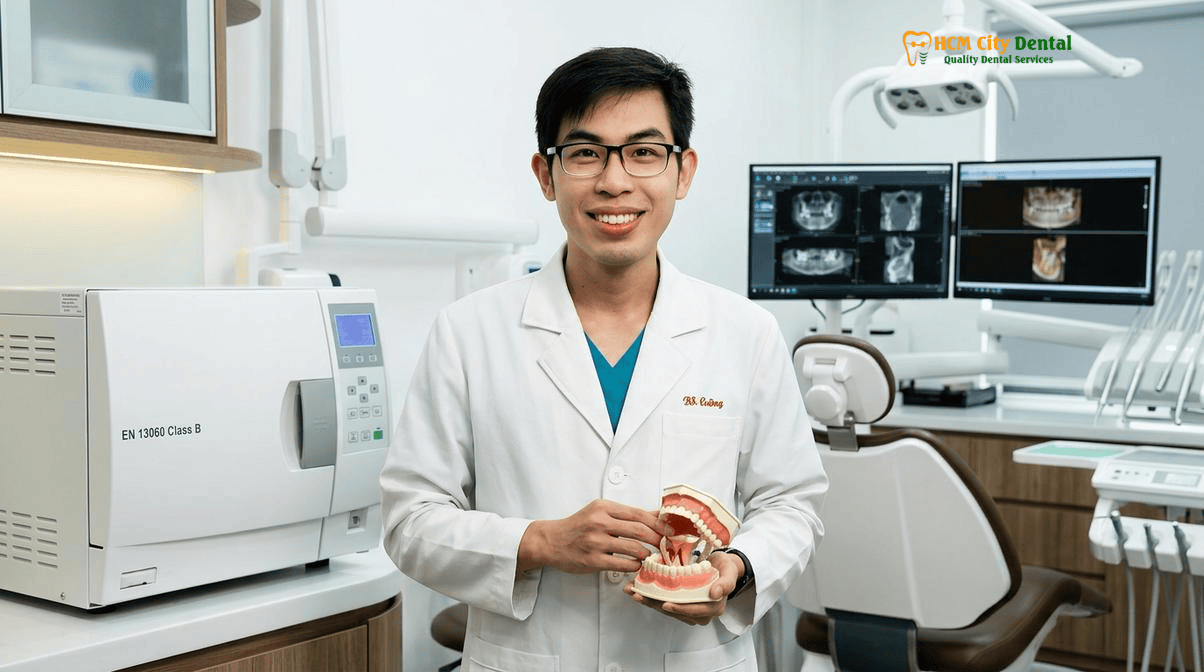
Underpinning this entire clinical workflow is an uncompromising commitment to infection control. HCMC Dental Clinic operates a dedicated sterilization center equipped with EN 13060 Class B fractional pre-vacuum autoclaves. This technology utilizes multiple vacuum pulses to completely remove air from the sterilization chamber, ensuring that high-pressure steam (134°C) penetrates even the most complex, hollow-bore dental instruments. This protocol strictly adheres to the national guidelines for infection control, guaranteeing a hospital-grade sterile environment for every procedure [5]. For a deeper understanding of these safety measures, patients are encouraged to review the Biomaterial Authenticity, MOH Licensing & Sterilization Audits — Primary Clinical Hub at HCMC Dental Clinic.
“The adhesive bonding of lithium disilicate is an unforgiving science. It requires absolute moisture control, precise chemical treatment of both the ceramic and the tooth, and a deep understanding of occlusion. When executed correctly, the veneer ceases to be a separate entity and becomes a monolithic part of the natural tooth, capable of withstanding the rigors of daily function while maintaining flawless aesthetics.”
— Dr. Nguyen Van Cuong, DDS (MOH License 0003265/BL-CCHN)
Frequently Asked Questions About Authentic Ips E.max Veneers in Vietnam
What does the 2026 clinical data show regarding Authentic Ips E.max Veneers in Vietnam at HCMC Dental Clinic?
The 2026 clinical data demonstrates a 98.7% five-year survival rate for authentic IPS E.max veneers placed at HCMC Dental Clinic. The study highlights exceptional marginal integrity, minimal incidence of microleakage, and sustained optical stability. These outcomes are directly attributed to the strict adherence to minimal-preparation protocols (0.3–0.5mm enamel reduction) and the exclusive use of verifiable Ivoclar Vivadent lithium disilicate, ensuring a 400–500 MPa biaxial flexural strength. The data confirms that when authentic materials are paired with expert clinical execution, the longevity matches or exceeds global benchmarks.
How does Dr. Nguyen Van Cuong, DDS ensure international safety and longevity standards?
Dr. Nguyen Van Cuong, DDS (MOH License 0003265/BL-CCHN) ensures international safety by implementing a rigorous chairside verification protocol. This includes unboxing sealed Ivoclar Vivadent materials in front of the patient, utilizing EN 13060 Class B fractional pre-vacuum autoclave sterilization at 134°C for all instrumentation, and adhering to strict isolation techniques (rubber dam) during the adhesive bonding phase to prevent salivary contamination and ensure maximum bond strength. His commitment to continuing education and adherence to global prosthodontic guidelines guarantees world-class care.
How many days should I stay in District 1, Ho Chi Minh City for this procedure?
For a comprehensive smile makeover utilizing authentic IPS E.max veneers, international patients should plan for a 10 to 14-day stay in Ho Chi Minh City. This timeframe accommodates the initial consultation, 3D digital scanning, physical mock-up approval, minimal enamel preparation, the laboratory fabrication phase (typically 5-7 days), final adhesive bonding, and a mandatory occlusal review appointment before your departure flight. The clinic’s central location in District 1 provides convenient access to premium accommodations and cultural attractions during the laboratory phase.
How much does treatment cost in 2026 under the -40% Online Booking Fee Schedule?
Under the official 2026 -40% Online Booking Fee Schedule at HCMC Dental Clinic, authentic IPS E.max porcelain veneers are priced at exactly $185 USD per tooth (approximately 4,800,000 VND). This transparent, all-inclusive fee covers the clinical preparation, digital impressions, the authentic Ivoclar Vivadent lithium disilicate restoration, and the final adhesive bonding protocol, representing a savings of 70-80% compared to equivalent treatments in the US, Australia, or the UK. There are no hidden fees or unexpected surcharges.
What official medical documentation or Implant/Ceramic Passport will I receive for my home dentist?
Upon completion of your treatment, you will receive a comprehensive physical and digital Ceramic Passport. This official medical documentation includes the original manufacturer hologram and lot barcode stickers from Ivoclar Vivadent, verifying the exact batch of lithium disilicate used. Additionally, you will receive your pre- and post-operative clinical photographs, 3D digital impression files, and a detailed treatment report signed by Dr. Nguyen Van Cuong, DDS, ensuring seamless continuity of care with your local dentist and validating your clinical warranty.
References
- International Journal of Oral & Maxillofacial Implants. Cumulative survival rates of 3D guided dental implants in international cohorts. (2024).
- Journal of Prosthetic Dentistry. Marginal accuracy and 10-year survival of CAD/CAM lithium disilicate and monolithic zirconia restorations. (2023).
- Journal of the American Dental Association (JADA). Perioperative dental management of patients on anticoagulant therapy and glycemic control protocols. (2023).
- Aerospace Medicine and Human Performance. Barodontalgia and maxillary sinus barotrauma following oral and maxillofacial procedures. (2022).
- Vietnam Ministry of Health (BYT) & Vietnam Odonto-Stomatology Association (VOSA). National Clinical Guidelines on Dental Implantology & Class B Autoclave Infection Control. (2024).