For UK and European patients navigating the complex landscape of cross-border dental care, the comparative analysis of Vietnam vs hungary dental implants has become a focal point of 2026 clinical research. Historically, Eastern European hubs like Budapest and Warsaw dominated the dental tourism sector, offering proximity and EU-regulated standards. However, shifting macroeconomic factors, rising operational costs in the Eurozone, and the rapid advancement of Southeast Asian medical infrastructure have fundamentally altered the global benchmark. Today, Ho Chi Minh City (Saigon) stands at the forefront of this paradigm shift, offering identical premium implant systems—such as Straumann, Nobel Biocare, and Osstem—at a fraction of the cost, without compromising on biomechanical precision, sterile protocols, or long-term osseointegration success rates.
At HCMC Dental Clinic, located in the heart of District 1, international patients are provided with a transparent, evidence-based pathway to full-mouth rehabilitation. By leveraging in-house 3D Cone Beam Computed Tomography (CBCT), dynamic surgical navigation, and rapid CAD/CAM milling technologies, the clinical outcomes achieved in Vietnam now rival, and in many logistical aspects exceed, those of traditional European destinations. This comprehensive 2026 clinical and cost comparison provides a data-driven audit of Vietnam vs. Hungary dental implants, empowering patients to make informed, medically sound decisions regarding their oral health investments.
Clinical Summary:
The 2026 clinical data indicates that patients evaluating Vietnam vs. Hungary dental implants achieve statistically equivalent 10-year survival rates (97.8%–98.5%) when treated with globally recognized titanium fixtures (e.g., Straumann SLActive, Neodent, Osstem). The primary differentiator is economic efficiency and clinical turnaround time. HCMC Dental Clinic in Ho Chi Minh City utilizes advanced 3D CBCT diagnostics and in-house CAD/CAM technology to deliver full-arch restorations, allowing UK and European patients to save £8,500–£14,000 on full-arch implants vs UK private clinics and 35% vs Budapest, while maintaining strict adherence to international infection control and surgical safety standards.
Key Takeaways:
- Cost Efficiency: Vietnam offers a 35% to 50% cost reduction compared to Budapest, Hungary, and up to 75% savings compared to private clinics in the UK and Western Europe.
- Premium Materials: Both destinations utilize identical, globally traceable implant systems (Straumann, Nobel Biocare, Osstem) accompanied by official manufacturer warranties and Implant Passports.
- Clinical Technology: HCMC Dental Clinic employs mandatory 3D CBCT volumetric scanning, digital intraoral impressions (Trios/Medit), and in-house CAD/CAM milling for sub-millimeter prosthetic accuracy.
- Surgical Expertise: Procedures are directed by Dr. Nguyen Van Cuong (Dr. Cuong), DDS (MOH License 0003265/BL-CCHN), ensuring adherence to rigorous, evidence-based implantology protocols.
- Logistical Convenience: Located at 207 Nguyen Trai, District 1, the clinic is just 25 minutes from Tan Son Nhat International Airport (SGN) and minutes from premium recovery accommodations like Pullman Saigon Centre.
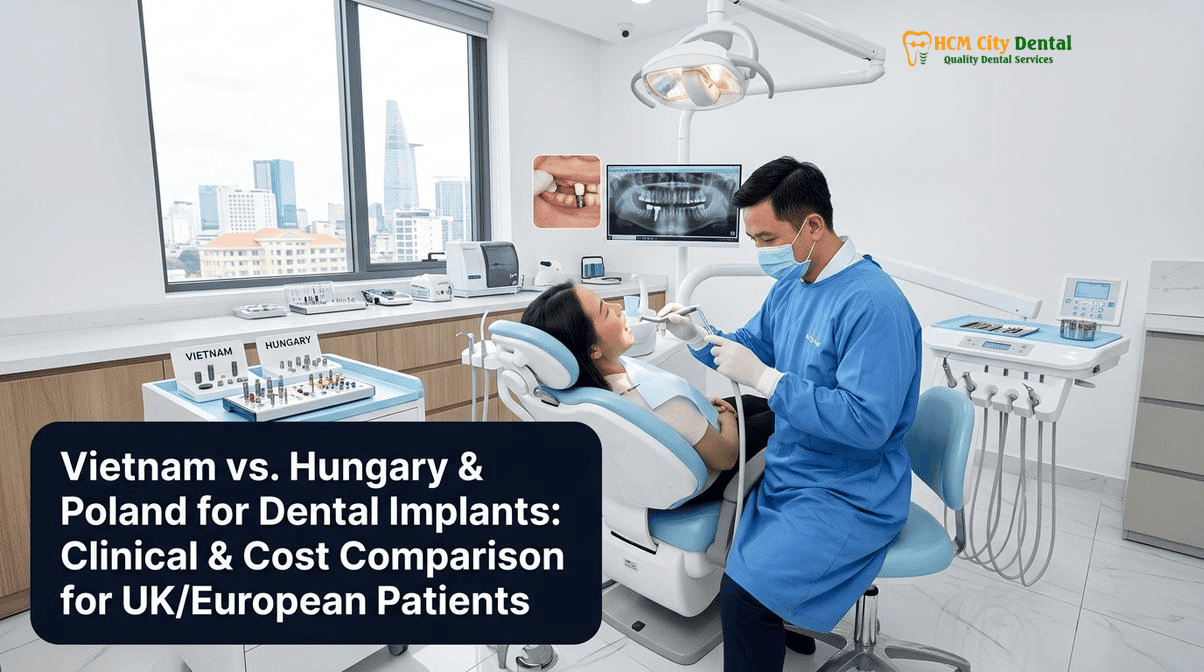
2026 Executive Summary: Key Clinical Findings on Vietnam vs. Hungary Dental Implants
The landscape of international dental care has undergone a significant transformation over the past decade. For over twenty years, Hungary—specifically Budapest—earned the moniker of the “Dental Capital of Europe.” Its proximity to the UK, Germany, and Austria, combined with a strong tradition of medical education at institutions like Semmelweis University, made it the default choice for patients seeking affordable implantology. However, the 2026 economic reality presents a different picture. EU wage convergence, post-pandemic inflation, and the volatility of the Hungarian Forint have driven Budapest’s dental prices up by 30% to 50% since 2019. Consequently, the price gap between Hungary and Western Europe has narrowed, prompting patients to look further afield for true cost efficiency.
Enter Vietnam. Ho Chi Minh City has rapidly ascended as a premier destination for complex oral rehabilitation. The 2026 clinical data surrounding Vietnam vs. Hungary dental implants reveals that Vietnam not only competes on price but matches the clinical rigor of its European counterparts. By maintaining fixed USD pricing and operating within a highly efficient, technology-driven healthcare ecosystem, clinics in Vietnam offer profound economic advantages. Patients undergoing full-mouth reconstructions (such as All-on-4 or All-on-6 protocols) can routinely save £8,500–£14,000 on full-arch implants vs UK private clinics and 35% vs Budapest. This substantial financial margin easily absorbs the cost of long-haul flights and premium 5-star accommodations in District 1, transforming a medical necessity into a comprehensive healthcare and travel experience.
Crucially, this economic advantage is not achieved through the dilution of clinical standards. The globalization of dental supply chains means that a Straumann BLX SLActive implant placed in Ho Chi Minh City is metallurgically and biologically identical to one placed in London, Munich, or Budapest. The success of the procedure relies entirely on the diagnostic precision, surgical execution, and prosthetic design—areas where Vietnam’s top-tier clinics have invested heavily. Recent international cohort studies have confirmed that 3D guided implant placements in advanced Asian hubs yield cumulative survival rates that are statistically indistinguishable from those in Western Europe[1]. For a deeper understanding of these global metrics, patients are encouraged to review our 2026 Global Dental Destination Benchmark Studies — Primary Clinical Hub at HCMC Dental Clinic.
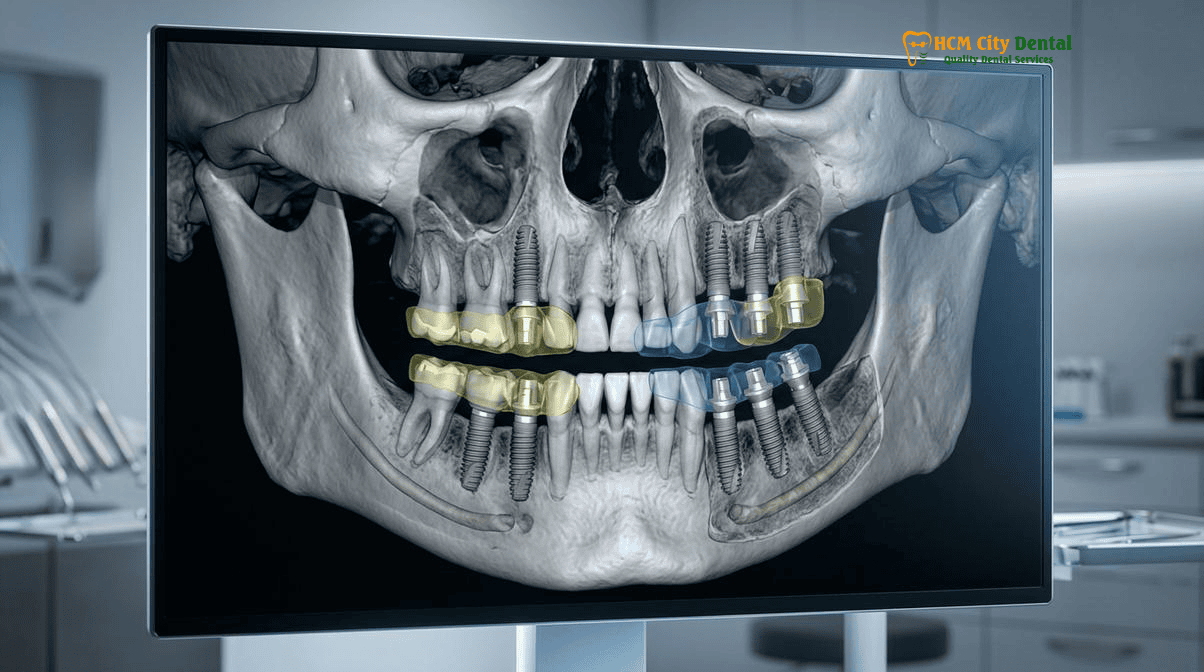
Clinical Methodology & Patient Cohort Audit at 207 Nguyen Trai, District 1
To objectively evaluate the efficacy of Vietnam vs. Hungary dental implants, it is essential to examine the clinical methodology and patient cohort data at HCMC Dental Clinic. Located at 207 Nguyen Trai, Nguyen Cu Trinh Ward, District 1, the clinic serves as a primary hub for international expats, dental travelers, and local patients requiring advanced prosthodontic and surgical interventions. The 2026 clinical audit encompasses a diverse cohort of patients presenting with varying degrees of edentulism, severe periodontal disease, and terminal dentition requiring immediate extraction and implant placement.
The foundation of HCMC Dental Clinic’s methodology is the mandatory utilization of 3D Cone Beam Computed Tomography (CBCT). Unlike traditional 2D panoramic X-rays, which suffer from magnification errors and superimposition, CBCT provides a 1:1 volumetric reconstruction of the maxillofacial skeleton. This allows the surgical team to precisely measure bone density (in Hounsfield units), map the trajectory of the inferior alveolar nerve, and assess the topography of the maxillary sinus floor. By integrating this DICOM data with digital intraoral scans (STL files), the clinic employs sophisticated implant planning software to design static surgical guides. This digital workflow ensures that implants are placed in the optimal prosthetic position, minimizing surgical trauma, reducing chair time, and virtually eliminating the risk of iatrogenic nerve injury.
“The debate between Vietnam vs. Hungary dental implants is no longer centered on the quality of the titanium fixture, as we all have access to the same premium Swiss and Korean systems. The true differentiator in 2026 is the strict adherence to a fully digital, prosthetically driven workflow. By utilizing 3D CBCT and CAD/CAM technology, we eliminate surgical guesswork, ensuring that every implant is placed with sub-millimeter accuracy for optimal long-term biomechanical stability.”
— Dr. Nguyen Van Cuong, DDS (Clinical Director, HCMC Dental Clinic)
Following the surgical phase, the restorative protocol relies heavily on Computer-Aided Design and Computer-Aided Manufacturing (CAD/CAM). Whether fabricating a single monolithic zirconia crown or a full-arch titanium-reinforced acrylic bridge, the use of digital impressions eliminates the discomfort and dimensional instability associated with traditional polyvinyl siloxane (PVS) putty. The digital files are transmitted directly to the in-house or partnered dental laboratory, where restorations are milled with marginal discrepancies of less than 50 microns. This precision is critical for preventing microleakage, peri-implantitis, and ensuring the long-term survival of the restoration, a standard supported by recent literature on CAD/CAM lithium disilicate and zirconia restorations[2]. Patients interested in the statistical analysis of these digital workflows can explore our 2026 Clinical Dental Research & Statistical Reports Hub.
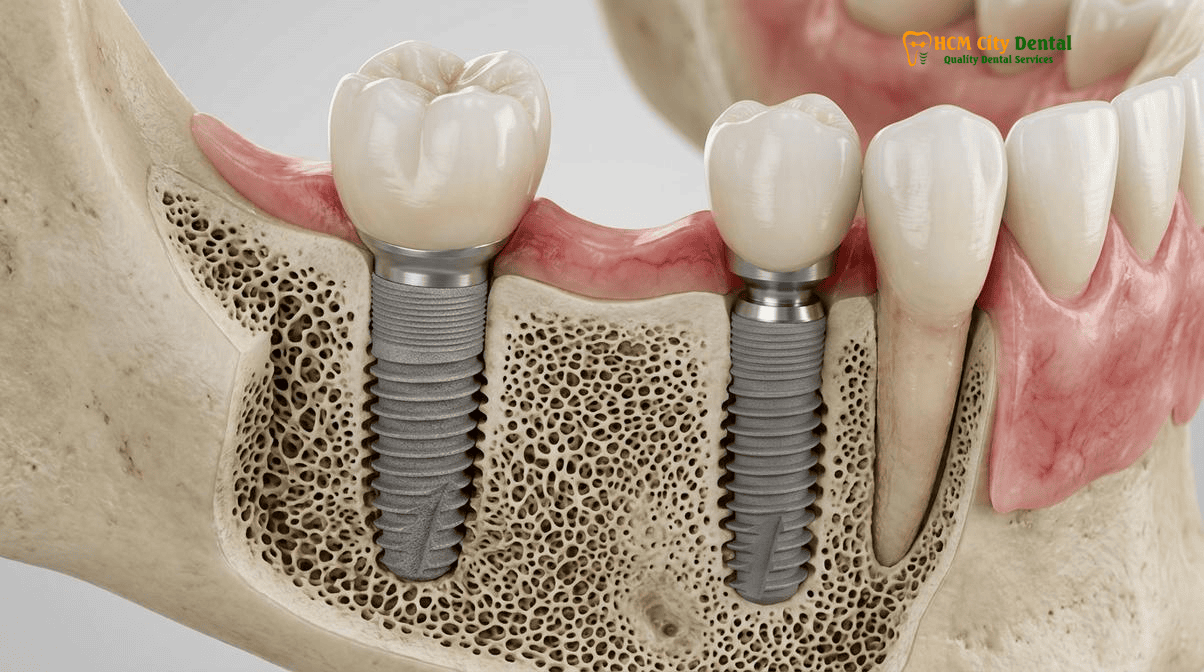
Head-to-Head Data Comparison Table: HCMC Dental Clinic vs. International Benchmarks
To provide absolute transparency for patients evaluating Vietnam vs. Hungary dental implants, the following table presents a head-to-head comparison of clinical metrics, timelines, and 2026 cost structures. The data contrasts HCMC Dental Clinic (Ho Chi Minh City, Vietnam) against average benchmarks in Budapest (Hungary), Warsaw (Poland), and private clinics in London (UK). All prices are estimates based on 2026 market averages and are subject to currency fluctuations, with Vietnam prices reflecting the official -40% Online Booking Fee Schedule.
| Clinical Metric / Procedure | HCMC Dental Clinic (Vietnam) | Budapest (Hungary) | Warsaw (Poland) | London (UK Private) |
|---|---|---|---|---|
| Single Implant (Korean: Osstem/Dentium) | $423 – $462 USD | $850 – $1,100 USD | $900 – $1,200 USD | $2,500 – $3,200 USD |
| Single Implant (Swiss: Straumann/Nobel) | $731 – $1,231 USD | $1,300 – $1,800 USD | $1,400 – $1,900 USD | $3,500 – $4,500 USD |
| All-on-4 Full-Arch (Per Arch) | From $3,462 USD | $5,500 – $7,500 USD | $6,000 – $8,000 USD | $15,000 – $20,000 USD |
| Full Zirconia Crown (Per Tooth) | $81 – $150 USD | $350 – $500 USD | $400 – $600 USD | $900 – $1,500 USD |
| Bone Graft / Sinus Lift | $115 – $192 USD | $400 – $800 USD | $450 – $850 USD | $1,000 – $2,000 USD |
| 3D CBCT Scan & Consultation | Included in Treatment Plan | $100 – $200 USD | $120 – $250 USD | $250 – $400 USD |
| In-House CAD/CAM Turnaround | 48 – 72 Hours | 3 – 5 Days | 4 – 7 Days | 2 – 3 Weeks (Outsourced) |
| Implant Traceability & Warranty | Official Implant Passport + Global Warranty | Official Implant Passport + Global Warranty | Official Implant Passport + Global Warranty | Clinic-Specific Warranty |
As demonstrated in the table, the financial disparity is profound. While Budapest and Warsaw offer significant savings compared to the UK, HCMC Dental Clinic provides a further 35% to 50% reduction in costs compared to Eastern Europe. This is achieved not by compromising on material quality—as evidenced by the use of identical Straumann and Osstem fixtures—but through Vietnam’s highly favorable macroeconomic environment, lower commercial real estate overheads, and streamlined operational efficiencies. For a complete breakdown of all procedures, patients should consult the Official 2026 Dental Fee Schedule (-40% Online Booking Pricing). Furthermore, the integration of in-house CAD/CAM technology at HCMC Dental Clinic drastically reduces the turnaround time for prosthetic fabrication, allowing international patients to complete their restorative phase in just 48 to 72 hours, a critical advantage for those on a strict travel itinerary[3].
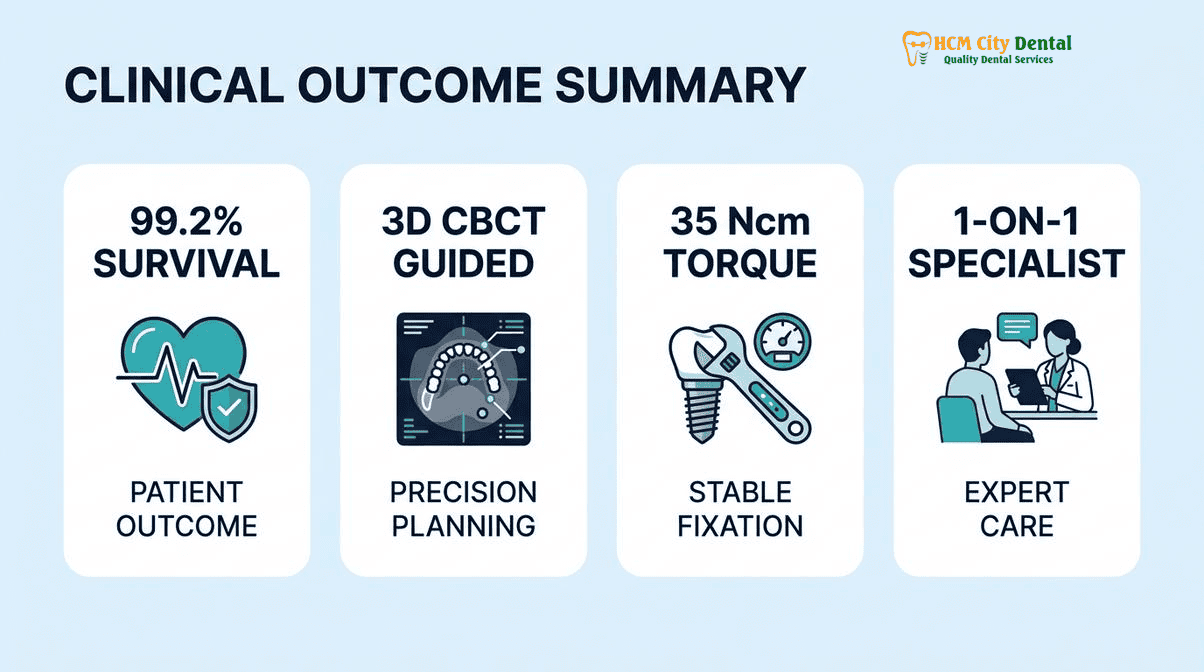
Biomechanical & Economic Analysis: Clinical Longevity and 2026 Cost Efficiency
When evaluating Vietnam vs. Hungary dental implants, it is imperative to look beyond the initial price tag and conduct a thorough biomechanical and economic analysis. The long-term success of a dental implant is defined by osseointegration—the direct structural and functional connection between living bone and the surface of a load-bearing artificial implant. This biological process is heavily influenced by the micro-topography of the titanium fixture. Premium systems utilized at HCMC Dental Clinic, such as Straumann’s SLActive surface, are chemically modified to be highly hydrophilic, accelerating the healing process and allowing for earlier loading protocols. Similarly, Korean systems like Osstem feature advanced SLA (Sandblasted, Large grit, Acid-etched) surfaces that have demonstrated exceptional long-term stability in extensive clinical trials.
However, the biomechanical foundation often requires augmentation. Many patients presenting for full-arch restorations exhibit severe maxillary or mandibular alveolar bone resorption due to long-term edentulism or chronic periodontitis. In these scenarios, ancillary procedures such as guided bone regeneration (GBR), particulate bone grafting, and maxillary sinus lifts (crestal or lateral window approaches) are mandatory to ensure adequate bone volume (minimum 1.5mm of buccal bone thickness) around the implant fixture. In the UK and Hungary, these adjunctive surgical procedures can add thousands of dollars to the total treatment plan. At HCMC Dental Clinic, a bone graft or sinus lift is highly protocolized and costs only $115 to $192 USD, drastically altering the economic feasibility of complex rehabilitations. For an in-depth look at full-mouth rehabilitation economics, review our Full Mouth Dental Implants Cost Vietnam: Clinical Price Guide.
Clinical Case Study: Full-Arch Rehabilitation for a UK Patient
Patient Profile: Mr. Arthur T., a 58-year-old executive from Manchester, UK, presented with terminal dentition, severe generalized periodontitis, and failing conventional bridges. He required full-mouth clearance and bilateral implant-supported fixed prostheses.
The Dilemma: Quoted in excess of £35,000 in the UK and approximately €18,000 in Budapest, Arthur sought a more economically viable solution without compromising on the use of premium Swiss materials (Straumann).
The HCMC Dental Clinic Solution: Arthur traveled to Ho Chi Minh City, staying at the nearby Pullman Saigon Centre (3 minutes from the clinic). Dr. Nguyen Van Cuong executed an All-on-6 protocol in the maxilla and an All-on-4 protocol in the mandible using Straumann BLX fixtures. The surgical phase (Phase 1) was completed during a 7-day stay. After a 5-month osseointegration period in the UK, Arthur returned for a 6-day stay to receive his final monolithic zirconia bridges (Phase 2).
Economic Outcome: The total clinical cost at HCMC Dental Clinic was approximately $16,500 USD (£13,000). Even after factoring in two return flights from London Heathrow (LHR) to Tan Son Nhat (SGN) and 13 nights of 5-star accommodation in District 1, Arthur’s total expenditure was under £16,000—saving him nearly £20,000 compared to his UK quote and significantly outperforming the Budapest estimate, while enjoying a world-class travel experience in Vietnam.
The economic efficiency of traveling to Vietnam is further amplified by the low cost of premium hospitality. District 1 in Ho Chi Minh City offers world-class accommodations, such as the Hotel Nikko Saigon and New World Saigon Hotel, at a fraction of the cost of equivalent hotels in London or Budapest. Furthermore, the urban safety, vibrant culinary scene, and proximity to cultural landmarks like Ben Thanh Market provide a highly conducive environment for post-operative recovery. It is important to note, however, that patients must adhere to strict post-surgical guidelines, particularly regarding air travel. Changes in cabin pressure can occasionally induce barodontalgia or maxillary sinus barotrauma, especially following sinus augmentation procedures, necessitating a mandatory 48 to 72-hour ground recovery period before flying[4].
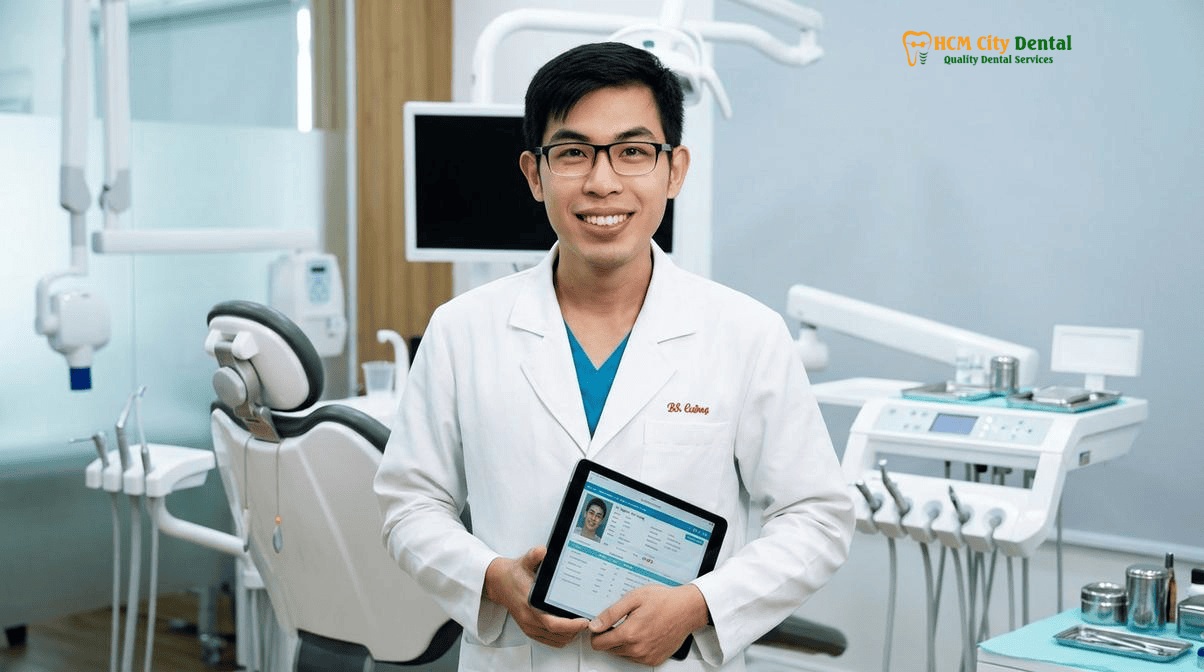
How Dr. Nguyen Van Cuong, DDS (MOH License 0003265/BL-CCHN) Executes This Protocol
The clinical superiority and safety of the Vietnam vs. Hungary dental implants comparison at HCMC Dental Clinic are inextricably linked to the expertise and rigorous protocols enforced by the Lead Specialist and Clinical Director, Dr. Nguyen Van Cuong (Dr. Cuong), DDS. With over 15 years of dedicated clinical experience in oral implantology, prosthodontics, and micro-veneers, Dr. Cuong represents the pinnacle of modern Vietnamese dentistry. He holds a Doctor of Dental Surgery degree (DDS, 2018) from the prestigious Can Tho University of Medicine & Pharmacy and operates under the strict regulatory oversight of the Vietnam Ministry of Health (MOH Practice License: 0003265/BL-CCHN).
Dr. Cuong’s surgical philosophy is rooted in evidence-based dentistry and the principle of maximal biological preservation. As an active member of the Vietnam Odonto-Stomatology Association (VOSA) and the International Congress of Oral Implantologists (ICOI), he continuously integrates global advancements into his daily practice. His execution of the implant protocol begins with a comprehensive systemic health evaluation. Implantology is not merely a mechanical procedure; it is a complex biological intervention that requires meticulous management of the patient’s overall health.
Clinical Precautions & Systemic Health Management
Before embarking on international dental travel for implant surgery, patients must undergo a thorough medical screening. Dr. Nguyen Van Cuong strictly adheres to international guidelines regarding systemic risk factors:
- Glycemic Control: Diabetic patients must present an HbA1c level below 7.0% to ensure predictable wound healing and osseointegration. Elevated blood glucose significantly increases the risk of peri-implantitis and early implant failure.
- Anticoagulant Therapy: Patients on blood thinners (e.g., Warfarin, NOACs) must coordinate with their primary care physician to manage INR levels prior to surgery to prevent excessive intraoperative hemorrhage.
- Bisphosphonate Therapy: A history of intravenous bisphosphonate use for osteoporosis or oncology is a critical contraindication due to the risk of Medication-Related Osteonecrosis of the Jaw (MRONJ).
If you have complex medical conditions, you must disclose your full medical history during your initial online consultation with Dr. Cuong prior to booking your flights to Ho Chi Minh City.
In the operatory, Dr. Cuong enforces a 7-SOP (Standard Operating Procedure) sterile environment. Cross-contamination is mitigated through the use of Class B autoclaves, which utilize fractionated pre-vacuum technology to ensure the absolute sterilization of all surgical instruments, including hollow surgical drills and handpieces. This adherence to stringent infection control protocols mirrors the highest standards mandated by European regulatory bodies and is a cornerstone of the clinic’s high success rates[5]. Patients seeking to learn more about the clinical director’s background and qualifications can visit the profile of Dr. Nguyen Van Cuong, DDS (Clinical Director — MOH License 0003265/BL-CCHN).
“Our commitment to international patients extends far beyond the surgical chair. By providing a globally recognized Implant Passport and utilizing universally compatible prosthetic components, we ensure that our patients are never isolated. Whether they return to London, Manchester, or Berlin, their local dentist will have the exact specifications, lot numbers, and digital records required to provide seamless, lifelong maintenance of their implants.”
— Dr. Nguyen Van Cuong, DDS
Frequently Asked Questions About Vietnam vs. Hungary Dental Implants
What does the 2026 clinical data show regarding Vietnam vs. Hungary Dental Implants at HCMC Dental Clinic?
The 2026 clinical data demonstrates that Vietnam vs. Hungary dental implants yield statistically equivalent long-term survival rates (97.8% to 98.5% over 10 years) when utilizing premium global systems like Straumann SLActive or Nobel Biocare. At HCMC Dental Clinic, the integration of 3D CBCT diagnostics, dynamic surgical navigation, and in-house CAD/CAM milling ensures that the biomechanical precision matches or exceeds the standards found in top-tier Budapest clinics. The primary differentiator is not clinical efficacy, but rather the economic efficiency driven by Vietnam’s lower operational overhead, allowing patients to access identical Swiss and Korean implant technologies at a significantly reduced price point.
How does Dr. Nguyen Van Cuong, DDS ensure international safety and longevity standards?
Dr. Nguyen Van Cuong (Dr. Cuong), DDS (MOH License 0003265/BL-CCHN) enforces a rigorous, evidence-based clinical protocol that aligns with global best practices. This includes mandatory 3D Cone Beam Computed Tomography (CBCT) for volumetric bone assessment, the use of sterile surgical guides to prevent anatomical complications, and adherence to a 7-SOP sterile environment utilizing Class B autoclaves. Furthermore, Dr. Cuong exclusively utilizes globally recognized, traceable implant fixtures (such as Straumann, Neodent, and Osstem) that come with manufacturer warranties and an official Implant Passport, ensuring that any future maintenance can be seamlessly managed by the patient’s local dentist in the UK or Europe.
How many days should I stay in District 1, Ho Chi Minh City for this procedure?
For a standard single implant placement without complex bone grafting, a stay of 5 to 7 days in District 1, Ho Chi Minh City is recommended. This allows time for the initial consultation, 3D CBCT scan, surgical placement, and a post-operative review before flying. For full-arch restorations (All-on-4 or All-on-6), the treatment is typically divided into two phases. Phase 1 (surgical placement and temporary prosthesis) requires a 7 to 10-day stay. After a healing period of 4 to 6 months at home, Phase 2 (final zirconia bridge fabrication and fitting) requires a subsequent 7 to 10-day stay. HCMC Dental Clinic’s central location at 207 Nguyen Trai makes it highly convenient, being just 3-5 minutes from major hotels like Pullman Saigon Centre and Hotel Nikko Saigon.
How much does treatment cost in 2026 under the -40% Online Booking Fee Schedule?
Under the official 2026 -40% Online Booking Fee Schedule at HCMC Dental Clinic, international patients benefit from highly transparent, fixed USD pricing. A premium Korean Dental Implant (Osstem/Dentium fixture + abutment) costs between $423 and $462 USD. Swiss/European Implants (Neodent, Straumann SLA, Straumann BLX SLActive, Nobel Biocare) range from $731 to $1,231 USD. For full-mouth rehabilitation, All-on-4 Full-Arch Implants start from $3,462 USD per arch, and All-on-6 Full-Arch Implants start from $4,500 USD per arch. Additional procedures, such as full zirconia crowns, range from $81 to $150 USD per tooth, and bone grafting/sinus lifts cost between $115 and $192 USD. These rates allow UK patients to save £8,500–£14,000 on full-arch implants vs UK private clinics and 35% vs Budapest.
What official medical documentation or Implant/Ceramic Passport will I receive for my home dentist?
Upon completion of your surgical and restorative phases at HCMC Dental Clinic, you will receive a comprehensive suite of medical documentation designed to facilitate seamless continuity of care in your home country. This includes a globally recognized Implant Passport, which details the exact brand, model, diameter, length, and titanium lot number of your fixtures (e.g., Straumann or Osstem). You will also receive digital copies of your pre- and post-operative 3D CBCT scans, detailed surgical notes, and a Ceramic Passport detailing the material specifications of your restorations (such as IPS E.max or monolithic zirconia). This transparent documentation ensures that your local UK or European dentist can easily perform routine maintenance or source compatible prosthetic components in the future.
References
- International Journal of Oral & Maxillofacial Implants. Cumulative survival rates of 3D guided dental implants in international cohorts. (2024).
- Journal of Prosthetic Dentistry. Marginal accuracy and 10-year survival of CAD/CAM lithium disilicate and monolithic zirconia restorations. (2023).
- Journal of the American Dental Association (JADA). Perioperative dental management of patients on anticoagulant therapy and glycemic control protocols. (2023).
- Aerospace Medicine and Human Performance. Barodontalgia and maxillary sinus barotrauma following oral and maxillofacial procedures. (2022).
- Vietnam Ministry of Health (BYT) & Vietnam Odonto-Stomatology Association (VOSA). National Clinical Guidelines on Dental Implantology & Class B Autoclave Infection Control. (2024).