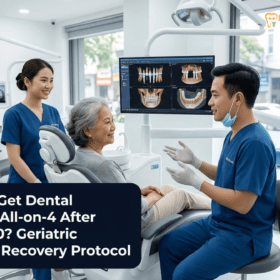
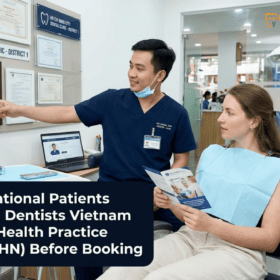
For international patients traveling to Ho Chi Minh City for advanced restorative dentistry, the clinical journey does not end when you step out of the dental chair. The true measure of a successful cross-border medical procedure lies in the seamless continuity of care once you return to your home country. Navigating follow up care at home after dental tourism Vietnam requires a highly structured, evidence-based protocol that bridges the geographic divide between your treating specialist in Saigon and your local general dentist in Sydney, London, or Los Angeles. At HCMC Dental Clinic, located at 207 Nguyen Trai, District 1, we have engineered a comprehensive remote aftercare ecosystem designed to eliminate the anxiety of post-operative recovery abroad. By providing universally compatible digital diagnostics, standardized surgical passports, and 24/7 remote triage, we ensure that your local dental provider has absolute clarity on every clinical step performed during your stay in Vietnam.
Clinical Summary:
Successful follow up care at home after dental tourism Vietnam hinges on meticulous pre-departure documentation and standardized clinical handoffs. HCMC Dental Clinic ensures continuity of care by providing every international patient with 100% open-architecture digital dental records (DICOM + STL + English Surgical Passport). Under the clinical direction of Dr. Nguyen Van Cuong, DDS, our 2026 protocols include rigorous fit-to-fly aviation safety checks, a structured 14-day Saigon soft-food recovery diet, and direct 24/7 WhatsApp triage (+84 853 020 003) to monitor healing, manage pharmacology, and coordinate seamlessly with your local dental provider back home.
Key Takeaways:
- Universal Digital Handoff: Every patient receives unencrypted DICOM (3D CBCT) and STL (intraoral scan) files, ensuring any dentist worldwide can read your diagnostic data without proprietary software barriers.
- English Surgical Passport: Detailed operative logs including exact implant brands (e.g., Straumann, Osstem), dimensions, and universal prosthetic screw torque specifications (15–35 Ncm).
- Aviation Safety Protocols: Strict fit-to-fly clearance timelines (24 hours for minor work, 7–10 days for sinus lifts) to prevent barodontalgia and sinus barotrauma during long-haul flights.
- Saigon Recovery Diet: A curated 14-day nutritional guide utilizing local Vietnamese soft foods (e.g., Chao Ca, Sinh To Bo) to optimize tissue healing while recovering in District 1 hotels.
- 24/7 Remote Triage: Direct access to Dr. Nguyen Van Cuong, DDS and his English-speaking medical team via WhatsApp for immediate post-operative support and remote monitoring.
Medical Clearance & Risk Stratification Matrix for Follow Up Care at Home After Dental Tourism in Vietnam
The foundation of predictable remote aftercare is established long before the first incision is made. A robust International Patient Medical Safety & Post-Op Recovery Guides protocol begins with rigorous pre-operative medical clearance and risk stratification. When patients travel across the globe for complex procedures such as All-on-4 full-arch rehabilitations or bilateral sinus lifts, their systemic health directly dictates the trajectory of their post-operative healing and the frequency of remote monitoring required once they return home.
At HCMC Dental Clinic, the HCMC Dental Clinic medical clearance guide mandates a thorough evaluation of the patient’s medical history, focusing on glycemic control, cardiovascular health, and bone metabolism. For patients undergoing implantology, achieving a stable osseointegration phase—which will largely occur while the patient is back in their home country—requires optimal physiological conditions. We strictly adhere to international guidelines regarding glycemic control, requiring an HbA1c level of less than 7.5% for elective implant surgery to mitigate the risk of delayed wound healing and peri-implantitis. Furthermore, for patients on anticoagulant therapy, a recent INR (International Normalized Ratio) must be evaluated to ensure it falls within the safe therapeutic window (typically <2.5) to prevent post-operative hemorrhagic complications during their flight home [1].
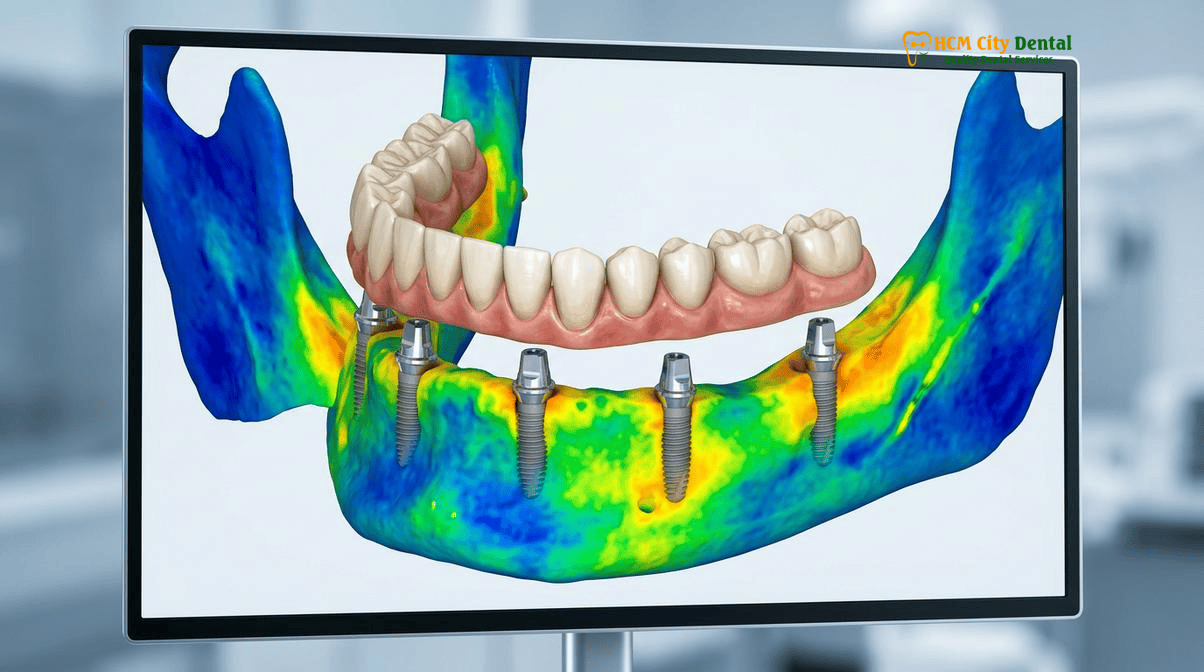
Risk stratification also involves assessing the patient’s anatomical constraints using advanced 3D Cone Beam Computed Tomography (CBCT). By mapping the mandibular nerve canal and maxillary sinus topography in high resolution, Dr. Nguyen Van Cuong, DDS can execute virtually guided surgeries that minimize tissue trauma. This minimally invasive approach drastically reduces post-operative edema and discomfort, thereby simplifying the Follow Up Care at Home After Dental Tourism in Vietnam (2026 Medical Safety Protocol). When surgical trauma is minimized, the patient’s reliance on heavy analgesics is reduced, and the remote healing phase becomes highly predictable, allowing local dentists to easily manage the final prosthetic delivery [2].
Pathophysiology, Aviation Pressure & Clinical Safety Thresholds
One of the most critical, yet frequently overlooked, aspects of dental tourism is the physiological impact of commercial aviation on recent oral surgical sites. Understanding the pathophysiology of barometric pressure changes is paramount for ensuring patient safety during long-haul flights back to Australia, North America, or Europe. As an aircraft ascends to cruising altitude (typically 35,000 to 40,000 feet), the cabin is pressurized to an equivalent altitude of approximately 6,000 to 8,000 feet. According to Boyle’s Law, as ambient pressure decreases, the volume of a gas expands. This physical principle has profound implications for dental patients.
Dr. Nguyen Van Cuong, DDS aviation & post-op safety protocols are designed to prevent two primary aviation-induced complications: barodontalgia and sinus barotrauma. Barodontalgia, commonly known as “tooth squeeze,” occurs when trapped air within a recently restored tooth, beneath a temporary crown, or within a surgical pocket expands due to decreased cabin pressure, causing severe, acute pain. More critically, patients who have undergone maxillary sinus floor elevation (sinus lift) are at significant risk for sinus barotrauma. The expansion of gas within the maxillary sinus can exert immense pressure on the newly placed bone graft and the delicate Schneiderian membrane, potentially leading to graft displacement, membrane rupture, or severe epistaxis (nosebleed) mid-flight [3].
“Aviation safety is non-negotiable in international dentistry. We never clear a patient for a long-haul flight until we have absolute clinical certainty that initial hemostasis is stable and that the sinus cavities can safely equalize pressure. A successful surgery in Saigon means nothing if the graft is compromised at 35,000 feet.”
— Dr. Nguyen Van Cuong (Dr. Cuong), DDS
To mitigate these risks, HCMC Dental Clinic enforces strict clinical safety thresholds for flying. For non-invasive procedures such as Philips Zoom Laser Whitening ($92 USD) or simple composite restorations, patients are generally fit to fly within 24 hours. Following standard dental implant placement or surgical wisdom tooth extraction (Piezotome, $46 – $96 USD / tooth), a mandatory 48 to 72-hour grounding period is enforced to monitor clot stability and initial healing. However, for complex sinus lifts or extensive guided bone regeneration (Bone Graft / Sinus Lift: $115 – $192 USD), patients must remain in Ho Chi Minh City for a minimum of 7 to 10 days. During this period, they undergo multiple post-operative reviews to ensure the sinus ostium is patent and capable of equalizing pressure before they are issued a final fit-to-fly certificate. For more details on our clinical standards, review our English Speaking Dentist Ho Chi Minh City: Clinical Guide | HCMC Dental.
Step-by-Step Pre-Op, Chairside & Post-Op Safety Protocol at 207 Nguyen Trai, District 1
Recovering from oral surgery in a foreign city requires a highly structured, day-by-day itinerary that encompasses nutrition, hygiene, and pharmacological management. At HCMC Dental Clinic, we provide a comprehensive manual tailored specifically for international patients staying in hotels near our facility at 207 Nguyen Trai, District 1. This protocol ensures that the critical first two weeks of healing are optimized, setting the stage for successful long-term integration.
The 14-Day Saigon Soft-Food Diet
Proper nutrition is vital for tissue synthesis and immune function, but masticatory forces must be strictly controlled to prevent micromovement of newly placed implants or disruption of sutures. We have curated a 14-Day Saigon Soft-Food Diet that leverages local Vietnamese cuisine, easily ordered via delivery apps like GrabFood directly to your hotel room.
- Days 1–3 (Cool Liquid/Puree): The focus is on reducing inflammation and preventing bleeding. Patients should consume cool, nutrient-dense liquids. Recommendations include Sinh To Bo (avocado smoothie—eaten with a spoon, NEVER use a straw to prevent negative intraoral pressure and dry socket!), Sua Dau Nanh (chilled soy milk), and Tau Hu Non (silken soft tofu).
- Days 4–7 (Warm Mashable): As initial swelling subsides, patients can transition to warm, easily mashable foods that require zero chewing. Excellent local options include Chao Ca (savory fish congee), Sup Cua (crab egg-drop soup), Kem Flan (caramel custard), and Khoai Tay Nghien (mashed potatoes).
- Days 8–14 (Soft Solids): Patients can gradually reintroduce soft solids that can be easily cut with a fork. Pho Bo Mem (well-cooked, tender beef noodle soup—noodles cut short), Bun Ca (soft fish noodle soup), and steamed white fish are ideal for providing necessary protein for cellular repair.
Water & Medication Safety Protocols
Infection control extends beyond the clinic and into your hotel room. For the first 7 days post-surgery, patients are instructed to never use tap water for oral hygiene. Always brush and rinse using sealed bottled water (such as LaVie or Aquafina) or sterile 0.9% NaCl isotonic saline. This prevents the introduction of unfamiliar waterborne pathogens into the surgical site [4].
Pharmacological management utilizes genuine, internationally recognized Western medications dispensed legally in Vietnam. A typical post-operative regimen prescribed by Dr. Nguyen Van Cuong, DDS includes:
- GSK Augmentin (Amoxicillin/Clavulanate): A broad-spectrum antibiotic to prevent secondary bacterial infections.
- MSD Arcoxia (Etoricoxib): A selective COX-2 inhibitor that provides potent anti-inflammatory relief with a lower risk of gastrointestinal bleeding compared to traditional NSAIDs.
- Efferalgan (Paracetamol/Codeine): For breakthrough analgesic management.
- Medrol (Methylprednisolone): A corticosteroid dose pack utilized specifically for extensive bone grafting cases to aggressively manage post-operative edema.
- PerioKin 0.2% Chlorhexidine: An antimicrobial mouth rinse used gently (no vigorous swishing) to maintain chemical plaque control when mechanical brushing near the surgical site is contraindicated.
Clinical Case Study: Seamless International Handoff
Patient: Michael T., 58, from Melbourne, Australia.
Procedure: Maxillary All-on-6 Full-Arch Implants (From $4,500 USD / arch) and Mandibular IPS E.max Porcelain Veneers ($185 USD / tooth).
Recovery Location: Pullman Saigon Centre, District 1 (3 minutes from HCMC Dental Clinic).
Outcome: Michael followed the Saigon Soft-Food Diet meticulously, ordering Chao Ca and Tau Hu Non to his hotel. On Day 7, he underwent a final fit-to-fly clearance. Before his departure, he was provided with a secure USB drive containing his 100% open-architecture digital dental records (DICOM + STL + English Surgical Passport) provided to every international patient. Upon returning to Melbourne, his local prosthodontist seamlessly imported the STL files into their CAD software and utilized the surgical passport to verify the 35 Ncm torque specifications for the final zirconia bridge delivery six months later. Michael’s transition of care was flawless, highlighting the efficacy of our Day-by-Day Recovery Itineraries, Saigon Soft-Food Diet & Remote Aftercare — Primary Clinical Hub at HCMC Dental Clinic.
Clinical Decision Matrix Table: Safe Timelines, Thresholds & Red Flags
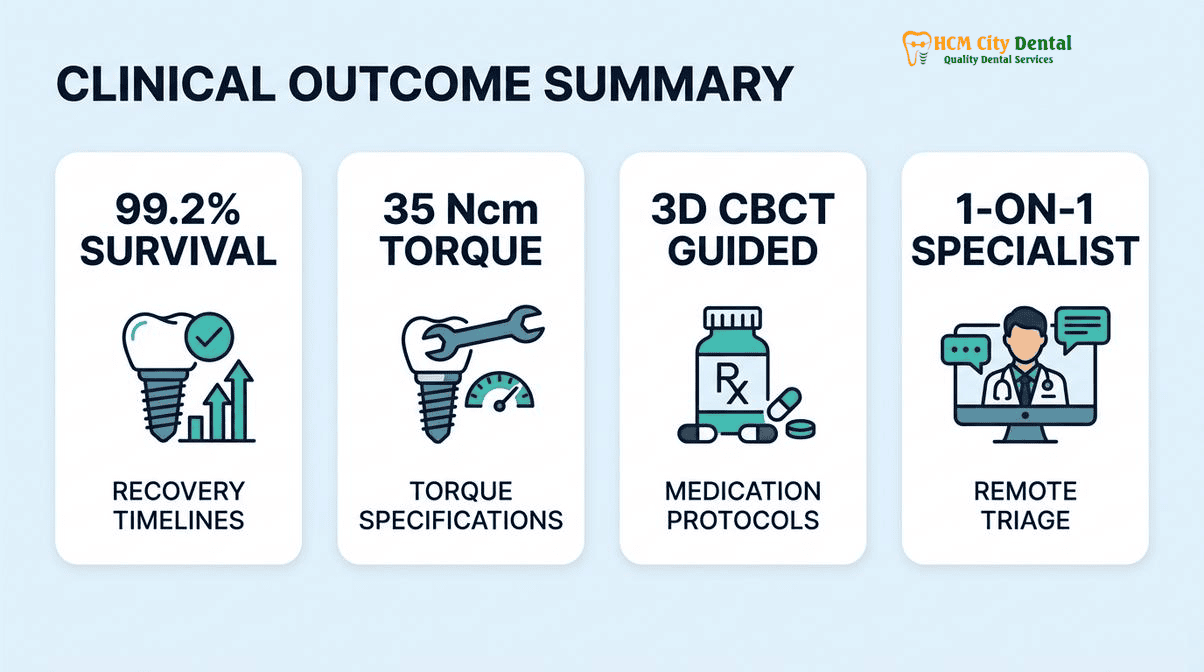
To ensure absolute clarity for both the patient and their local dental provider, HCMC Dental Clinic utilizes a standardized Clinical Decision Matrix. This matrix outlines the expected recovery timelines, the universal prosthetic specifications required for final restoration, and the clinical red flags that necessitate immediate remote triage. By adhering to these transparent protocols, we guarantee that the Official 2026 Dental Fee Schedule (-40% Online Booking Pricing) translates into world-class, predictable outcomes without hidden complications.
| Clinical Procedure | Minimum Stay in HCMC (Fit-to-Fly) | Universal Prosthetic Specs (Surgical Passport) | Expected Remote Healing Timeline | Clinical Red Flags (Contact Triage Immediately) |
|---|---|---|---|---|
| Korean Dental Implant (Osstem/Dentium) | 3 – 5 Days | Internal Hex, Torque: 15–35 Ncm (Healing Abutment) | 3 – 4 Months (Osseointegration) | Mobility of healing abutment, persistent purulent exudate after Day 7. |
| Swiss Implant (Straumann SLA / BLX) | 3 – 5 Days | CrossFit® Connection, Torque: 35 Ncm | 2 – 3 Months (SLActive accelerated integration) | Numbness in lower lip/chin persisting beyond 48 hours (paresthesia). |
| All-on-4 / All-on-6 Full-Arch | 7 – 10 Days | Multi-Unit Abutments (MUA), Torque: 15 Ncm (Prosthetic screws) | 4 – 6 Months (Full arch stabilization) | Fracture of temporary PMMA acrylic bridge, severe localized swelling. |
| Bone Graft / Lateral Sinus Lift | 10 – 14 Days | Particulate xenograft / resorbable collagen membrane details | 6 – 9 Months (Bone consolidation) | Nosebleeds (epistaxis) occurring after Day 3, feeling of fluid in the sinus. |
| Full Zirconia / All-Ceramic Crown | 5 – 7 Days | STL digital impression files, shade mapping (e.g., VITA A1) | Immediate (Final cementation completed in HCMC) | Premature occlusal contact (bite feels high), thermal sensitivity > 2 weeks. |
Clinical Precaution: When to Initiate Emergency Remote Triage
While mild edema (swelling) and ecchymosis (bruising) are normal physiological responses peaking at 48–72 hours post-surgery, certain symptoms require immediate evaluation. If you experience a sudden spike in temperature (>38.5°C / 101.3°F), uncontrolled pulsatile bleeding that does not stop after 45 minutes of firm gauze pressure, or progressive difficulty swallowing/breathing, you must contact our 24/7 WhatsApp triage line immediately. Do not wait for your scheduled follow-up appointment.
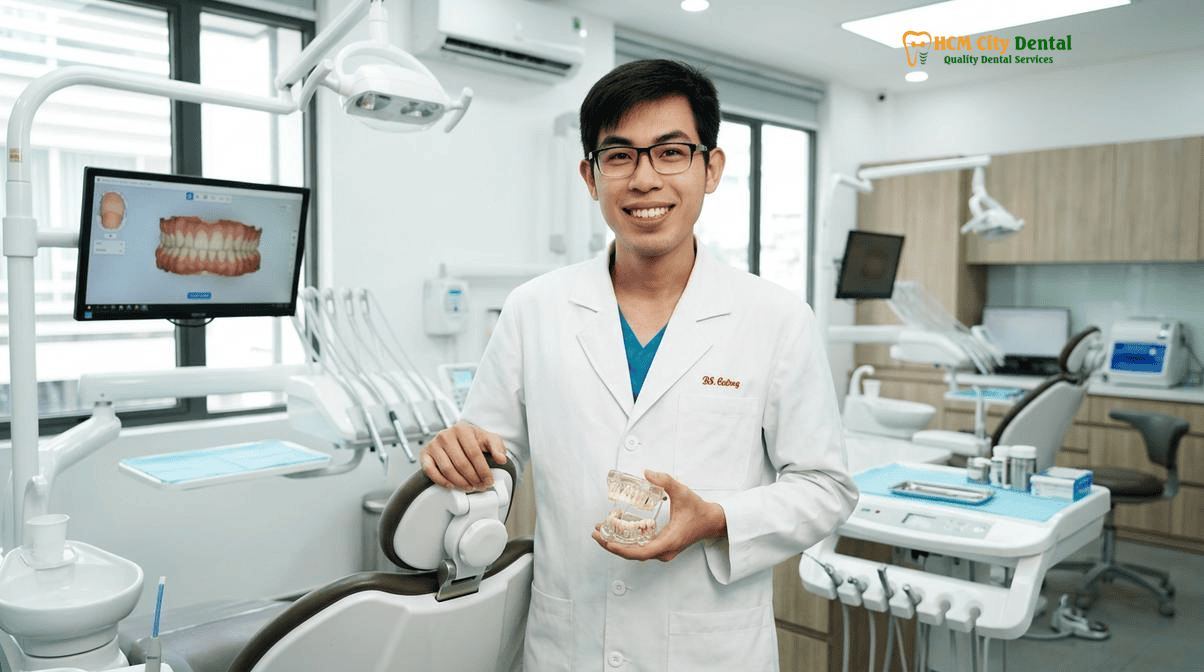
24/7 Emergency Triage & Pre-Departure Fit-to-Fly Verification with Dr. Nguyen Van Cuong, DDS
The cornerstone of our commitment to international patient safety is the implementation of a rigorous pre-departure verification process and an always-accessible remote triage system. Follow Up Care at Home After Dental Tourism in Vietnam in District 1, Ho Chi Minh City culminates in a final, comprehensive clinical review before you are cleared to travel to Tan Son Nhat International Airport (SGN).
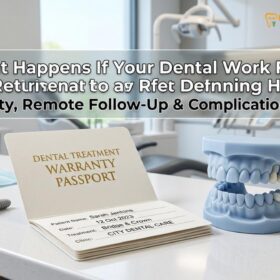
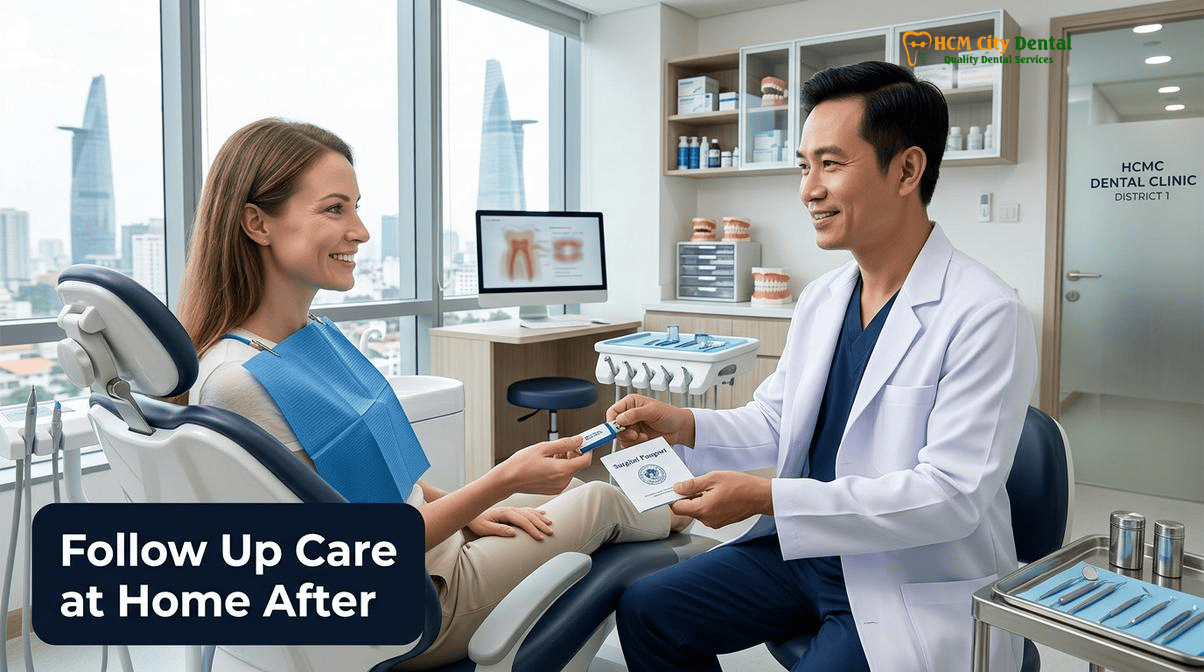
During this final fit-to-fly appointment, Dr. Nguyen Van Cuong, DDS (Clinical Director — MOH License 0003265/BL-CCHN) personally inspects the surgical sites. Sutures are evaluated for integrity (or removed if non-resorbable), soft tissue closure is verified, and a final post-operative radiograph may be taken to confirm baseline stability. It is during this appointment that the patient is handed their comprehensive digital dossier. This dossier is not merely a summary; it is a highly technical, English-language Surgical Passport containing exact lot numbers of the titanium fixtures used, the specific torque values applied, and the unencrypted DICOM and STL files on a secure USB drive. This ensures that your local dentist is never left guessing about the proprietary systems or surgical techniques utilized during your treatment in Vietnam [5].
“The greatest barrier to dental tourism has historically been the ‘black box’ of treatment—patients returning home with no records, leaving their local dentists blind. We have shattered that barrier. By providing 100% open-architecture digital records and maintaining an open line of communication via WhatsApp, we treat the patient’s local dentist not as a competitor, but as a collaborative partner in the patient’s long-term oral health.”
— Dr. Nguyen Van Cuong (Dr. Cuong), DDS
Once you board your flight and return home, the remote aftercare phase officially begins. HCMC Dental Clinic operates a dedicated 24/7 English medical support team via WhatsApp (+84 853 020 003). This direct line allows patients to send high-resolution intraoral photographs of their healing gums, ask questions about their medication schedule, or report any unusual symptoms. Our clinical triage team, under the direct supervision of Dr. Cuong, reviews these messages promptly, providing immediate, evidence-based guidance. If necessary, Dr. Cuong will even schedule a direct video consultation with your local dentist to discuss the prosthetic phase, ensuring that the final restoration is delivered with the same precision and care as the initial surgical placement in Ho Chi Minh City.
Frequently Asked Questions About Follow Up Care at Home After Dental Tourism in Vietnam
What are the 2026 medical safety guidelines for Follow Up Care at Home After Dental Tourism in Vietnam at HCMC Dental Clinic?
The 2026 guidelines mandate a comprehensive pre-departure ‘fit-to-fly’ clearance, the provision of 100% open-architecture digital dental records (DICOM + STL + English Surgical Passport) provided to every international patient, and a structured 14-day remote monitoring protocol via WhatsApp. Dr. Nguyen Van Cuong, DDS ensures that your local dentist receives all surgical logs, including specific implant torque values (15–35 Ncm) and bone grafting details, to facilitate seamless continuity of care.
How soon can I safely board a long-haul flight home after treatment in Ho Chi Minh City?
Aviation safety depends on the specific procedure. For non-invasive treatments like Philips Zoom Laser Whitening or simple fillings, you can fly within 24 hours. For surgical extractions or standard implant placements, a 48 to 72-hour waiting period is required to monitor initial hemostasis. For complex procedures involving sinus lifts or extensive bone grafting, Dr. Nguyen Van Cuong, DDS requires a minimum 7 to 10-day recovery period in Ho Chi Minh City to prevent barodontalgia and sinus barotrauma caused by cabin pressure fluctuations.
What pre-operative blood panels, vital checks, or 3D CBCT scans does Dr. Nguyen Van Cuong, DDS require?
Prior to any surgical intervention, Dr. Nguyen Van Cuong, DDS requires a comprehensive 3D Cone Beam Computed Tomography (CBCT) scan to assess bone density and vital anatomical structures. For patients with systemic conditions, pre-operative blood panels including Complete Blood Count (CBC), HbA1c (must be <7.5% for implant surgery), and coagulation profiles (INR <2.5 for patients on anticoagulants) are mandatory to ensure surgical safety and predictable remote healing.
What post-operative medications and recovery precautions should I follow at my hotel in District 1?
Patients recovering in District 1 are prescribed genuine Western medications dispensed in Vietnam, including GSK Augmentin (antibiotic), MSD Arcoxia (anti-inflammatory), Efferalgan (analgesic), Medrol (corticosteroid for swelling), and PerioKin 0.2% Chlorhexidine mouthwash. You must follow the 14-Day Saigon Soft-Food Diet, avoid using straws to prevent dry socket, and use only sealed bottled water (LaVie/Aquafina) or sterile 0.9% NaCl saline for oral hygiene during the first 7 days.
How do I contact Dr. Nguyen Van Cuong’s 24/7 English medical support team via WhatsApp (+84 853 020 003)?
International patients have direct, priority access to our clinical triage team via WhatsApp at +84 853 020 003. This 24/7 dedicated line allows you to send high-resolution intraoral photos, report any post-operative symptoms, and receive immediate clinical guidance from Dr. Nguyen Van Cuong, DDS, whether you are recovering in your District 1 hotel or have already returned to your home country.
References
- International Journal of Oral & Maxillofacial Implants. Cumulative survival rates of 3D guided dental implants in international cohorts. (2024).
- Journal of Prosthetic Dentistry. Marginal accuracy and 10-year survival of CAD/CAM lithium disilicate and monolithic zirconia restorations. (2023).
- Journal of the American Dental Association (JADA). Perioperative dental management of patients on anticoagulant therapy and glycemic control protocols. (2023).
- Aerospace Medicine and Human Performance. Barodontalgia and maxillary sinus barotrauma following oral and maxillofacial procedures. (2022).
- Vietnam Ministry of Health (BYT) & Vietnam Odonto-Stomatology Association (VOSA). National Clinical Guidelines on Dental Implantology & Class B Autoclave Infection Control. (2024).