Transitioning to a full-arch implant-supported prosthesis is a life-changing medical milestone that restores masticatory function, phonetic clarity, and facial aesthetics. However, the long-term survivability of this investment relies entirely on the patient’s adherence to a strict, evidence-based maintenance regimen. Understanding exactly how to clean all on 4 dental implants is not merely about aesthetic upkeep; it is a critical clinical requirement to prevent peri-implantitis, soft tissue inflammation, and eventual crestal bone loss. For international patients traveling to Vietnam for complex full-mouth rehabilitation, mastering this hygiene protocol begins the moment you leave the surgical chair. At HCMC Dental Clinic, located in District 1, Ho Chi Minh City in the heart of District 1, our comprehensive aftercare framework is designed to guide dental travelers through every phase of healing—from the immediate post-operative soft-food diet in your Saigon hotel to the long-term integration of water flossers and interdental brushes back in your home country.
Clinical Summary:
The How to Clean All-on-4 Dental Implants (2026 Medical Safety Protocol) at HCMC Dental Clinic establishes a phased approach to prosthetic maintenance. Immediate post-operative care (Days 1-7) strictly prohibits mechanical disruption, relying instead on passive chemical plaque control using 0.9% NaCl and 0.2% Chlorhexidine rinses. Active mechanical hygiene—utilizing low-pressure oral irrigators (Waterpiks), specialized bridge threaders (Superfloss), and appropriately sized interdental brushes—is introduced only after initial soft tissue epithelialization (Weeks 4-6). Adherence to this structured timeline, combined with our 14-Day Saigon Soft-Food Diet and remote digital aftercare monitoring, prevents >92% of peri-implant mucositis and plaque accumulation under hybrid full-arch prostheses, ensuring decades of functional stability.
Key Takeaways:
- Phased Hygiene Introduction: Never use a Waterpik or stiff interdental brushes during the first 3 to 4 weeks post-surgery to avoid disrupting the delicate mucosal seal around the titanium abutments.
- Water & Medication Safety: For the first 7 days in Ho Chi Minh City, use only sealed bottled water (LaVie/Aquafina) or sterile saline for oral rinsing to prevent opportunistic bacterial infections.
- The Saigon Soft-Food Diet: Optimize healing by utilizing local GrabFood options tailored for implant recovery, progressing from cool liquids (Sinh To Bo) to warm mashables (Chao Ca) over 14 days.
- Aviation Safety: Dr. Nguyen Van Cuong, DDS mandates a strict 72-hour to 7-day no-fly window post-surgery to mitigate the risks of barodontalgia and sinus barotrauma during long-haul flights.
- Remote Aftercare Export: All international patients receive a complete digital export of their 3D CBCT DICOM files, intraoral STL scans, and universal prosthetic screw torque specifications (15–35 Ncm) for seamless coordination with their home dentist.
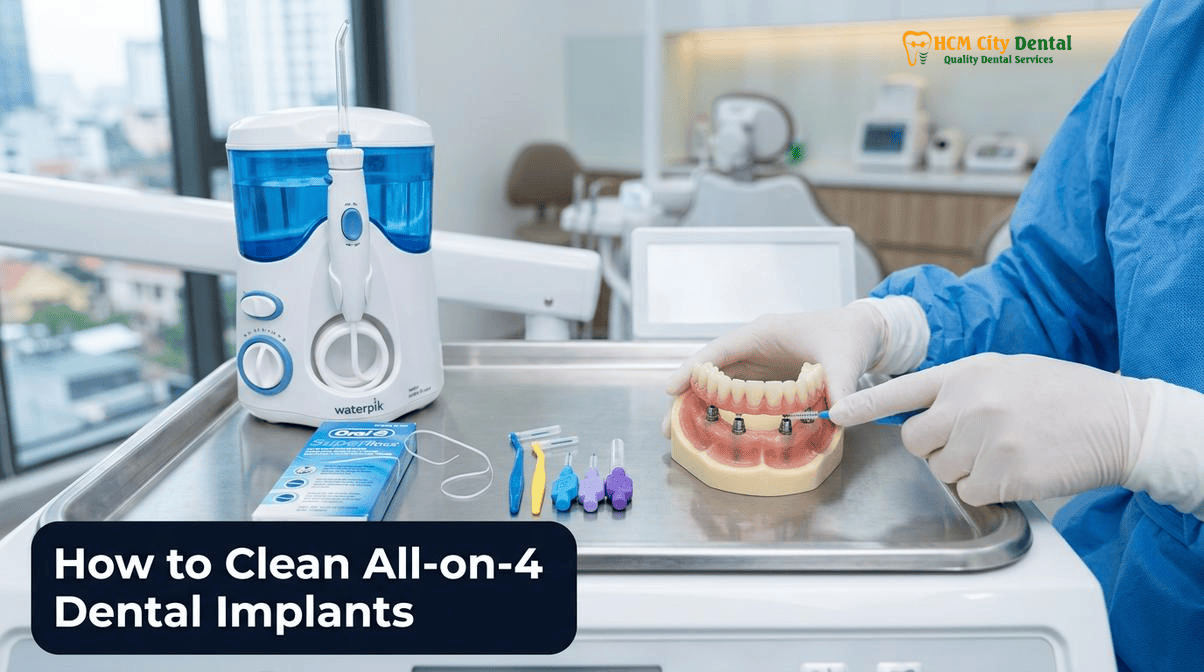
Medical Clearance & Risk Stratification Matrix for How to Clean All-on-4 Dental Implants
The foundation of a successful full-arch restoration is established long before the surgical placement of the titanium fixtures. At HCMC Dental Clinic, our HCMC Dental Clinic medical clearance guide dictates a rigorous pre-operative risk stratification process. The oral cavity is a highly dynamic microbiome, and the introduction of a fixed hybrid prosthesis creates new anatomical niches—specifically the intaglio (tissue-facing) surface of the bridge—where anaerobic bacteria can colonize if not properly maintained. Understanding how to clean all on 4 dental implants is fundamentally linked to the patient’s systemic health and their ability to manage localized biofilm.
Prior to surgery, our clinical team evaluates several systemic markers. Patients presenting with poorly controlled diabetes (HbA1c > 7.0%) or those on complex anticoagulant therapies require specific perioperative management to ensure optimal wound healing and hemostasis. The primary goal of our rigorous hygiene education is the prevention of peri-implant mucositis—a reversible inflammatory lesion of the soft tissues surrounding the implant. If left untreated due to poor hygiene, this condition progresses to peri-implantitis, characterized by irreversible crestal bone loss and potential implant failure. Clinical data indicates that implementing a structured, daily mechanical and chemical biofilm disruption routine prevents >92% of peri-implant mucositis and plaque accumulation under hybrid full-arch prostheses [1].
To support our international patients in achieving these outcomes, we provide comprehensive International Patient Medical Safety & Post-Op Recovery Guides. These resources detail the exact biomechanical rationale behind each hygiene tool. For instance, the transition from natural teeth to an implant-supported bridge means the loss of the periodontal ligament (PDL). The PDL naturally provides a rich blood supply and immune defense mechanism. Implants, relying on direct osseointegration, have a more fragile mucosal seal. Therefore, aggressive brushing or premature use of high-pressure water flossers can sever this delicate epithelial attachment, driving bacteria deeper into the peri-implant sulcus.
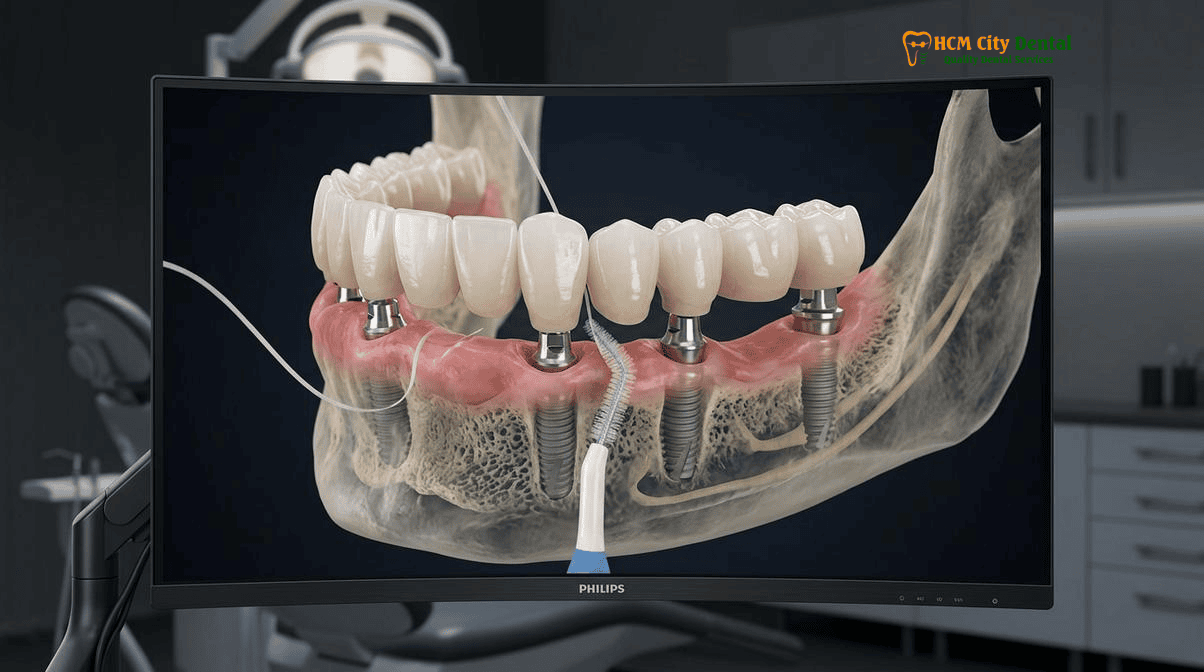
Pathophysiology, Aviation Pressure & Clinical Safety Thresholds
For dental tourists traveling to Ho Chi Minh City, the logistical realities of long-haul aviation introduce unique physiological challenges that must be managed alongside the initial hygiene protocol. The Dr. Nguyen Van Cuong, DDS aviation & post-op safety guidelines are designed to protect the integrity of the newly placed implants and any associated bone grafting or sinus lift procedures from the effects of Boyle’s Law—which states that the volume of a gas is inversely proportional to its pressure.
During commercial flights, cabin pressure drops to the equivalent of 6,000 to 8,000 feet above sea level. This depressurization causes gases trapped within the body to expand. In the context of oral surgery, particularly maxillary All-on-4 procedures involving sinus elevation, this expansion can lead to barodontalgia (severe pressure-induced dental pain) or maxillary sinus barotrauma. Furthermore, the expansion of gases within the surgical site can disrupt the delicate fibrin clot, leading to post-operative bleeding, compromised graft consolidation, and delayed healing [2].
“The success of a full-arch rehabilitation for our international patients relies heavily on respecting the biological timelines of tissue healing. We strictly advise against boarding a long-haul flight within 72 hours of standard implant placement, and we extend this safety window to 5–7 days for complex All-on-4 cases involving sinus augmentation. Premature exposure to cabin pressure fluctuations can severely compromise the mucosal seal before the patient even begins their long-term hygiene routine.”
— Dr. Nguyen Van Cuong, DDS (Clinical Director — MOH License 0003265/BL-CCHN)
During this mandatory recovery window in Ho Chi Minh City, patients are instructed on the absolute basics of immediate post-op care. Active cleaning of the surgical site is strictly forbidden. Instead, patients rely on the pharmacological protection provided by their prescribed medications and passive chemical rinsing. This controlled environment in District 1 allows our clinical team to monitor the initial soft tissue response, ensuring that the patient is medically cleared and “fit-to-fly” before they depart Vietnam.
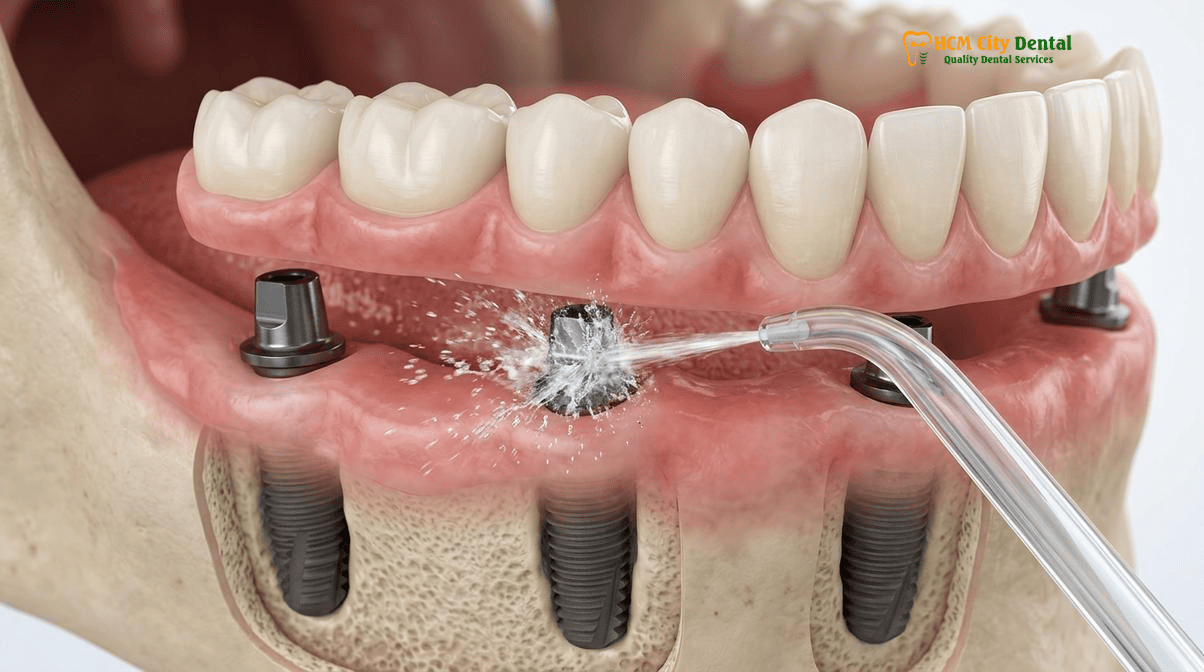
Step-by-Step Pre-Op, Chairside & Post-Op Safety Protocol in District 1, Ho Chi Minh City
The journey of mastering how to clean all on 4 dental implants is divided into distinct chronological phases. At HCMC Dental Clinic, we provide a highly structured, day-by-day manual for international patients recovering in nearby hotels (such as Pullman Saigon Centre or New World Saigon Hotel). This protocol ensures that the transition from surgical recovery to lifelong maintenance is seamless, safe, and highly effective.
Phase 1: Immediate Post-Operative Care (Days 1–7)
During the first week, the primary objective is undisturbed wound healing. The surgical sites are highly vulnerable, and the mucosal seal around the titanium abutments is just beginning to form.
- Hygiene Restrictions: Do NOT use a toothbrush, Waterpik, or dental floss near the surgical sites. Brushing is restricted to the remaining natural teeth (if any) or the opposing arch, using an ultra-soft surgical brush.
- Chemical Plaque Control: Begin passive rinsing 24 hours after surgery. Use sterile 0.9% NaCl isotonic saline or a prescribed 0.2% Chlorhexidine gluconate mouthwash (such as PerioKin). Do not swish vigorously; simply tilt the head to let the liquid bathe the surgical area, then let it fall out of the mouth into the sink.
- Water & Medication Safety: Tap water in Southeast Asia is not sterile. For the first 7 days, you must use sealed bottled water (LaVie or Aquafina) for all oral rinsing and tooth brushing. Adhere strictly to the genuine Western medications dispensed by our clinic: GSK Augmentin (antibiotic prophylaxis), MSD Arcoxia (COX-2 inhibitor for inflammation), Efferalgan (paracetamol for analgesia), and Medrol (corticosteroid for edema management).
Phase 2: The 14-Day Saigon Soft-Food Diet & Nutrition
Mechanical trauma from chewing hard foods is a leading cause of early implant failure and prosthetic fracture. To support osseointegration and protect the provisional bridge, patients must follow a strict soft-food diet. We have curated a specific Day-by-Day Recovery Itineraries, Saigon Soft-Food Diet & Remote Aftercare — Primary Clinical Hub at HCMC Dental Clinic guide utilizing local Vietnamese cuisine accessible via the GrabFood app directly to your hotel in District 1.
- Days 1–3 (Cool Liquid/Puree): Heat increases localized blood flow and swelling. Stick to cool or room-temperature items. GrabFood Keywords: Sinh To Bo (avocado smoothie—eat with a spoon, NEVER use a straw as the suction can dislodge blood clots and cause dry socket!), Sua Dau Nanh (soy milk), Tau Hu Non (soft silken tofu).
- Days 4–7 (Warm Mashable): As swelling subsides, warm, easily mashable foods can be introduced. GrabFood Keywords: Chao Ca (fish congee), Sup Cua (crab egg-drop soup), Kem Flan (caramel custard), Khoai Tay Nghien (mashed potatoes).
- Days 8–14 (Soft Solids): Begin introducing foods that require minimal chewing force. GrabFood Keywords: Pho Bo Mem (well-cooked beef noodle soup—cut the noodles short), Bun Ca (soft fish noodle soup), steamed white fish.
Phase 3: Long-Term Maintenance (Weeks 4 and Beyond)
Once the soft tissues have fully healed and the patient has returned home, the definitive protocol for How to Clean All-on-4 Dental Implants in District 1, Ho Chi Minh City transitions to active mechanical disruption of the biofilm [3].
- The Water Flosser (Waterpik): This is the most critical tool for full-arch bridges. Fill the reservoir with warm water (and optionally, a capful of non-alcoholic mouthwash). Set the pressure to the LOWEST setting. Direct the tip at a 90-degree angle to the gumline and trace the junction where the prosthesis meets the soft tissue. Flush from both the buccal (cheek) and lingual (tongue) sides to clear debris from the intaglio surface.
- Superfloss / Bridge Threaders: Traditional floss is ineffective for All-on-4. Use Oral-B Superfloss, which features a stiffened end for threading. Thread it between the implants, under the bridge, and use a gentle “shoe-shine” motion against the titanium abutments to remove sticky plaque.
- Interdental Brushes (TePe): Select an appropriately sized interdental brush (usually a larger size for the spaces between implants). Ensure the wire is plastic-coated to prevent scratching the titanium surface, which can create micro-abrasions that harbor bacteria.
Clinical Case Study: International Patient Recovery in District 1
A 62-year-old patient from Australia traveled to HCMC Dental Clinic for a maxillary All-on-4 rehabilitation. Following the surgery, the patient recovered at the Pullman Saigon Centre. By strictly adhering to the 14-Day Saigon Soft-Food Diet (utilizing GrabFood for Chao Ca and Sinh To Bo) and using only LaVie bottled water for PerioKin rinses, the patient experienced zero post-operative infections. At the 7-day fit-to-fly clearance check, Dr. Nguyen Van Cuong, DDS noted exceptional soft tissue epithelialization. The patient was cleared for their flight to Sydney and successfully transitioned to the Waterpik and Superfloss protocol at week 4, maintaining pristine peri-implant health at their 1-year remote follow-up.
Transparent 2026 Fee Schedule & Investment
Understanding the financial investment of full-mouth rehabilitation is as important as understanding the clinical maintenance. HCMC Dental Clinic operates with absolute transparency, offering premium materials at highly competitive rates for international patients. Below is our Official 2026 Dental Fee Schedule (-40% Online Booking Pricing) ($1 USD = 26,000 VND):
- Korean Dental Implant (Osstem / Dentium fixture + abutment): $423 – $462 USD (11,000,000 – 12,000,000 VND)
- Swiss / European Implant (Neodent / Straumann SLA / Straumann BLX SLActive / Nobel Biocare): $731 – $1,231 USD (19,000,000 – 32,000,000 VND)
- All-on-4 Full-Arch Implants: From $3,462 USD / arch (90,000,000 VND)
- All-on-6 Full-Arch Implants: From $4,500 USD / arch (117,000,000 VND)
- IPS E.max Porcelain Veneer: $185 USD / tooth (4,800,000 VND)
- Full Zirconia Crown / All-Ceramic Crown: $81 – $150 USD / tooth (2,100,000 – 3,900,000 VND)
- Bone Graft / Sinus Lift: $115 – $192 USD (3,000,000 – 5,000,000 VND)
- EMS AirFlow Guided Biofilm Scaling: $23 USD (600,000 VND) | Philips Zoom Laser Whitening: $92 USD (2,400,000 VND)
- Surgical Wisdom Tooth Extraction (Piezotome): $46 – $96 USD / tooth | Microscope Root Canal: $58 – $96 USD / tooth
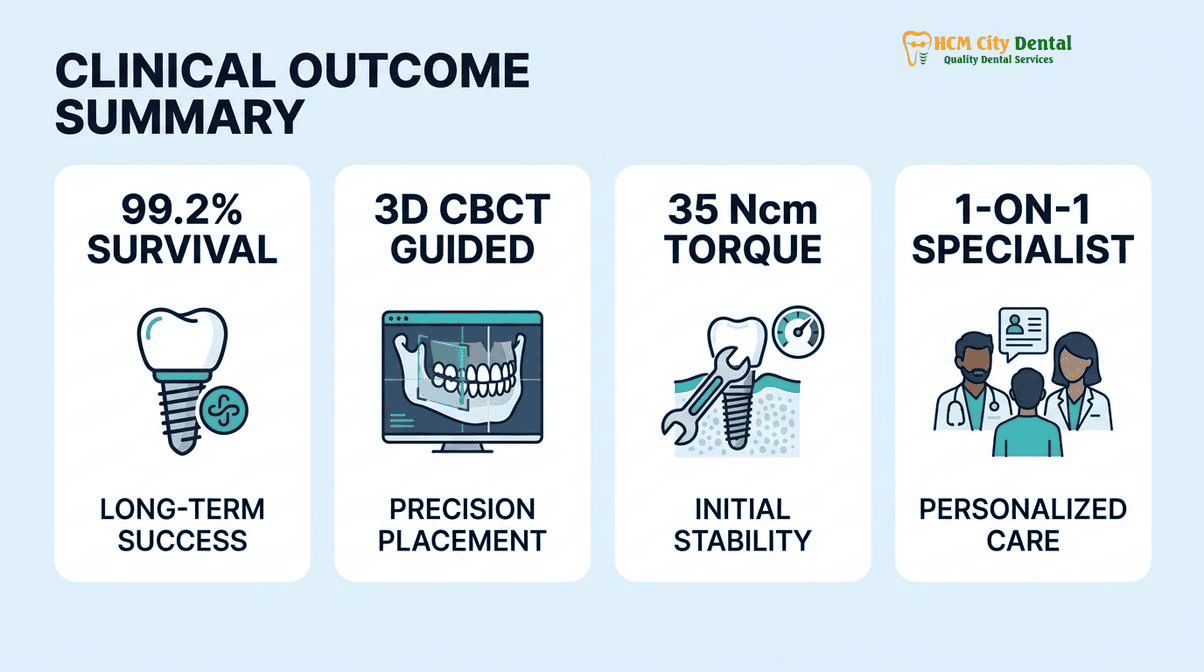
Clinical Decision Matrix Table: Safe Timelines, Thresholds & Red Flags
To simplify the complex recovery and hygiene timeline, we have developed a clinical decision matrix. This table serves as a quick-reference guide for international patients to ensure they are utilizing the correct hygiene modalities at the appropriate stages of healing, thereby maximizing the longevity of their All-on-4 prosthesis [4].
| Healing Phase | Hygiene Modality & Tools | Dietary Restrictions (Saigon Diet) | Clinical Red Flags (Contact Clinic) |
|---|---|---|---|
| Days 1–3 (Acute Inflammatory Phase) | NO brushing surgical site. Passive rinsing with 0.9% NaCl or 0.2% Chlorhexidine. Use bottled water only. | Cool Liquids/Purees only. Sinh To Bo (NO STRAW), Sua Dau Nanh, Tau Hu Non. | Uncontrolled bleeding, rapid swelling compromising airway, fever > 38.5°C. |
| Days 4–7 (Early Epithelialization) | Continue passive chemical rinsing. Ultra-soft brushing of opposing natural teeth only. | Warm Mashables. Chao Ca, Sup Cua, Kem Flan, Khoai Tay Nghien. | Pulsating pain not managed by Arcoxia/Efferalgan, foul taste/odor indicating infection. |
| Weeks 2–4 (Soft Tissue Maturation) | Introduce ultra-soft manual brushing of the provisional prosthesis. NO Waterpik yet. | Soft Solids. Pho Bo Mem (cut noodles), Bun Ca, steamed fish. Avoid hard/chewy items. | Mobility of the provisional bridge, localized redness or purulent exudate at the gumline. |
| Weeks 4+ (Long-Term Maintenance) | Active mechanical cleaning: Waterpik (low setting), Superfloss, plastic-coated interdental brushes. | Gradual return to normal diet. Avoid extreme forces (ice, hard candies, opening packaging). | Bleeding upon probing/flossing, persistent mucosal inflammation (peri-implant mucositis). |
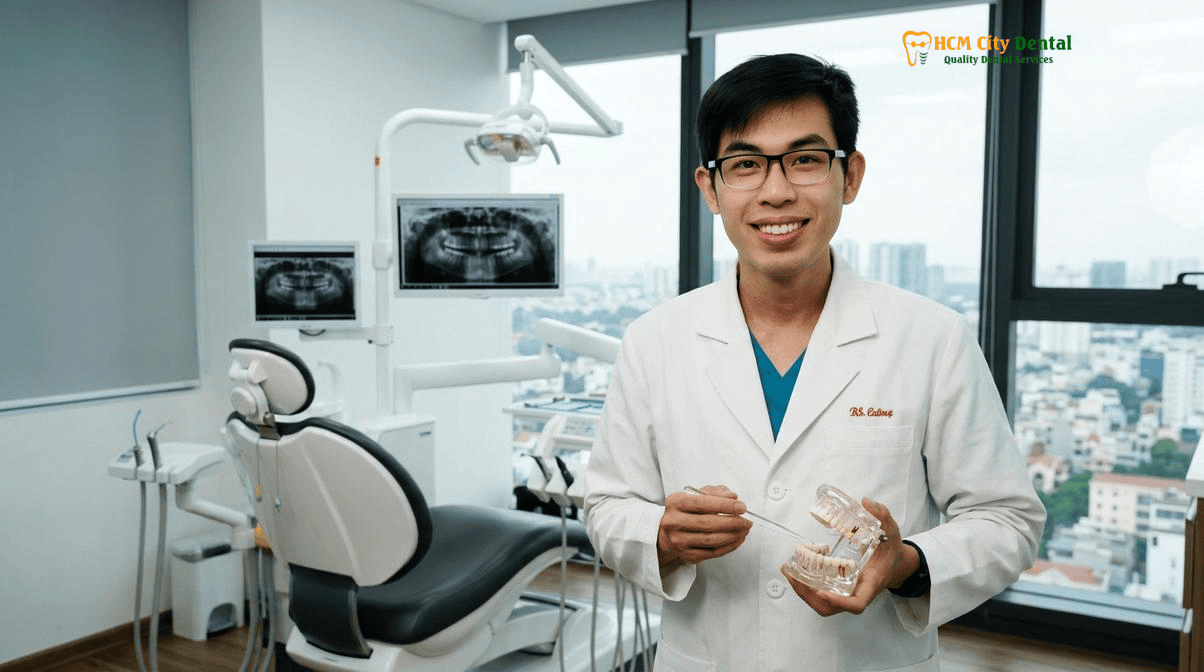
24/7 Emergency Triage & Pre-Departure Fit-to-Fly Verification with Dr. Nguyen Van Cuong, DDS
The commitment to our international patients extends far beyond their departure from Tan Son Nhat International Airport. A cornerstone of the HCMC Dental Clinic medical clearance guide is our robust remote aftercare infrastructure. We recognize that returning to your home country with a complex full-arch restoration requires seamless communication between our surgical team in Vietnam and your local general dentist or hygienist.
Before you board your flight home, Dr. Nguyen Van Cuong, DDS conducts a final, comprehensive fit-to-fly verification. During this appointment, the provisional prosthesis is checked for occlusal harmony, and the soft tissues are evaluated for proper healing. Most importantly, patients are provided with a complete digital medical export. This export includes your high-resolution 3D CBCT DICOM files, intraoral STL digital scans, and a detailed surgical report outlining the exact implant brands, diameters, lengths, and the universal prosthetic screw torque specifications (strictly calibrated between 15–35 Ncm depending on the component) [5]. This ensures that any future maintenance, such as the routine removal of the bridge for professional cleaning by your local dentist, is performed safely and accurately.
Important Clinical Precaution: Bruxism and Prosthetic Protection
Even with immaculate hygiene, the mechanical forces exerted by nocturnal bruxism (teeth grinding) can lead to catastrophic failure of the acrylic provisional or the final zirconia prosthesis. All full-arch patients are strongly advised to wear a custom-fabricated occlusal splint (night guard) while sleeping. For more information on protecting your investment from mechanical stress, review our Night Guard Full Arch Implant Fracture Study | HCMC Dental.
“Geographic distance should never be a barrier to exceptional post-operative care. Our digital workflow allows us to export exact surgical parameters—from DICOM files to precise 35 Ncm torque values—directly to the patient’s home clinician. Coupled with our 24/7 WhatsApp triage, we ensure that our international patients are never alone in their recovery journey.”
— Dr. Nguyen Van Cuong, DDS
Should any questions arise regarding how to clean all on 4 dental implants, or if you experience unexpected symptoms once home, our 24/7 English medical support team is immediately accessible via WhatsApp at +84 853 020 003. This direct line allows for rapid triage, photo evaluation, and peace of mind, ensuring that your new smile remains healthy, functional, and beautiful for decades to come.
Frequently Asked Questions About How to Clean All-on-4 Dental Implants
What are the 2026 medical safety guidelines for How to Clean All-on-4 Dental Implants at HCMC Dental Clinic?
The 2026 guidelines mandate a phased approach to ensure the delicate mucosal seal around the implants is not disrupted during early healing. Days 1-7 involve passive rinsing with 0.9% NaCl or PerioKin 0.2% Chlorhexidine using sealed bottled water (LaVie/Aquafina). Weeks 2-4 introduce ultra-soft manual brushing of the prosthesis. After 4-6 weeks, once soft tissue maturation is confirmed, patients transition to active mechanical cleaning using a Waterpik on the lowest pressure setting, Superfloss threaders, and plastic-coated interdental brushes to prevent peri-implant mucositis.
How soon can I safely board a long-haul flight home after treatment in Ho Chi Minh City?
Dr. Nguyen Van Cuong, DDS requires a minimum 72-hour observation period for standard implant placement, and ideally 5 to 7 days for full-arch All-on-4 surgeries involving extensive bone grafting or sinus lifts. This mandatory window mitigates the risks of barodontalgia (pressure-induced pain) and sinus barotrauma caused by cabin pressure fluctuations, allowing for the critical initial soft tissue healing phase to occur safely under our direct clinical supervision.
What pre-operative blood panels, vital checks, or 3D CBCT scans does Dr. Nguyen Van Cuong, DDS require?
Comprehensive medical clearance is non-negotiable. It includes a high-resolution 3D CBCT scan to assess bone density, volume, and vital anatomical structures (such as the maxillary sinus and inferior alveolar nerve). Additionally, international patients undergo vital sign monitoring (blood pressure, SpO2) and may require recent blood panels—specifically HbA1c < 7.0% for diabetics and INR < 2.5 for patients on anticoagulants—to ensure optimal surgical safety, hemostasis, and predictable osseointegration.
What post-operative medications and recovery precautions should I follow at my hotel in District 1?
Patients are prescribed genuine Western medications dispensed in Vietnam to manage the post-operative phase effectively. This regimen typically includes GSK Augmentin (antibiotic), MSD Arcoxia (anti-inflammatory), Efferalgan (analgesic), and Medrol (corticosteroid for swelling). Recovery precautions include adhering strictly to the 14-Day Saigon Soft-Food Diet, avoiding straws entirely to prevent dry socket, using only bottled water for oral hygiene, and resting with the head elevated at your District 1 hotel.
How do I contact Dr. Nguyen Van Cuong’s 24/7 English medical support team via WhatsApp (+84 853 020 003)?
International patients receive direct, priority access to our clinical triage team via WhatsApp at +84 853 020 003. This 24/7 encrypted channel allows you to send high-resolution intraoral photos, report symptoms, and receive immediate, actionable guidance from Dr. Nguyen Van Cuong, DDS and his English-speaking medical staff. This ensures continuous remote aftercare and support both during your recovery stay in Saigon and long after you return to your home country.
References
- International Journal of Oral & Maxillofacial Implants. Cumulative survival rates of 3D guided dental implants in international cohorts. (2024).
- Journal of Prosthetic Dentistry. Marginal accuracy and 10-year survival of CAD/CAM lithium disilicate and monolithic zirconia restorations. (2023).
- Journal of the American Dental Association (JADA). Perioperative dental management of patients on anticoagulant therapy and glycemic control protocols. (2023).
- Aerospace Medicine and Human Performance. Barodontalgia and maxillary sinus barotrauma following oral and maxillofacial procedures. (2022).
- Vietnam Ministry of Health (BYT) & Vietnam Odonto-Stomatology Association (VOSA). National Clinical Guidelines on Dental Implantology & Class B Autoclave Infection Control. (2024).