Navigating gummy smile insurance in Vietnam requires distinguishing between cosmetic enhancements and medically necessary procedures. While purely esthetic contouring is rarely covered, functional crown lengthening for decay or biological width violations often qualifies for reimbursement through international dental policies.
Clinical Summary:
Securing insurance coverage for gummy smile treatments in Vietnam hinges on clinical justification. Procedures like functional crown lengthening to address subgingival decay or periodontitis are typically reimbursable under major international plans. Conversely, purely cosmetic laser gingivectomy or lip repositioning usually requires out-of-pocket payment. Clinics provide comprehensive documentation, including ADA codes, medical reports, and official tax invoices, to facilitate successful claims for expats and dental tourists seeking advanced periodontal care.
Key Takeaways:
- Cosmetic gum contouring is generally excluded from standard dental insurance policies.
- Functional crown lengthening (ADA Code D4212) is often covered if deemed medically necessary.
- Proper documentation, including panoramic X-rays and periodontal charting, is mandatory for claims.
- Official government-issued tax receipts are required by international insurers for reimbursement.
- Advanced diode lasers ensure bloodless, rapid-recovery procedures with minimal postoperative discomfort.
Esthetic & Cosmetic Procedures vs. Functional Procedures (Medical Necessity)
Insurance providers strictly differentiate between elective cosmetic gum contouring and medically necessary functional crown lengthening when determining claim eligibility and coverage limits.
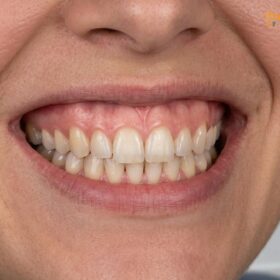
When patients explore options for Gum Contouring & Gummy Smile correction, the primary administrative hurdle is establishing the clinical intent of the procedure. Dental insurance policies are fundamentally designed to restore oral health and function, not to enhance facial esthetics. Therefore, a standard gingivectomy performed solely to improve the visual proportions of the teeth and gums will almost universally be classified as an elective cosmetic procedure, resulting in a denial of coverage.
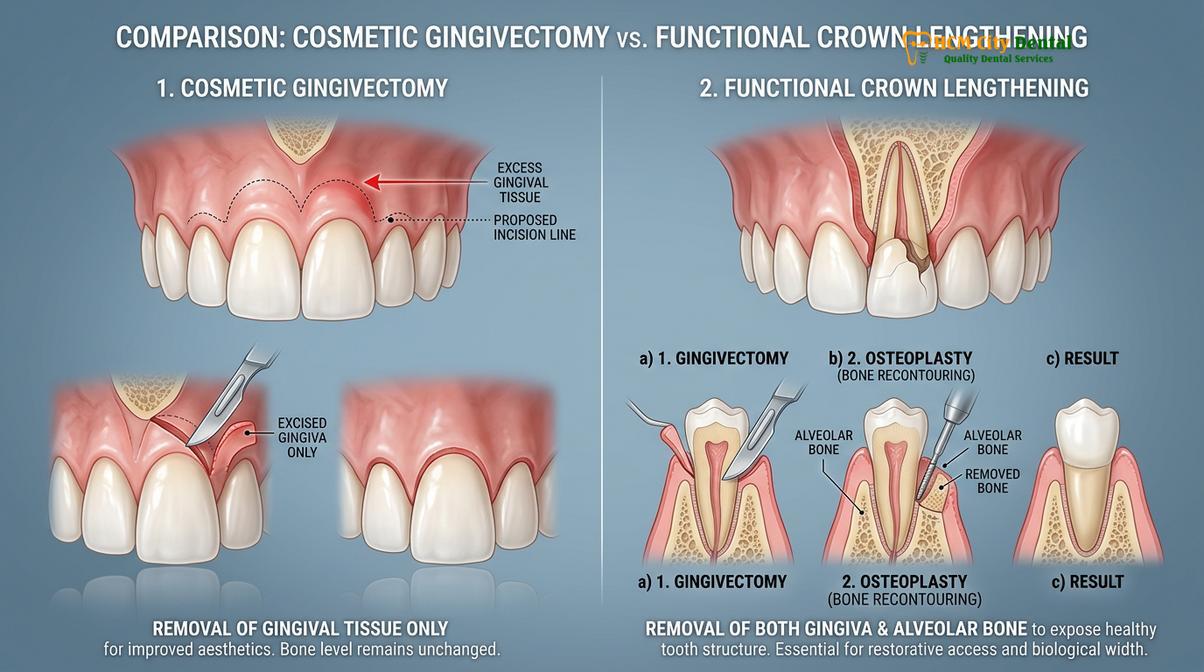
However, the clinical reality is often more complex. Many patients presenting with a “gummy smile” actually suffer from altered passive eruption or require restorative work that necessitates altering the gingival margins. In these scenarios, the procedure transitions from cosmetic to functional. Functional crown lengthening involves the surgical removal of both gingival tissue and supporting alveolar bone to expose more of the tooth structure [1]. This is medically necessary when a tooth has fractured beneath the gum line or when severe subgingival decay prevents the proper placement of a dental crown.
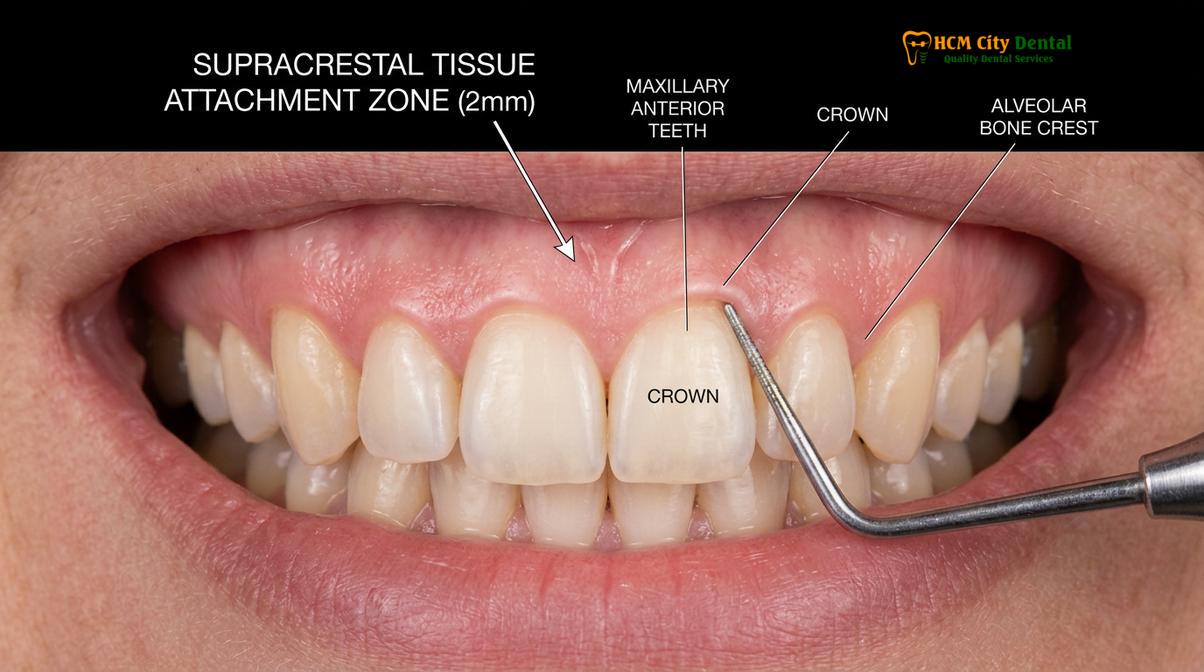
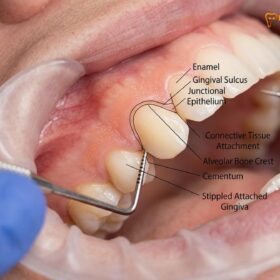
From a clinical perspective, Dr. Nguyen Van Cuong emphasizes the critical importance of respecting the supracrestal tissue attachment (formerly known as the biological width). This zone, which typically measures around 2mm, consists of the junctional epithelium and supracrestal connective tissue. If a dental restoration encroaches upon this space, it triggers a chronic inflammatory response, leading to localized periodontitis and unpredictable bone resorption. Therefore, functional crown lengthening is not merely about exposing tooth structure; it is a vital surgical intervention to re-establish a healthy biological width further down the root surface, a necessity that insurance companies recognize and often cover.
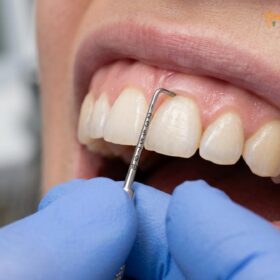
For patients engaging in dental tourism, understanding this distinction before traveling is paramount. A comprehensive pre-treatment consultation involving digital X-rays and periodontal probing is required to determine whether the proposed treatment plan aligns with the functional criteria mandated by international insurance carriers.
Clinical Triggers: Recurrent Decay, Biological Width Violation, and Periodontitis
Documenting recurrent subgingival decay, biological width violations, or severe periodontitis is essential to prove medical necessity and secure insurance reimbursement for periodontal surgeries.
To successfully navigate a Cigna dental claim vietnam or similar international policies, the attending periodontist must provide incontrovertible evidence of a clinical trigger. The most common trigger is recurrent subgingival caries. When decay extends apically (towards the root) beyond the gingival margin, the dentist cannot achieve a dry, isolated field necessary for a durable composite filling or crown margin. In such cases, surgical intervention is mandatory to lower the gum and bone levels, thereby exposing sound tooth structure.
Another significant trigger is the violation of the supracrestal tissue attachment by existing, poorly fabricated restorations. Patients often present with chronic gingival inflammation, bleeding upon probing, and localized pain around specific crowns. Clinical examination and radiographic analysis frequently reveal that the margins of these crowns have been placed too deep into the gingival sulcus. Correcting this requires the removal of the offending restoration, followed by a surgical procedure that often includes osteoplasty (reshaping of the bone) to recreate a healthy attachment apparatus [2].
Clinical Warning: Ignoring a biological width violation can lead to chronic, refractory gingivitis, progressive alveolar bone loss, and eventual tooth mobility. Prompt surgical correction is medically necessary to halt periodontal destruction and preserve the dentition.
Furthermore, patients with advanced periodontitis may exhibit gingival hyperplasia (overgrowth) or deep periodontal pockets that cannot be managed through routine dental scaling and root planing alone. In these advanced cases, a gingivectomy or flap surgery is performed to reduce pocket depths, eliminate anaerobic bacterial reservoirs, and facilitate proper home care. Because these interventions are directly aimed at treating active disease, they are heavily supported by clinical literature and are generally recognized as reimbursable medical expenses by major insurers [3].
Red Invoices, Medical Reports, and Treatment Codes (ADA Codes)
Successful international insurance reimbursement relies on precise ADA coding, comprehensive medical reports, and government-issued tax receipts provided by the dental clinic.
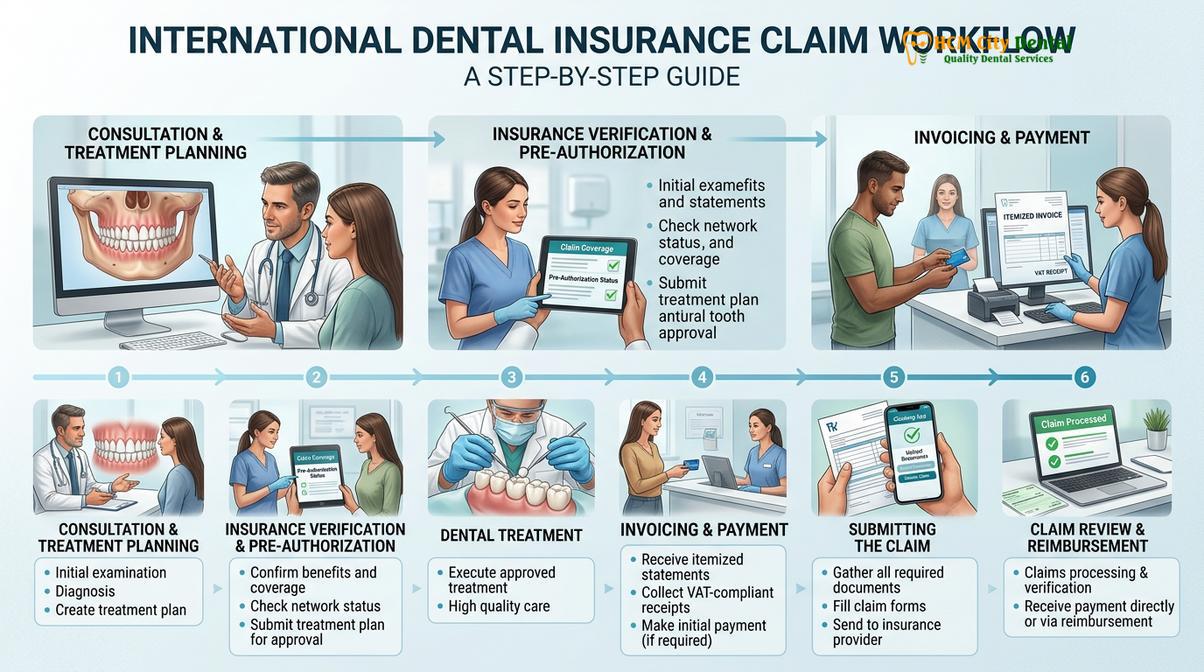
The administrative workflow for processing an international dental claim requires meticulous attention to detail. Insurers operate on standardized coding systems, most notably the Current Dental Terminology (CDT) codes established by the American Dental Association (ADA). When submitting a claim for gummy smile correction, the specific ADA code crown lengthening (D4212 for functional, D4211 for gingivectomy) must be accurately applied. Using a cosmetic code for a functional procedure will result in automatic rejection.
In addition to precise coding, insurers require a detailed medical report signed by the attending specialist. This report must narrate the patient’s chief complaint, the clinical findings (e.g., pocket depths, extent of decay), the diagnosis, and the rationale for the chosen surgical intervention. Pre-operative and post-operative periapical or panoramic X-rays are mandatory attachments, serving as visual proof of the pathology and the surgical outcome.
Crucially, for treatments performed in Vietnam, international insurers mandate the submission of a VAT invoice red invoice (Hóa đơn đỏ). This is an official, government-registered electronic tax receipt that proves the financial transaction is legitimate and legally recorded. Standard clinic receipts or credit card slips are insufficient for claim processing. HCMC Dental Clinic ensures that all expat and international patients receive this official documentation promptly upon payment.
Understanding the financial investment is equally important. Below is the current pricing structure for various gummy smile correction modalities, reflecting the high standards of clinical care and the availability of a -40% WhatsApp booking discount for international patients:
| Clinical Procedure | Standard Walk-in Fee (VND) | Discounted Fee (VND) | Estimated USD |
|---|---|---|---|
| Laser Gingivectomy (per tooth) | 2,500,000 | 1,500,000 | ~$60 |
| Full-Arch Laser Gum Contouring (up to 10 teeth) | 20,000,000 | 12,000,000 | ~$480 |
| Functional/Esthetic Crown Lengthening (per tooth, incl. bone) | 5,000,000 | 3,000,000 | ~$120 |
| Surgical Lip Repositioning / Lip Lowering | 25,000,000 | 15,000,000 | ~$600 |
| Botox Gummy Smile Correction (both sides) | 7,500,000 | 4,500,000 | ~$180 |
How We Assist Expats with Claims (Cigna, Allianz, Luma, FWD)
Our dedicated international desk streamlines the claims process for major insurers by providing pre-authorization support and comprehensive, accurately coded clinical documentation.
Expatriates residing in Vietnam often carry comprehensive health policies from global providers. Navigating an Allianz international dental claim or a submission to Luma or FWD requires a clinic that understands the specific bureaucratic requirements of these organizations. At HCMC Dental Clinic in Ho Chi Minh City, the international patient coordination team is trained to bridge the gap between clinical treatment and insurance administration.
The process typically begins with a pre-authorization request. Before any surgical intervention commences, the clinic compiles the proposed treatment plan, the corresponding ADA codes, and the estimated costs, submitting them to the insurer for approval. This step provides the patient with financial clarity, confirming exactly what percentage of the procedure will be covered and what the out-of-pocket co-pay will be.
Patient Case Study: An Australian expat presented to HCMC Dental Clinic in Ho Chi Minh City with severe subgingival decay on two upper premolars, complicated by a naturally high smile line. The treatment required functional crown lengthening prior to the placement of zirconia crowns. The clinic’s international desk prepared a detailed medical dossier, including periodontal charting and a VAT invoice red invoice. The Cigna dental claim vietnam was processed within 14 days, resulting in an 80% reimbursement for the surgical phase, as it was clearly documented as a medical necessity rather than a cosmetic enhancement.
Following the completion of the treatment, the clinic provides a consolidated claim package. This includes the finalized medical report, the official tax invoice, and all relevant radiographic imaging. By ensuring that the documentation is flawless and the ADA code crown lengthening is correctly applied, the clinic significantly reduces the likelihood of claim delays or rejections, allowing expats to focus on their recovery rather than administrative stress.
Advanced Clinical Workflows for Gummy Smile Correction
Utilizing cutting-edge diode lasers and digital smile design ensures minimally invasive gummy smile correction with highly predictable esthetic and functional outcomes.
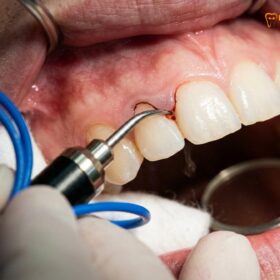
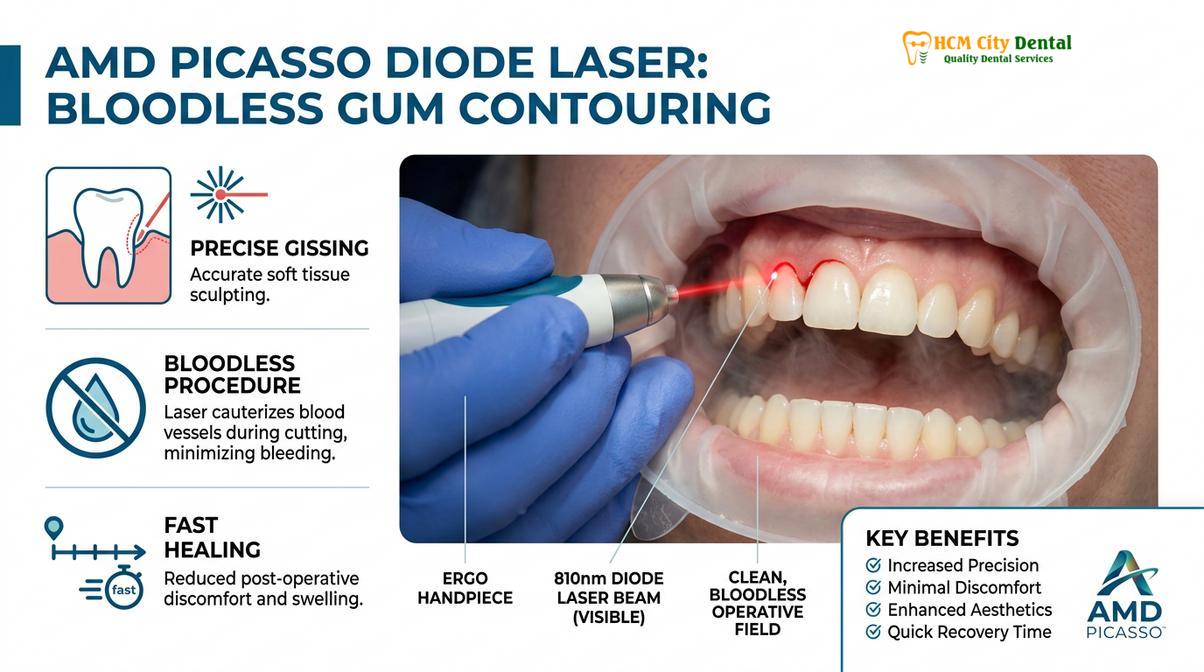
The technological landscape of periodontal surgery has evolved dramatically, moving away from traditional scalpel techniques toward highly precise, minimally invasive modalities. At the forefront of this evolution is the use of AMD Picasso Lasers. This diode soft tissue laser, operating at an 810nm wavelength, is specifically highly absorbed by melanin and hemoglobin. This specific absorption profile allows the laser to vaporize target tissue with microscopic precision while simultaneously sealing blood vessels and nerve endings.
The clinical advantages of the diode laser are profound. The procedure is virtually bloodless, providing the surgeon with a clear, unobstructed view of the surgical field. Furthermore, the laser beam is inherently sterile, significantly minimizing the risk of postoperative bacterial infection. Because the tissue is cauterized instantly, there is no need for sutures. Patients experience drastically reduced postoperative pain and swelling, leading to a rapid 48-hour recovery period compared to the weeks required for traditional scalpel surgery [4].
“The integration of 810nm diode lasers in gingival contouring has revolutionized patient comfort. By achieving instant hemostasis and eliminating the need for sutures, we observe a dramatic reduction in inflammatory mediators, allowing the gingival tissues to heal rapidly and predictably within 48 hours.”
During the procedure, Dr. Nguyen Van Cuong meticulously calibrates the gingival zenith points—the highest point of the gum scallop, which should ideally be displaced slightly distal to the long axis of the tooth. This calibration is guided by Digital Smile Design (DSD) software, which allows the clinician to map out the ideal gingival architecture on a digital photograph of the patient’s face before the laser is even activated. This ensures that the final result is in perfect harmony with the patient’s facial symmetry and lip dynamics.
However, not all gummy smiles are caused by excess gingival tissue. In cases where the excessive display is due to a hyperactive levator muscle of the upper lip, surgical lip repositioning or targeted Botox injections may be indicated. Lip repositioning surgery involves removing a strip of mucosa from the inside of the upper lip and suturing the lip to a lower position, physically restricting its upward movement during a full smile [5].
“Accurate diagnosis of the etiology of a gummy smile is paramount. While laser gingivectomy addresses altered passive eruption, cases driven by a hyperactive levator muscle require neuromuscular modulation or mucosal repositioning to achieve a harmonious and stable esthetic outcome.”
For the most severe skeletal cases, known as Vertical Maxillary Excess (VME), where the upper jaw bone itself has grown too far downward, soft tissue procedures are insufficient. In these complex scenarios, HCMC Dental Clinic collaborates with Surgical Jaw Partners. Patients are referred to the maxillofacial specialists at the National Hospital of Odonto-Stomatology in Ho Chi Minh City (Bệnh viện Răng Hàm Mặt Trung Ương TP.HCM), the highest clinical authority in the region. Here, a Le Fort I osteotomy orthognathic surgery is performed to physically impact and reposition the entire upper jaw, fundamentally resolving the skeletal discrepancy.
When to See a Doctor
Determining when to seek professional consultation for a gummy smile depends on both esthetic concerns and functional symptoms. You should schedule an evaluation with a periodontist or specialized cosmetic dentist if you experience any of the following:
- Chronic Gum Inflammation: If your gums are persistently red, swollen, or bleed easily when brushing, especially around existing dental crowns or veneers, this may indicate a biological width violation requiring surgical correction.
- Short Clinical Crowns: If your teeth appear unusually short and square, and you feel that excessive gum tissue is covering the enamel, a consultation can determine if you are a candidate for laser contouring.
- Difficulty Maintaining Hygiene: Deep periodontal pockets or overgrown gum tissue that makes flossing and proper brushing impossible should be evaluated promptly to prevent progressive bone loss.
- Pre-Restorative Needs: If your dentist has informed you that a tooth is too decayed or broken near the gum line to support a new crown, functional crown lengthening is medically necessary.
- Severe Skeletal Discrepancy: If your gummy smile is accompanied by an open bite, difficulty closing your lips comfortably at rest (lip incompetence), or chewing difficulties, a comprehensive maxillofacial evaluation is warranted.
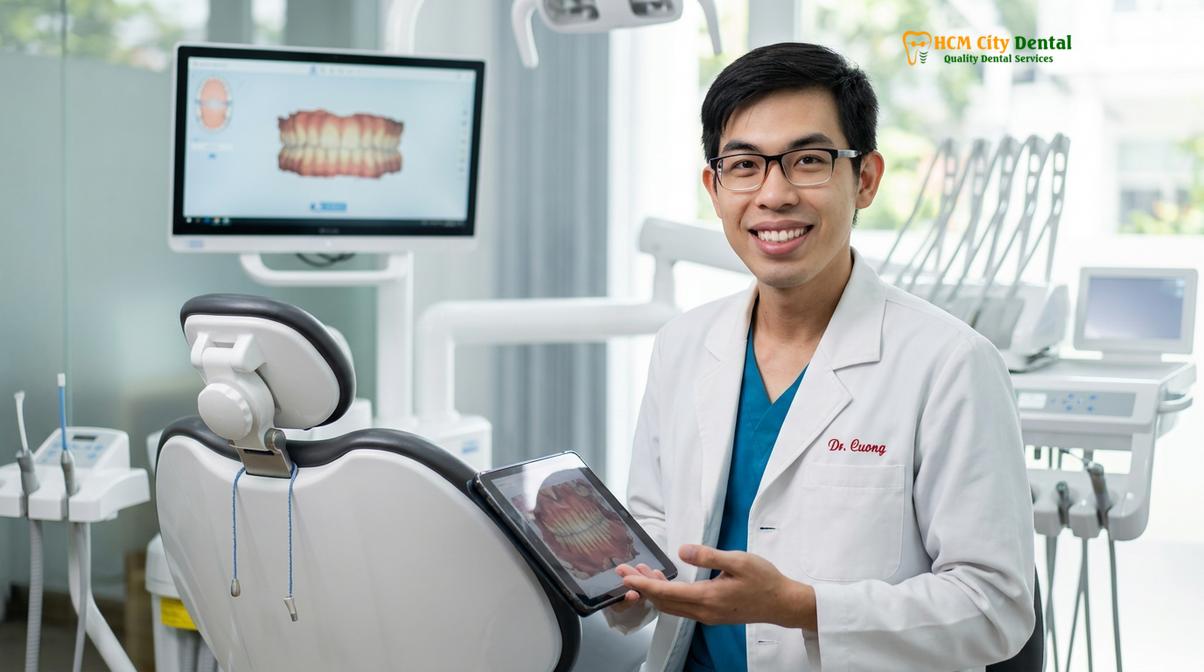
A thorough clinical examination, including digital imaging and periodontal probing, is the only way to accurately diagnose the underlying cause of excessive gingival display and formulate an appropriate, potentially insurance-reimbursable, treatment plan.
Frequently Asked Questions
Does Cigna cover cosmetic gum contouring?
Cigna and most major insurers typically do not cover purely cosmetic gum contouring. However, if the procedure is coded as functional crown lengthening required to restore a severely decayed tooth, partial or full coverage may apply depending on your specific policy limits. A detailed medical report is essential to prove necessity.
What documentation is required for insurance claims?
You will need a comprehensive medical report, pre- and post-operative panoramic X-rays, periodontal charting, precise ADA treatment codes, and an official government-issued VAT red invoice to successfully process your international dental claim. Missing any of these documents can lead to claim rejection.
Will the clinic directly bill my insurance?
Direct billing depends on the specific network agreement with your insurance provider. For many international plans, patients pay upfront and the clinic provides all necessary documentation for rapid reimbursement through a standard pay-and-claim workflow. Pre-authorization can clarify this before treatment.
How long is the recovery after laser gingivectomy?
Recovery following a diode laser gingivectomy is exceptionally rapid, typically taking 48 hours. The laser cauterizes as it cuts, eliminating the need for sutures, minimizing postoperative swelling, and significantly reducing the risk of bacterial infection compared to traditional scalpel surgery.
Can orthognathic surgery for a gummy smile be claimed under medical insurance?
Yes, if a gummy smile is caused by severe Vertical Maxillary Excess (VME) affecting your bite or airway, orthognathic surgery like a Le Fort I osteotomy may be covered under the medical (rather than dental) portion of your health insurance. This requires extensive diagnostic proof of functional impairment.
References
- Journal of Clinical Periodontology. Esthetic and functional crown lengthening outcomes. (2021).
- International Journal of Periodontics & Restorative Dentistry. Diode laser vs scalpel gingivectomy efficacy. (2020).
- Journal of Aesthetic and Restorative Dentistry. Biological width around dental restorations. (2019).
- Journal of Oral and Maxillofacial Surgery. Le Fort I osteotomy stability in VME patients. (2022).
- Clinical Oral Investigations. Surgical lip repositioning longevity and relapse rates. (2018).