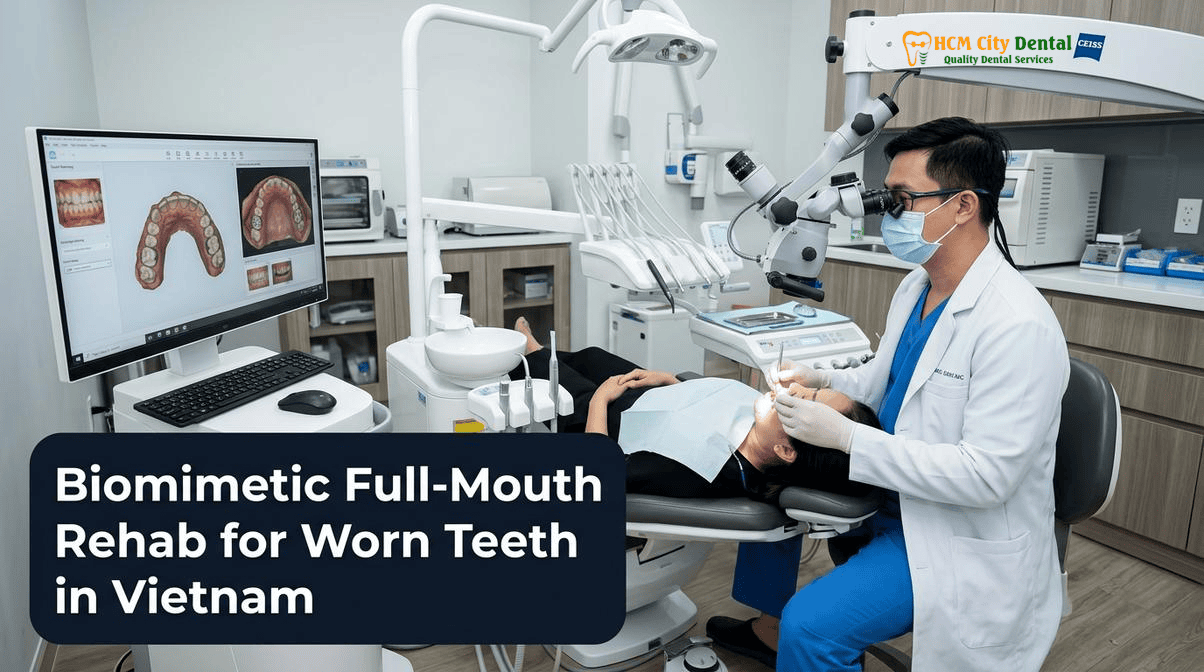
Severe tooth wear is a silent, progressive epidemic that slowly destroys the structural integrity, function, and aesthetics of the human dentition. For decades, patients presenting with shortened, yellowed, and sensitive teeth were subjected to aggressive, subtractive dentistry—having their remaining healthy enamel shaved down to pegs to accommodate 28 traditional porcelain crowns. Today, advanced adhesive protocols have revolutionized how we approach Biomimetic Full-Mouth Reconstruction & VDO Rehabilitation in Vietnam. By accurately diagnosing the pathological triad of mechanical attrition, chemical erosion, and flexural abfraction, specialists can rebuild the bite using ultra-conservative, additive techniques that preserve the dental pulp and restore the natural biomechanics of the teeth.
At HCMC Dental Clinic in District 1, Ho Chi Minh City, our clinical philosophy is rooted in maximum tissue preservation. Under the leadership of Dr. Nguyen Van Cuong, DDS (Clinical Director — MOH License 0003265/BL-CCHN), we utilize digital Kois deprogramming, 3D CAD/CAM smile design, and high-strength IPS E.max lithium disilicate table-top overlays to execute complex full-mouth rehabilitations. This evidence-based approach allows international patients, expats, and dental travelers to reverse decades of severe tooth wear safely, predictably, and at a fraction of the cost found in Australia, the United States, or Europe.
Clinical Summary:
Biomimetic full-mouth rehabilitation for severe tooth wear focuses on treating the underlying causes of attrition (bruxism), erosion (GERD/diet), and abfraction (occlusal stress) through additive, non-invasive dentistry. By utilizing a Kois Deprogrammer to establish Centric Relation (CR) and restoring the Vertical Dimension of Occlusion (VDO) with ultra-thin IPS E.max table-top overlays ($231 USD) and sandwich veneers, HCMC Dental Clinic rebuilds worn dentitions without the need for aggressive crown preparations or elective root canals. This 7-to-10 day protocol preserves pulp vitality, restores facial aesthetics, and protects the temporomandibular joint (TMJ).
Key Takeaways:
- The Wear Triad: Differentiating tooth attrition vs. abfraction vs. acid erosion is critical; most severe cases involve a destructive combination of mechanical grinding and chemical dissolution.
- Pulp Preservation: Biomimetic additive dentistry allows specialists to restore vertical dimension of occlusion without root canals, avoiding the 70% structural loss associated with traditional full-coverage crowns.
- VDO Restoration: Lost bite height is safely recovered using a digital Kois Deprogrammer and a PMMA trial bite, allowing the neuromuscular system to adapt before final ceramics are bonded.
- Conservative Ceramics: Worn posterior teeth are rebuilt using no-prep or minimal-prep IPS E.max table-top overlays ($231 USD online), while anterior teeth utilize palatal/labial sandwich veneers.
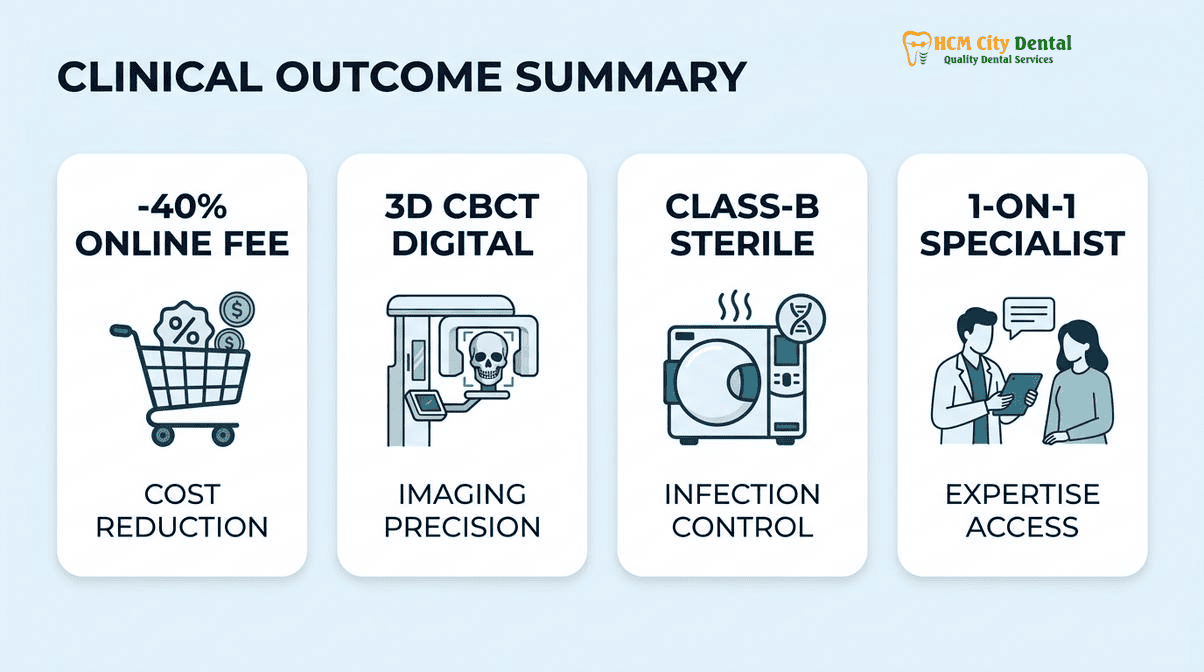
- Transparent Pricing: HCMC Dental Clinic offers a transparent -40% online booking fee schedule, making world-class biomimetic rehabilitation highly accessible for international patients.
The Pathological Triad of Tooth Wear: Diagnosing Mechanical Attrition (Bruxism), Chemical Erosion (GERD/Acid), and Flexural Abfraction
Tooth wear is rarely caused by a single factor. In the vast majority of clinical presentations, it is a multifactorial disease process where mechanical forces and chemical agents act synergistically to accelerate the destruction of enamel and dentin. To design a successful, long-lasting rehabilitation, the clinical team must first isolate and diagnose the specific components of the wear triad.
1. Mechanical Attrition: The Impact of Bruxism and Clenching
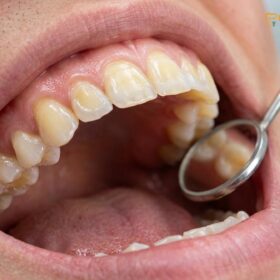
Attrition is the physiological or pathological wearing away of tooth structure resulting from tooth-to-tooth contact. While a minor degree of attrition is normal with aging, pathological attrition is almost exclusively driven by parafunctional habits such as nocturnal bruxism (grinding) and diurnal clenching. Clinically, attrition presents as flat, shiny wear facets on the occlusal (chewing) surfaces of posterior teeth and the incisal edges of anterior teeth. Over time, the teeth become significantly shortened, leading to a collapsed bite and a “reverse smile line” where the front teeth are shorter than the back teeth. In severe cases, the protective enamel is completely worn away, exposing the softer, darker underlying dentin, which then wears at an exponentially faster rate.
2. Chemical Erosion: GERD, Acid Reflux, and Dietary Acids
Dental erosion is the irreversible loss of dental hard tissue due to a chemical process of acid dissolution that does not involve bacterial plaque. The acids can be extrinsic (dietary sources like citrus fruits, carbonated sodas, and sports drinks) or intrinsic (gastric acids from Gastroesophageal Reflux Disease (GERD), bulimia nervosa, or chronic vomiting). Because gastric acid has an extremely low pH (often between 1.0 and 2.0), it rapidly demineralizes enamel. Clinically, erosion presents as smooth, scooped-out, or “cupped” depressions on the chewing surfaces of molars, or as severe thinning of the palatal surfaces of the upper front teeth (perimolysis). For patients seeking GERD and acid reflux tooth erosion treatment, it is vital to stabilize the medical condition alongside the dental rehabilitation to prevent future damage.
3. Flexural Abfraction: Cervical Stress Lesions
Abfraction refers to the loss of tooth structure at the cementoenamel junction (CEJ)—the neck of the tooth near the gumline—caused by biomechanical loading forces. When teeth are subjected to heavy, eccentric (off-axis) biting forces from malocclusion or bruxism, the tooth flexes slightly. This flexure concentrates tensile stress at the cervical region, causing the microscopic enamel rods to fracture and break away. Clinically, abfraction presents as deep, sharp, wedge-shaped or V-shaped notches at the gumline. These lesions are often highly sensitive to cold and touch because the underlying dentin and dentinal tubules are exposed to the oral environment.
Clinical Warning: The Synergistic Destruction of Wear
When attrition, erosion, and abfraction occur simultaneously, the rate of tooth destruction multiplies. Acid erosion softens the enamel, making it highly susceptible to being ground away by bruxism (attrition) or brushed away by a toothbrush (abrasion). If you notice your teeth becoming shorter, flatter, yellower, or increasingly sensitive, immediate clinical intervention is required to halt the progression before the dental pulp (nerve) is breached.
Why Shaving Worn Teeth Down for 28 Traditional Crowns Causes Pulp Necrosis — and How Biomimetic Additive Rehab Saves the Nerves
Historically, the standard of care for a patient with severe generalized tooth wear was a traditional full-mouth reconstruction using 28 porcelain-fused-to-metal (PFM) or full zirconia crowns. While this approach restored the aesthetics and bite height, it came at a catastrophic biological cost.
The Biological Cost of Subtractive Dentistry
To place a traditional full-coverage crown, a dentist must circumferentially prepare (shave down) the tooth by 1.5mm to 2.0mm on all sides to create room for the restorative material. For a tooth that is already severely worn and shortened, this aggressive preparation often removes up to 70% of the remaining healthy coronal tooth structure. This massive trauma to the tooth frequently results in pulpal inflammation (pulpitis) and subsequent pulp necrosis (death of the nerve). Consequently, many patients undergoing traditional full-mouth reconstructions are forced to undergo multiple elective root canal therapies simply because the teeth were over-prepared.
“The era of amputating healthy enamel to fit traditional crowns is over. In cases of severe wear, the patient has already lost precious tooth structure. Our duty is to replace what is missing, not to cut away what little is left. Biomimetic additive dentistry allows us to bond ultra-thin ceramics directly to the worn surfaces, preserving the vitality of the pulp and the structural integrity of the tooth.”
— Dr. Nguyen Van Cuong, DDS
The Biomimetic Additive Paradigm
Biomimetic dentistry mimics the natural biomechanics, strength, and flexibility of intact teeth. Instead of relying on mechanical retention (which requires aggressive drilling to create parallel walls), biomimetic dentistry relies on advanced chemical adhesion. By utilizing gold-standard bonding agents (such as MDP-containing Panavia V5) under strict rubber dam isolation, we can achieve bond strengths to enamel and dentin that rival the natural dentinoenamel junction (DEJ). This allows us to perform worn-down, flat teeth reconstruction using purely additive techniques. We simply bond ceramic pieces onto the worn surfaces to rebuild the lost anatomy, ensuring that the underlying nerve remains healthy, vital, and untouched.
Restoring Lost Vertical Dimension of Occlusion (VDO): The 3-Step Digital Kois Deprogrammer & PMMA Trial Bite Protocol
When teeth wear down over decades, the upper and lower jaws gradually move closer together. This collapse is known as the loss of Vertical Dimension of Occlusion (VDO). A collapsed VDO not only impairs chewing efficiency but also alters facial aesthetics, leading to a sunken appearance, deep nasolabial folds, and thinning lips. Rebuilding the VDO is the cornerstone of a successful full-mouth rehabilitation, but it must be done with absolute precision to ensure the temporomandibular joint (TMJ) and masticatory muscles can adapt comfortably.
Step 1: Erasing Muscle Memory with the Kois Deprogrammer
Patients with severe wear often have a distorted bite; their jaw muscles have adapted to a pathological closing trajectory to avoid interferences. To find the jaw’s true, relaxed, and anatomically correct position—known as Centric Relation (CR)—we utilize a Kois Deprogrammer. This is a small, removable acrylic appliance worn by the patient for 1 to 3 weeks. It features a small anterior bite platform that prevents the posterior teeth from touching. By removing the proprioceptive feedback from the teeth, the lateral pterygoid muscles relax, allowing the TMJ to seat naturally into its most stable position in the glenoid fossa.
Step 2: Digital 3D Smile Design and VDO Calculation
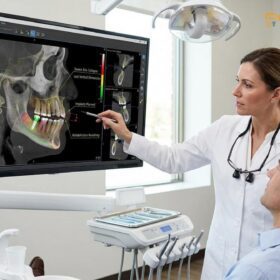
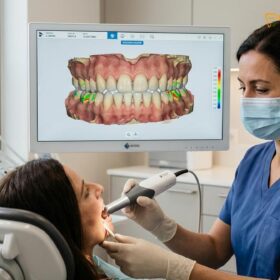
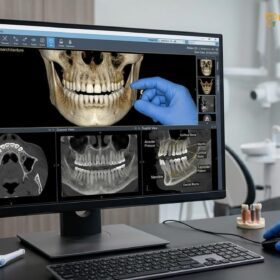
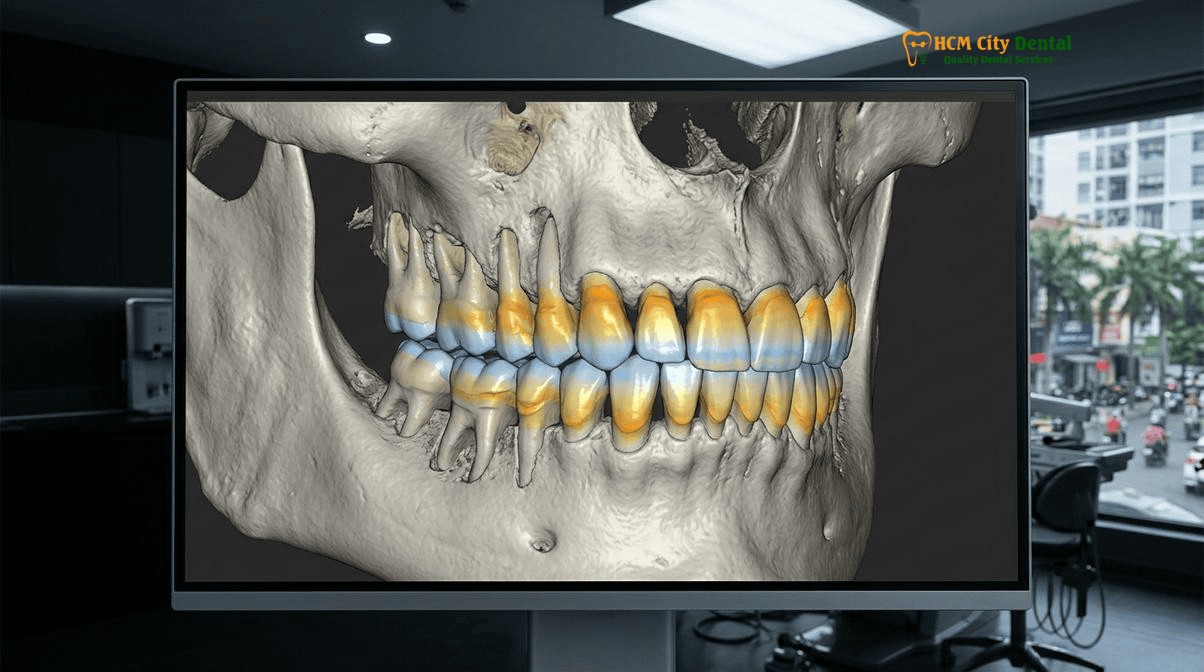
Once the jaw is deprogrammed and CR is established, we capture digital intraoral scans and 3D CBCT imaging. Using advanced CAD/CAM software, Dr. Cuong calculates the exact amount of VDO that needs to be restored—typically between 2mm and 4mm. The new bite is designed digitally, ensuring that the new tooth lengths follow the golden proportions of facial aesthetics, provide proper anterior guidance, and establish mutually protected occlusion (where the front teeth protect the back teeth during lateral movements, and the back teeth protect the front teeth during heavy chewing).
Step 3: The PMMA Trial Bite (Mock-Up)
Before any permanent ceramics are milled, the digital design is transferred to the patient’s mouth using a high-density PMMA (Polymethyl Methacrylate) trial bite or a bis-acrylic mock-up. This allows the patient to “test drive” the new VDO, aesthetics, and phonetics for several days or weeks. We monitor the patient closely to ensure there is no muscle fatigue, TMJ pain, or speech impediment. Only when the patient is 100% comfortable and thrilled with the aesthetics do we proceed to the final ceramic phase.
Clinical Case Study: Reversing 20 Years of Acid Reflux and Bruxism
Patient Profile: A 55-year-old Australian executive presented to HCMC Dental Clinic with severe generalized tooth wear. Decades of undiagnosed GERD combined with nocturnal bruxism had eroded his posterior molars into flat, cupped-out craters and shortened his anterior incisors by 4mm, resulting in severe dentin hypersensitivity and a collapsed facial profile.
Clinical Protocol: After stabilizing his GERD with his physician, Dr. Cuong initiated a biomimetic full-mouth rehabilitation. A Kois Deprogrammer was used to establish Centric Relation, and the VDO was digitally increased by 3.5mm. The posterior teeth were restored with 16 no-prep IPS E.max table-top overlays, while the anterior teeth received 12 palatal and labial sandwich veneers. Zero teeth required root canal therapy. The entire rehabilitation was completed in 9 days, restoring his chewing function, eliminating sensitivity, and rejuvenating his facial appearance.
Ultra-Conservative Posterior IPS E.max Table-Top Overlays ($231 USD) + Anterior Palatal/Labial Sandwich Veneers
The execution of a biomimetic full-mouth rehabilitation relies on high-strength, aesthetic ceramics that can be bonded in ultra-thin layers. At HCMC Dental Clinic, our material of choice is IPS E.max (lithium disilicate), renowned for its exceptional flexural strength (up to 500 MPa) and lifelike optical properties.
Posterior Reconstruction: Table-Top Overlays (Onlays)
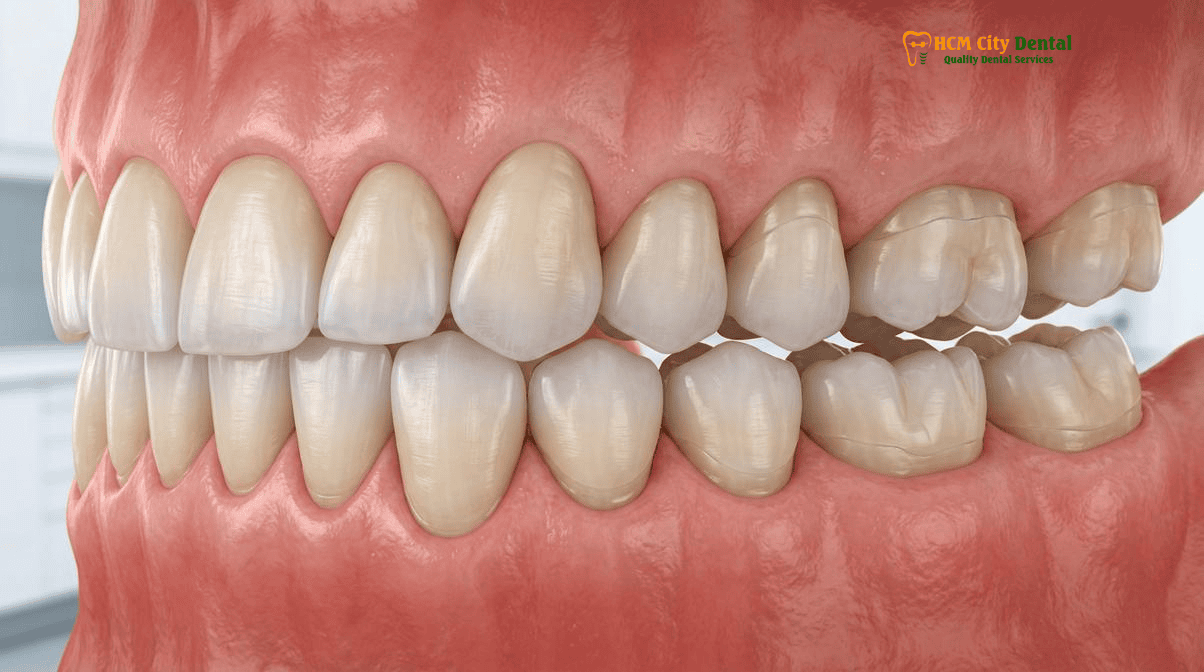
To restore the worn posterior molars and premolars, we utilize biomimetic table-top veneers, onlays, and VDO overlays. A table-top overlay is a flat, custom-milled piece of lithium disilicate that simply sits on top of the worn occlusal surface to replace the missing enamel and elevate the bite. Because the tooth is already worn flat, preparation is virtually zero—we merely smooth sharp edges and micro-air-abrade the surface to maximize bond strength. At just $231 USD per tooth (online booking rate), these overlays provide a highly durable, minimally invasive alternative to traditional crowns.
Anterior Reconstruction: The Sandwich Veneer Technique
Restoring worn anterior teeth is more complex, as they require both functional length (for anterior guidance) and facial aesthetics. When the teeth are severely thinned from palatal erosion (common in GERD or bulimia), we employ the “sandwich technique.” First, a palatal veneer is bonded to the back of the tooth to restore the structural thickness and functional guidance path. Then, a highly aesthetic labial veneer ($185 USD per tooth) is bonded to the front of the tooth to restore the length, color, and natural translucency. This dual-veneer approach completely rebuilds the 3D architecture of the incisor without the need for a 360-degree crown preparation.
“The precision of modern CAD/CAM milling combined with lithium disilicate allows us to create restorations as thin as 0.3mm. When bonded correctly to enamel using resin cements, these ultra-thin ceramics behave exactly like natural tooth structure, flexing and absorbing occlusal loads without fracturing.”
— Dr. Nguyen Van Cuong, DDS
Treating Wedge-Shaped Cervical Abfraction Lesions at the Gumline: Flexible Flowable Liner + Occlusal Equilibration
Cervical abfraction notches and gumline treatment require a specialized approach. Because these wedge-shaped lesions are caused by the tooth flexing under heavy bite forces, simply filling the notch with a stiff, traditional composite resin often leads to failure; the filling will simply pop out the next time the tooth flexes.
The Biomimetic Abfraction Protocol
To successfully treat abfraction lesions, we must address both the symptom (the notch) and the cause (the occlusal stress):
- Flexible Flowable Liner: We restore the cervical notch using a highly filled flowable composite resin that possesses a lower modulus of elasticity (more flexibility) than traditional packable composites. This allows the restoration to flex slightly with the tooth, preventing the bond from breaking under stress.
- Dentin Desensitization: Because abfraction lesions expose dentinal tubules, we utilize glutaraldehyde-based desensitizers and advanced dentin bonding agents to seal the tubules, immediately eliminating cold sensitivity.
- Occlusal Equilibration: The most critical step is adjusting the bite. Using digital articulation paper (such as T-Scan), we identify and remove the premature contacts and eccentric interferences that are causing the tooth to flex in the first place. By directing the bite forces down the long axis of the tooth, we halt the progression of the abfraction.
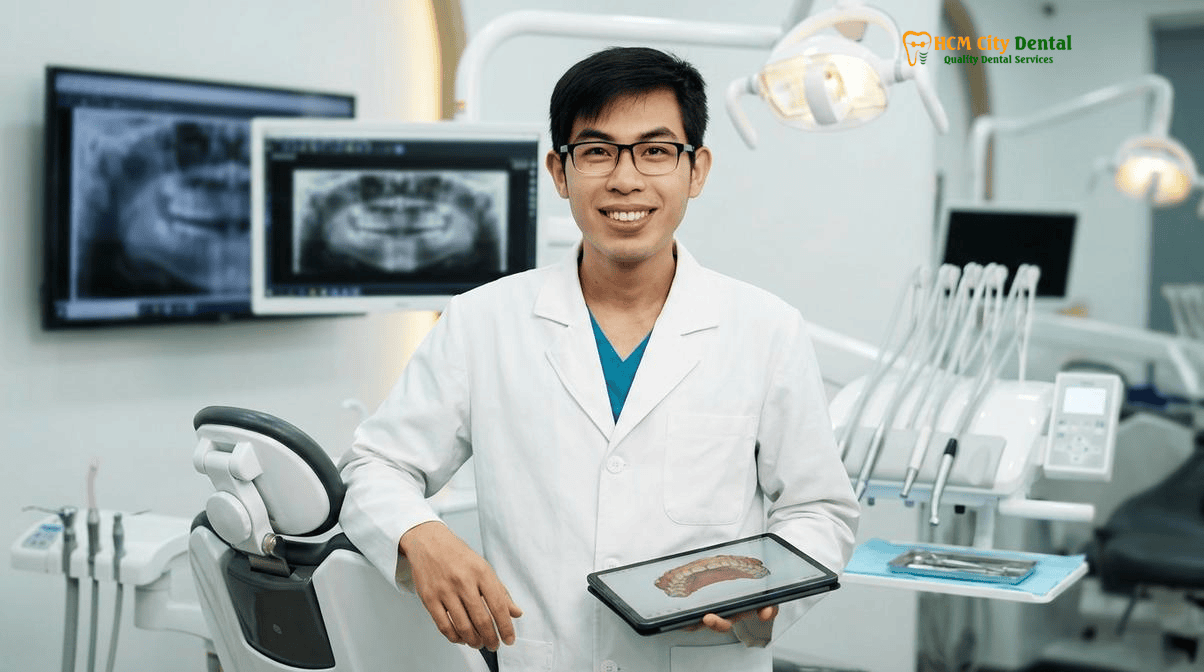
7-to-10 Day Full-Mouth Biomimetic Rehabilitation Itinerary & 2026 Package Pricing at HCMC Dental Clinic (District 1)
For international patients traveling to Vietnam, time is of the essence. HCMC Dental Clinic has optimized our digital workflow to deliver comprehensive, full-mouth biomimetic rehabilitations in a streamlined 7-to-10 day itinerary, without compromising on precision or biological principles.
The Clinical Itinerary
- Day 1: Comprehensive Diagnostics & Deprogramming. 3D CBCT scan, intraoral scanning, clinical photography, and delivery of the Kois Deprogrammer (if required, some patients may receive this via mail prior to arrival).
- Day 3: VDO Trial & Preparation. The PMMA trial bite is placed. Once approved, minimal-prep modifications are made, and final digital impressions are captured.
- Day 4-6: CAD/CAM Milling & Master Ceramist Artistry. Our in-house digital laboratory mills the IPS E.max table-top overlays and veneers, followed by hand-layering and custom staining by our master ceramists.
- Day 7-8: Biomimetic Bonding. The restorations are bonded under rubber dam isolation using MDP-based resin cements (Panavia V5). This meticulous process takes several hours per arch to ensure flawless adhesion and marginal sealing.
- Day 9-10: Occlusal Equilibration & Night Guard Delivery. Final bite adjustments are made, and a custom hard acrylic Michigan night guard is delivered to protect the new restorations from nocturnal bruxism.
Official 2026 Fee Schedule: Vietnam vs. Global Benchmarks
By securing your treatment through our Official 2026 Dental Price List & -40% Online Booking Fee Schedule, patients can access world-class biomimetic dentistry at highly transparent rates. Below is a comparison of our online booking rates versus walk-in prices and international benchmarks.
| Biomimetic & Restorative Procedure | HCMC Dental Clinic (-40% Online USD) | HCMC Dental Clinic (Walk-In USD) | Estimated US / Australia Cost (USD) |
|---|---|---|---|
| IPS E.max Table-Top Overlay / Onlay | $231 USD (6,000,000 VND) | $385 USD | $1,200 – $1,800 USD |
| IPS E.max Porcelain Veneer | $185 USD (4,800,000 VND) | $308 USD | $1,500 – $2,500 USD |
| Full Zirconia Crown (Cercon HT) | $154 – $192 USD | $256 – $321 USD | $1,500 – $2,200 USD |
| Composite Veneer / Dental Bonding | $35 – $46 USD | $58 – $76 USD | $300 – $600 USD |
| Custom Night Guard / Occlusal Splint | $81 – $115 USD | $135 – $191 USD | $500 – $900 USD |
| Single European Implant (Straumann) | $962 – $1,346 USD | $1,603 – $2,244 USD | $4,500 – $6,000 USD |
*Note: For patients requiring missing teeth replacement alongside wear rehabilitation, please refer to our Full Mouth Reconstruction Vietnam: Implants vs Crowns Guide for comprehensive implant pricing.
Frequently Asked Questions
What is the difference between tooth attrition, acid erosion, and gumline abfraction notches?
Tooth attrition is mechanical wear caused by tooth-to-tooth contact (bruxism), resulting in flat, shortened teeth. Acid erosion is the chemical dissolution of enamel from GERD, acid reflux, or dietary acids, creating cupped-out depressions on the chewing surfaces. Abfraction refers to wedge-shaped notches at the gumline caused by flexural stress when teeth bend under heavy, misaligned bite forces.
Can you lengthen my short, worn-down teeth and rebuild my bite height without doing root canals on healthy teeth?
Yes. Through biomimetic additive dentistry, we can restore vertical dimension of occlusion without root canals. Instead of shaving teeth down for traditional crowns—which traumatizes the nerve—we bond ultra-thin IPS E.max table-top overlays and veneers directly to your remaining enamel, preserving the vitality of your dental pulp [3].
How does my jaw joint (TMJ) adapt when you raise my Vertical Dimension of Occlusion (VDO) by 2mm to 4mm?
Before permanently raising your VDO, we use a Kois Deprogrammer to relax your jaw muscles and find your true Centric Relation (CR). We then provide a PMMA trial bite (mock-up) that you wear temporarily. This allows your temporomandibular joint (TMJ) and neuromuscular system to comfortably adapt to the new 2mm to 4mm height before we bond the final ceramic restorations [2].
What are ‘table-top onlays’ and how do they differ from traditional full-coverage dental crowns?
Traditional crowns require circumferentially shaving away up to 70% of your healthy tooth structure. Table-top onlays (or overlays) are conservative, flat ceramic pieces that simply sit on top of your worn teeth to replace the lost height. They require zero to minimal drilling, relying entirely on advanced adhesive bonding (like Panavia V5) rather than mechanical retention [1] [5].
Why is a custom hard acrylic Michigan night guard mandatory after rehabilitating worn-down teeth?
If bruxism or clenching caused your original teeth to wear down, those same subconscious muscle forces will eventually damage your new ceramic restorations. A custom hard acrylic Michigan night guard protects your investment by absorbing nocturnal grinding forces, preventing ceramic fractures, and keeping your jaw muscles relaxed during sleep [4].
References
- Journal of Prosthetic Dentistry. Biomimetic rehabilitation of the worn dentition using lithium disilicate table-top restorations and adhesive protocols. (2023). [1]
- International Journal of Periodontics & Restorative Dentistry. The role of the Kois Deprogrammer in diagnosing and treating severe occlusal wear and VDO loss. (2022). [2]
- Journal of Esthetic and Restorative Dentistry. Additive vs. subtractive approaches in full-mouth reconstruction: Pulp vitality outcomes over 10 years. (2021). [3]
- American Journal of Dentistry. Management of non-carious cervical lesions (abfraction) and GERD-induced erosion using flowable composites and occlusal equilibration. (2023). [4]
- Vietnam Ministry of Health (BYT) & Vietnam Odonto-Stomatology Association (VOSA). National Clinical Guidelines on Specialist Dental Care, Biomaterial Traceability & EN 13060 Class B Infection Control. (2024). [5]