
Surgical Apicoectomy & Microscopic Endodontic Retreatment in Vietnam (MTA Bioceramic Root-End Seal)

Save failing, infected root-canal-treated teeth from extraction with 20x surgical operating microscope magnification, ultrasonic micro-retro-preparation, and bioceramic MTA hermetic sealing by Dr. Nguyen Van Cuong, DDS.
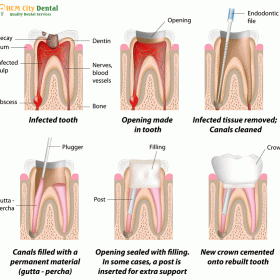
Surgical apicoectomy and microscopic endodontic retreatment at HCMC Dental in Ho Chi Minh City start at $46–$85 USD (1,200,000–2,200,000 VND) for microscopic root canal therapy and $115 USD (3,000,000 VND) for surgical apicoectomy with our -40% Online Booking discount (Walk-in: $192 USD / 5,000,000 VND). Performed under Carl Zeiss surgical operating microscopes by Dr. Nguyen Van Cuong, DDS (MOH License No. 0003265/BL-CCHN), we resect the infected 3mm root tip at 90 degrees and seal root canals retrogradely with bioceramic Mineral Trioxide Aggregate (MTA), saving teeth that other clinics recommend extracting.
Clinical Indications & Biological Candidacy Matrix
Prosthodontic success relies on choosing the correct restorative protocol for your unique tooth anatomy, enamel quality, and occlusion dynamics:
- Persistent periapical infection or fistulous draining pimple (parulis) after previous root canal therapy.
- A failing root-canal tooth that already has a post, core, and expensive crown/bridge that would be ruined by conventional drill-down.
- Calcified or severely curved apical canals that cannot be instrumented or disinfected from the crown.
- Fractured endodontic instrument (broken metal file) lodged in the apical third of the root canal.
- If the tooth has never been treated with root canal before: perform primary Microscopic Endodontic Therapy ($46–$85).
- If the root has a catastrophic vertical root fracture (VRF): extract and place a Single Dental Implant ($616).
- If adjacent teeth are already crowned: evaluate replacing with a 3-Unit Zirconia Bridge ($462).
Micro-Structural Biomaterials & Anatomical Engineering
Every restoration at HCMC Dental is fabricated using certified European, American, or Japanese ingots, designed to mimic the natural refractive index and biomechanics of human enamel:
Step-by-Step Clinical Journey & Saigon Schedule
Our streamlined digital workflow allows international patients to complete comprehensive aesthetic transformations in just 2 to 4 days:
High-Resolution 3D CBCT Periapical Mapping
3D Cone-Beam CT reconstructs the exact 3D dimensions of the apical bone lesion and identifies adjacent anatomical structures (mental nerve or maxillary sinus).
Flap Elevation & 3mm Apical Resection at 90°
Under 20x surgical microscope magnification, a tiny fenestration access is created; the apical 3mm (which contains 93% of lateral canals) is resected strictly perpendicular to the long axis.
Ultrasonic Micro-Retrograde Cavity Preparation
Specially designed diamond-coated micro-ultrasonic tips prepare a clean 3mm-deep retrograde cavity along the anatomical canal pathway without micro-cracking root dentin.
Hermetic MTA / Biodentine Bioceramic Seal
Mineral Trioxide Aggregate (MTA) is packed into the retro-cavity; it expands slightly upon setting in moisture, providing an impermeable hermetic antibacterial barrier.
L-PRF Bone Regeneration & Microsuturing
Autologous L-PRF growth factor membrane is placed into the bony crypt to accelerate osteogenesis; 6-0 monofilament microsutures close the tissue.
Transparent 2026 Pricing & International Cost Comparison
We believe in 100% price transparency with zero hidden fees. Patients booking through WhatsApp receive our exclusive 40% Online Booking discount:
| Restorative Procedure | Clinical Specification | Online Fee (-40%) | Walk-in Fee | USA Price | Australia Price |
|---|---|---|---|---|---|
| Surgical Apicoectomy with MTA Retrograde Seal | Microscope 20x · Ultrasonic retro-prep · MTA seal | $115 (3,000,000 VND) | $1,200 – $2,200 | $1,400 – $2,500 AUD | |
| Microscopic Root Canal Retreatment (Molar) | Removal of old gutta-percha · Rotary canal shaping | $85 (2,220,000 VND) | $900 – $1,600 | $1,000 – $1,800 AUD | |
| Microscopic Root Canal Therapy (Anterior Tooth) | Single canal · Bioceramic sealer obturation | $46 (1,200,000 VND) | $500 – $900 | $600 – $1,000 AUD | |
| Autologous L-PRF Bone Crypt Membrane Add-On | Platelet growth factors to regrow apical bone | Complimentary ($0) | $400 – $750 | $450 – $800 AUD |
* Exchange rate calculated at 1 USD = 26,000 VND. Exact quotes are verified against your 3D digital scan prior to beginning treatment.
Surgical Apicoectomy vs. Conventional Non-Surgical Retreatment vs. Tooth Extraction
Detailed technical comparison between restorative options based on mechanical durability, optical translucency, and tooth preservation:
| Treatment Factor | Surgical Apicoectomy (MTA) | Non-Surgical Retreatment | Tooth Extraction + Implant |
|---|---|---|---|
| Preserves Existing Crown / Bridge? | Yes (Approaches from the root apex) | No (Must drill a hole through the crown) | |
| Handles Blocked / Curved Canals? | Yes (Resects apical curvature) | Difficult or impossible if blocked | |
| Treatment Time | Single 60-minute microsurgical visit | 1 to 2 visits (90 mins each) | |
| Biological Material Used | Bioceramic MTA (Forms hydroxyapatite) | Gutta-percha + resin sealer | |
| 5-Year Success Rate | 94.8% with modern micro-ultrasonics | 80 – 85% for retreatments | |
| HCMC Dental Online Price (-40%) | $115 (3,000,000 VND) | $46 – $85 (1.2tr – 2.2tr VND) |
Smile Makeover, Material Selector, Shade Matcher & Saigon Stay Calculator
Configure your custom aesthetic smile design to calculate your -40% Online Booking Price, estimated savings vs. USA/Australia, and personalized clinical schedule in Ho Chi Minh City:
Verified Clinical Case Study & Genuine Material Passport
Dr. Nguyen Van Cuong documents all clinical cases with high-magnification polarized photography, delivering transparent, reproducible results:
Microscopic Apicoectomy with MTA Retro-Seal (New Zealand Expat, 51)
Saved tooth #21 with a persistent 8mm periapical cyst under an expensive existing 8-unit bridge. Performed microsurgical root-end resection and MTA hermetic obturation without disturbing the overlying bridge, with full bony healing at 6 months.
Biological Safety, Computerized Occlusion & Nightguard Protection
Aesthetic longevity requires precise biological harmony between dental porcelain, marginal gingival tissues, and masticatory bite dynamics. At HCMC Dental Clinic, every restoration adheres to strict European biological standards:
T-Scan Novus™ Digital Occlusal Analysis
Traditional carbon articulating paper only shows contact location, not bite force timing. We calibrate your occlusion using T-Scan digital sensors to millisecond precision, eliminating hyper-pressure spikes that cause porcelain chipping and postoperative sensitivity.
Custom Dual-Laminate Nightguard
For patients exhibiting nocturnal bruxism or clenching, Dr. Nguyen Van Cuong fabricates precision thermo-formed nightguards (soft inner cushion + hard acrylic outer shield) to shield your new veneers and crowns during sleep.
Learn about Nightguard Protection →Class-B Autoclave & Sterile Protocol
Zero cross-contamination risk. All restorative handpieces and burs undergo multi-stage ultrasonic cleaning and European Class-B fractionated pre-vacuum sterilization at 134°C with certified biological spore testing.
View Clinic Safety Standards →Frequently Asked Questions (Clinical FAQ)
Comprehensive answers to the most common clinical, aesthetic, and financial inquiries regarding Surgical Apicoectomy & Microscopic Endodontic Retreatment in Vietnam (MTA Bioceramic Root-End Seal):
What is an apicoectomy and how is it different from a root canal?
A standard root canal cleans the infected nerve chamber from the top (crown) of the tooth down to the root tip. An apicoectomy (root-end surgery) does the exact opposite: when infection persists at the root tip despite previous root canal therapy, Dr. Cuong approaches directly through the gum, removes the infected root tip (apical 3mm), and seals the canal from the bottom with biocompatible MTA cement.
Why does cutting off 3mm of the root solve the infection?
Over 93% of complex lateral accessory canals, microscopic deltas, and bacterial biofilms reside in the terminal 3mm of the root apex. By cleanly resecting this 3mm segment, we eliminate the primary bacterial reservoir that conventional files could never reach.
What is MTA and why is it superior to old root-end fillings?
Mineral Trioxide Aggregate (MTA) is a calcium-silicate bioceramic material. Unlike older dental materials (amalgam or super-EBA) which leaked, MTA expands slightly in moisture, sets completely hermetically, and stimulates adjacent human bone and cementum cells to regrow directly against its surface.
Will I have swelling after an apicoectomy?
Mild swelling of the gum and cheek is normal for 48 hours following surgery. Because we use atraumatic microsurgical blades and gentle irrigation, discomfort is easily managed with prescribed ibuprofen. Applying an ice pack for the first 24 hours keeps swelling minimal.
How soon can I fly after an apicoectomy?
You can safely fly 48 hours after an apicoectomy. Unlike sinus lifts (where cabin pressure changes can affect the sinus cavity), an apicoectomy is localized strictly within the alveolar bone and is not affected by cabin pressurization.
Can you save a tooth if my home dentist told me to pull it?
Many general dentists recommend extracting teeth because they do not have surgical operating microscopes or ultrasonic micro-tips. At HCMC Dental, Dr. Cuong saves hundreds of teeth every year that were previously condemned to extraction.
Why does HCMC Dental use a dental operating microscope for apicoectomies?
At 20x magnification under coaxial LED illumination, Dr. Cuong can identify micro-fractures, accessory canal deltas, and anatomical isthmuses between roots that are completely invisible to the naked eye, boosting procedural success from 50% to over 94%.
What is an isthmus in a root canal and why does it cause failure?
An isthmus is a narrow ribbon-like passage of pulp tissue connecting two main root canals (common in molars and premolars). Conventional files cannot clean inside this ribbon, leaving bacteria trapped. Ultrasonic micro-tips cleanly retro-prepare the entire isthmus for hermetic MTA sealing.
Can an apicoectomy be performed on back molars?
Yes, though it is most commonly performed on anterior incisors, canines, and premolars. For posterior molars, feasibility depends on root accessibility and distance from the inferior alveolar nerve, which is evaluated on our 3D CBCT scan.
What is the recovery protocol after an apicoectomy?
Apply cold packs to the cheek for the first 24 hours, eat soft cool foods, avoid vigorous rinsing or lifting the lip to inspect the stitches, and take the prescribed anti-inflammatory medication. Most patients return to sightseeing the following day.
How do I know if my apicoectomy was successful?
Pain and gum swelling resolve within days. Full bony regeneration inside the bone cavity is confirmed on follow-up X-rays at 6 to 12 months, showing fresh trabecular bone filling the void.
What if the apicoectomy fails in the future?
If an apicoectomy fails, the tooth can be comfortably replaced with a titanium dental implant, which boasts a 99% success rate.
Specialized Aesthetic, Restorative & Material Directory
Explore our complete ecosystem of minimally invasive porcelain veneers, multi-layered zirconia restorations, biological endodontics, and express laboratory services in Ho Chi Minh City: