
Dental Crown & Porcelain Veneer Materials Guide in Vietnam: E.max vs. Zirconia vs. Composite

An evidence-based prosthodontic breakdown of Lithium Disilicate, Monolithic Multi-Layered Zirconia, Hybrid Ceramics, and Direct Composite Resin by Dr. Nguyen Van Cuong, DDS — choosing the ideal biomaterial for aesthetics, longevity, and biological preservation.
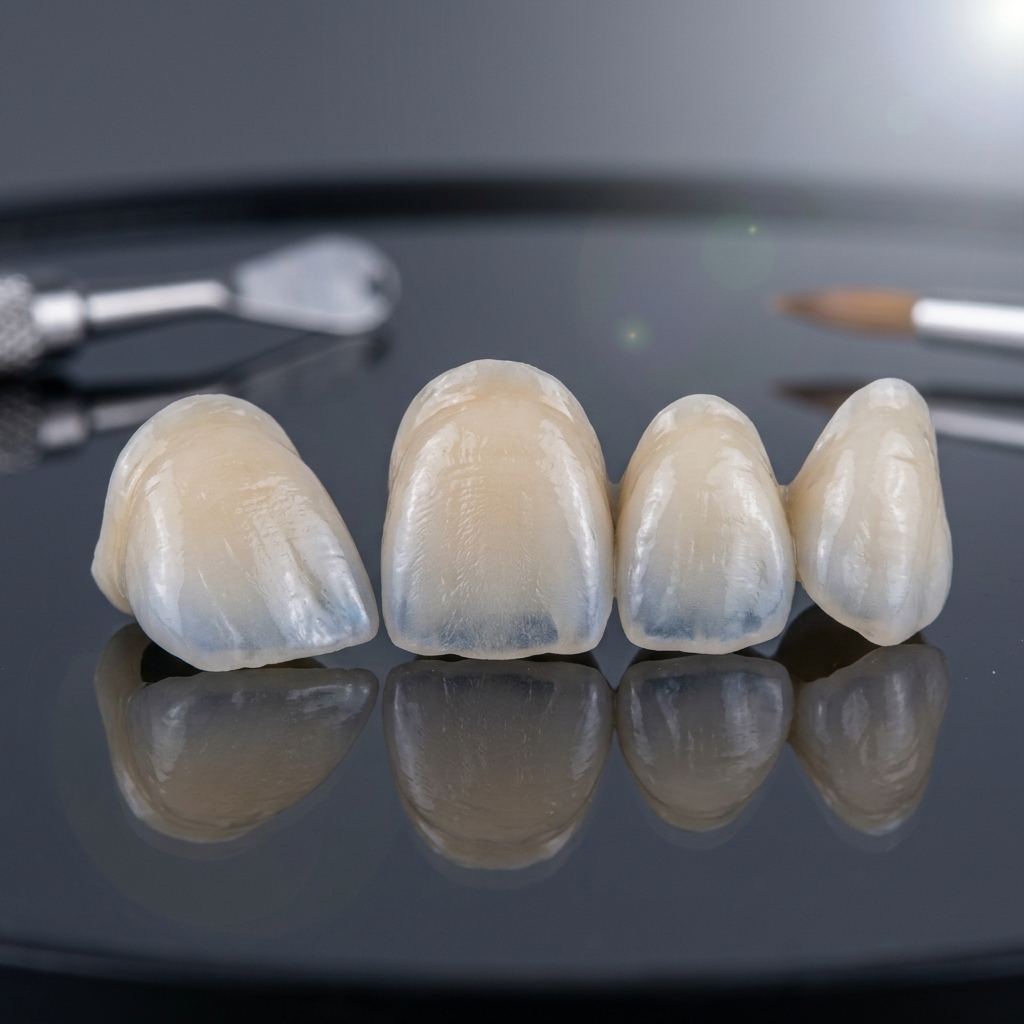
Dental crown and veneer materials at HCMC Dental in Ho Chi Minh City range from $48 USD (1,200,000 VND) for nano-hybrid composite veneers to $192 USD (4,800,000 VND) for Swiss IPS e.max® Press lithium disilicate and Katana™ multi-layered monolithic zirconia with our -40% Online Booking discount (Walk-in: $80 to $320 USD). Dr. Nguyen Van Cuong, DDS (MOH License No. 0003265/BL-CCHN) matches restorative materials based on flexural strength (400–1200 MPa), optical translucency (42–55%), and enamel conservation requirements. Ceramic fabrications require 3–4 days in Saigon across 2 clinical appointments.
Clinical Indications & Biological Candidacy Matrix
Prosthodontic success relies on choosing the correct restorative protocol for your unique tooth anatomy, enamel quality, and occlusion dynamics:
- Patients seeking cosmetic improvement needing clear guidance on glass-ceramic vs. polycrystalline zirconia.
- Anterior smile zone restorations demanding maximum light transmission and natural opal effects (IPS e.max Press).
- Posterior molars or patients with severe bruxism/clenching requiring unbreakable 1200 MPa flexural strength (Zirconia HT).
- Budget-conscious patients wanting express same-day single-visit transformations without lab wait times (Nano-Composite).
- If you have sound, unblemished anterior enamel and minor gaps: choose 0.2mm No-Prep Veneers.
- If your tooth has lost over 60% coronal structure or underwent root canal therapy: choose Monolithic Zirconia Crowns.
- If you suffer from nighttime teeth grinding: combine ceramic restorations with a custom Occlusal Nightguard.
Micro-Structural Biomaterials & Anatomical Engineering
Every restoration at HCMC Dental is fabricated using certified European, American, or Japanese ingots, designed to mimic the natural refractive index and biomechanics of human enamel:
Step-by-Step Clinical Journey & Saigon Schedule
Our streamlined digital workflow allows international patients to complete comprehensive aesthetic transformations in just 2 to 4 days:
Digital Diagnostic Workup & Biomaterial Selection
3Shape Trios 5D optical scanning, polarized aesthetic photography, and T-Scan occlusal force mapping to determine structural loading requirements.
Digital Smile Design (DSD) & Direct Intraoral Mockup
Preview your exact tooth proportions, incisal edge positions, and smile curve directly in your mouth with reversible bis-acryl resin.
Conservative Microscope Preparation & Precision Digital Impression
Dr. Cuong executes minimal chamfer margins (0.3–0.5mm) strictly within enamel under Carl Zeiss magnification; digital CAD files are routed to our on-site milling facility.
5-Axis CAD/CAM Robotic Milling & Artisan Ceramic Layering
Ingots from Ivoclar Vivadent or Kuraray Noritake are milled with 5-micron tolerance, then hand-glazed by master ceramists to mimic natural mammelon translucency.
Adhesive Cementation & T-Scan Occlusal Equilibration
Total-etch or self-adhesive resin bonding under rubber dam isolation, followed by computerized bite balancing to ensure zero premature contacts.
Transparent 2026 Pricing & International Cost Comparison
We believe in 100% price transparency with zero hidden fees. Patients booking through WhatsApp receive our exclusive 40% Online Booking discount:
| Restorative Procedure | Clinical Specification | Online Fee (-40%) | Walk-in Fee | USA Price | Australia Price |
|---|---|---|---|---|---|
| Direct Nano-Hybrid Composite Veneer | 3M Filtek / Tokuyama Estelite · Same-day 1 visit | $48 (1,200,000 VND) | $350 – $600 | $400 – $750 AUD | |
| IPS e.max® Press Lithium Disilicate Veneer | Ivoclar Vivadent · 470–530 MPa · 0.3–0.5mm prep | $192 (4,800,000 VND) | $1,200 – $2,200 | $1,400 – $2,500 AUD | |
| Ultra-Thin No-Prep Veneer (Lumineers Style) | 0.2mm contact-lens thickness · Reversible | $212 (5,500,000 VND) | $1,400 – $2,500 | $1,600 – $2,800 AUD | |
| Monolithic Zirconia Crown (Cercon Standard) | Dentsply Sirona · 1000 MPa · Posterior teeth | $154 (4,000,000 VND) | $1,100 – $1,800 | $1,200 – $2,200 AUD | |
| Katana™ Multi-Layered Zirconia HT Crown | Kuraray Noritake · 4-layer gradient · 1200 MPa | $192 (5,000,000 VND) | $1,300 – $2,400 | $1,500 – $2,600 AUD |
* Exchange rate calculated at 1 USD = 26,000 VND. Exact quotes are verified against your 3D digital scan prior to beginning treatment.
Comprehensive Restorative Biomaterial Comparison Matrix
Detailed technical comparison between restorative options based on mechanical durability, optical translucency, and tooth preservation:
| Biomaterial Property | IPS e.max® Press | Katana™ ML Zirconia | Direct Composite |
|---|---|---|---|
| Flexural Strength (MPa) | 470 – 530 MPa | 1,100 – 1,200 MPa | |
| Optical Translucency | Excellent (High/Medium Translucency) | Good to High (Multi-layered gradient) | |
| Enamel Prep Required | 0.3 – 0.5 mm (Conservative) | 0.6 – 1.0 mm (Circumferential) | |
| Antagonist Enamel Wear | Very Low (Matches natural enamel) | Extremely Low (When high-gloss polished) | |
| Expected Lifespan | 15 – 20+ Years | 20 – 25+ Years | |
| Best Clinical Indication | Anterior Veneers & Front Crowns | Posterior Molars, Bridges & Bruxism |
Smile Makeover, Material Selector, Shade Matcher & Saigon Stay Calculator
Configure your custom aesthetic smile design to calculate your -40% Online Booking Price, estimated savings vs. USA/Australia, and personalized clinical schedule in Ho Chi Minh City:
Verified Clinical Case Study & Genuine Material Passport
Dr. Nguyen Van Cuong documents all clinical cases with high-magnification polarized photography, delivering transparent, reproducible results:
Full Aesthetic Zone Smile Rehabilitation with IPS e.max® & Noritake Katana™ (US Expat, 52)
Combined 6 anterior IPS e.max Press veneers (0.4mm prep) with 4 posterior Katana ML zirconia crowns to restore worn canine guidance and achieve natural optical translucency.
Biological Safety, Computerized Occlusion & Nightguard Protection
Aesthetic longevity requires precise biological harmony between dental porcelain, marginal gingival tissues, and masticatory bite dynamics. At HCMC Dental Clinic, every restoration adheres to strict European biological standards:
T-Scan Novus™ Digital Occlusal Analysis
Traditional carbon articulating paper only shows contact location, not bite force timing. We calibrate your occlusion using T-Scan digital sensors to millisecond precision, eliminating hyper-pressure spikes that cause porcelain chipping and postoperative sensitivity.
Custom Dual-Laminate Nightguard
For patients exhibiting nocturnal bruxism or clenching, Dr. Nguyen Van Cuong fabricates precision thermo-formed nightguards (soft inner cushion + hard acrylic outer shield) to shield your new veneers and crowns during sleep.
Learn about Nightguard Protection →Class-B Autoclave & Sterile Protocol
Zero cross-contamination risk. All restorative handpieces and burs undergo multi-stage ultrasonic cleaning and European Class-B fractionated pre-vacuum sterilization at 134°C with certified biological spore testing.
View Clinic Safety Standards →Frequently Asked Questions (Clinical FAQ)
Comprehensive answers to the most common clinical, aesthetic, and financial inquiries regarding Dental Crown & Porcelain Veneer Materials Guide in Vietnam: E.max vs. Zirconia vs. Composite:
Which is better for front teeth: E.max or Zirconia?
For front teeth (anterior smile zone), IPS e.max® Press is widely regarded by prosthodontists as the gold standard because of its glass-ceramic lithium disilicate microstructure. It replicates the optical translucency, opalescence, and natural light reflection of tooth enamel better than any other material. Multi-layered Zirconia (such as Katana STML) is close in beauty and is preferred if you have heavy bite forces or severe bruxism.
Will porcelain veneers or crowns stain over time?
No. High-fused ceramic materials like IPS e.max and Zirconia are completely non-porous and glazed at temperatures exceeding 850°C. They are immune to staining from coffee, red wine, tea, and tobacco. In contrast, composite resin is slightly porous and may absorb surface pigments over 3–5 years, requiring periodic chairside polishing.
How much tooth structure is shaved for crowns vs. veneers?
Veneers are highly conservative: Dr. Cuong removes only 0.3mm to 0.5mm of facial enamel (or zero enamel for no-prep veneers), preserving 80–90% of your coronal tooth structure. Full crowns require circumferential preparation (0.8mm to 1.2mm around the entire 360 degrees of the tooth), sacrificing 60–70% of coronal structure. We always recommend veneers when structurally feasible.
Can Zirconia break or chip?
Monolithic Zirconia is virtually unbreakable under normal and even extreme masticatory loads, boasting a flexural strength of 1100–1200 MPa (compared to ~150 MPa for human enamel). Older layered porcelain-fused-to-zirconia (PFZ) crowns had chipping risks, which is why HCMC Dental exclusively utilizes advanced full-contour monolithic or multi-layered zirconia.
How long do I need to stay in Saigon for veneers or crowns?
For ceramic veneers or crowns, you only need 3 to 4 days in Ho Chi Minh City. Your first visit includes digital 3Shape scanning and preparation with immediate temporary placement. Our dedicated CAD/CAM lab crafts your restorations within 48–72 hours, and visit two is final adhesive bonding and bite verification.
Do you provide authentic material authenticity cards with QR codes?
Yes. Every patient receiving IPS e.max, Noritake Katana, or Dentsply Sirona Cercon restorations receives the manufacturer’s genuine warranty card featuring the batch LOT number and digital verification QR code.
What is the difference between feldspathic porcelain and lithium disilicate?
Feldspathic porcelain is traditional powder-liquid ceramic stacked by hand; it has beautiful translucency but modest flexural strength (~90–120 MPa). Lithium disilicate (IPS e.max®) is a high-density glass-ceramic with interlocking needle-like crystals, offering over 4x higher strength (470–530 MPa) while maintaining comparable natural translucency.
What is Hybrid Ceramic (Resin-Matrix Ceramic) like Vita Enamic?
Hybrid ceramics combine 86% ceramic network with 14% polymer. They mimic the elasticity modulus of natural human dentin (~30 GPa), making them ideal for table-top onlays for severe tooth wear because they absorb chewing shock and do not fracture easily.
How does bonding differ between glass-ceramics and zirconia?
Glass-ceramics (e.max) can be chemically etched with hydrofluoric acid and silanized to create an unbreakable micro-mechanical bond to tooth enamel. Zirconia is an acid-resistant polycrystalline oxide that cannot be etched with acid; it requires air-abrasion with 50µm aluminum oxide and primers containing 10-MDP monomer (such as RelyX Ultimate or Panavia V5).
Can dental materials trigger allergic reactions?
All materials used at HCMC Dental (IPS e.max, Noritake Katana, 3M Filtek) are 100% metal-free, nickel-free, and biologically inert, with zero cytotoxicity or allergic potential.
How do I know which shade (VITA vs Bleach) will look best on my skin tone?
We perform a digital shade assessment using polarized lighting. Patients with fair skin tones often suit BL1 or BL2, whereas warmer olive or tan skin tones often look most striking and natural with BL3, BL4, or A1.
What happens if a ceramic veneer or crown ever chips in the future?
All our e.max and zirconia restorations are covered by our clinic 10-year warranty. If a chip occurs under normal masticatory use, we repair or replace the restoration free of charge.
Specialized Aesthetic, Restorative & Material Directory
Explore our complete ecosystem of minimally invasive porcelain veneers, multi-layered zirconia restorations, biological endodontics, and express laboratory services in Ho Chi Minh City: