Yes, porcelain fused to metal (PFM) crowns are generally safe and have been a reliable restorative standard for decades. However, their safety and biocompatibility depend heavily on the specific metal alloys used, the patient’s allergy profile, and the precision of the clinical fabrication process.
Clinical Summary:
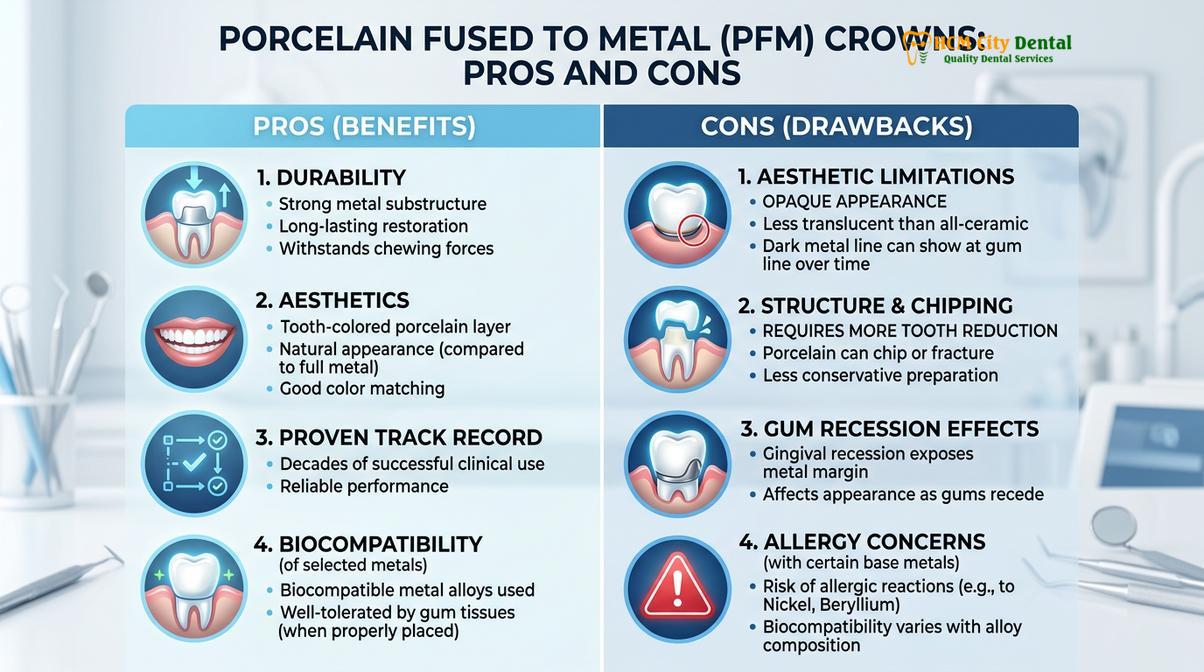
Porcelain Fused to Metal (PFM) crowns combine the robust mechanical strength of a cast metal core with the aesthetic appeal of an overlying ceramic veneer. From a clinical safety perspective, PFM restorations are highly effective for restoring severely damaged teeth and supporting dental bridges. The primary safety concerns revolve around potential allergic reactions to base metals (such as nickel or beryllium) and localized gingival irritation. To mitigate these risks, modern dental practices prioritize high-noble alloys (gold, platinum) or transition patients to highly biocompatible alternatives like monolithic zirconia or E.max ceramics. Utilizing advanced digital diagnostics and adhering to strict European CE sterilization standards ensures that PFM crowns remain a safe, durable, and functional option for comprehensive oral rehabilitation.
Key Takeaways:
- PFM crowns are structurally sound, utilizing a metal core for bite resistance and a porcelain exterior for a natural appearance.
- Safety risks are minimal but include potential metal allergies; using noble metals or titanium significantly reduces this risk.
- A common aesthetic drawback is the appearance of a dark line at the gum margin as gingival tissue naturally recedes over time.
- Modern alternatives like Zirconia and E.max offer superior biocompatibility and aesthetics without compromising on chewing strength.
- Precision in fabrication, aided by digital intraoral scanners, is crucial for ensuring a tight marginal fit and preventing secondary decay.
Understanding Porcelain Fused to Metal (PFM) Crowns
PFM crowns are dual-layered dental restorations featuring a durable metal alloy core covered by a tooth-colored ceramic shell, offering a balance of strength and aesthetics.
For decades, restorative dentistry has relied on Porcelain Fused to Metal (PFM) crowns as the gold standard for repairing extensively decayed, fractured, or endodontically treated teeth. To fully understand whether these restorations are safe, it is essential to examine their structural composition and the biomechanical role they play within the oral cavity. A PFM crown is essentially a hybrid structure. The internal framework is cast or milled from a metal alloy, providing the necessary tensile strength to withstand the immense occlusal (biting) forces generated by the human jaw. Over this metal coping, layers of feldspathic porcelain are meticulously baked in a high-heat dental furnace, creating a translucent, tooth-colored exterior that mimics natural enamel.
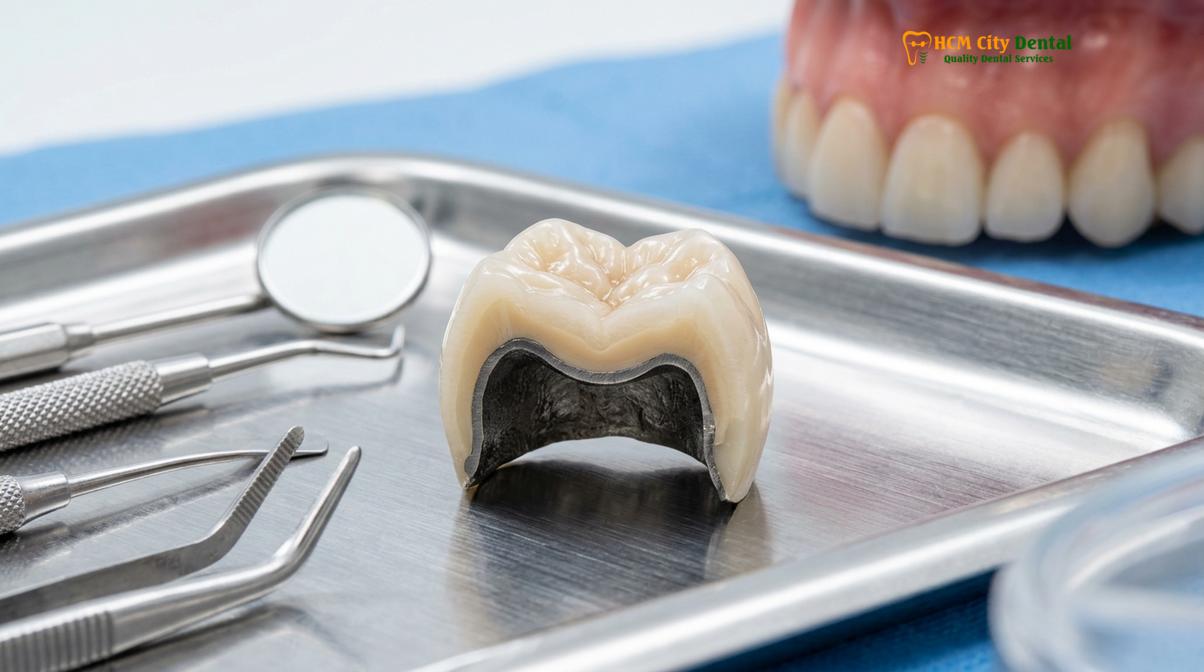
The safety and longevity of a PFM crown are intrinsically linked to the type of metal alloy used for the substructure. Dental alloys are generally categorized into three main groups: high-noble, noble, and base metal alloys. High-noble alloys contain a minimum of 60% noble metals (such as gold, platinum, and palladium), with gold comprising at least 40% of the mixture. These materials are exceptionally safe, highly biocompatible, and resistant to corrosion in the moist environment of the mouth. Noble alloys contain at least 25% noble metals, offering a middle ground in terms of cost and clinical performance. Conversely, base metal alloys consist primarily of non-noble metals like nickel, chromium, cobalt, and sometimes beryllium. While base metals provide excellent rigidity and are more cost-effective, they are the primary source of the safety concerns and allergic reactions occasionally associated with PFM restorations[1].
When evaluating dental crown restorations, clinicians must consider the specific location of the tooth, the patient’s bite dynamics, and their systemic health profile. For posterior teeth (molars) that endure heavy grinding forces, the metal substructure of a PFM crown provides unparalleled fracture resistance. However, the overlying porcelain is still susceptible to chipping if subjected to excessive trauma or bruxism. In the context of comprehensive Kiến thức nha khoa (dental knowledge), understanding the material science behind these crowns empowers patients to make informed decisions regarding their long-term oral health.
Clinical Safety and Biocompatibility of PFM Crowns
While generally safe, PFM crowns can trigger allergic reactions or gingival inflammation in sensitive individuals if base metal alloys containing nickel or beryllium are utilized.
The primary clinical question—are porcelain fused to metal crowns safe?—is best answered by examining the concept of biocompatibility. Biocompatibility refers to the ability of a dental material to exist within the oral cavity without eliciting an adverse biological response. For the vast majority of patients, PFM crowns are entirely safe and function seamlessly for decades. However, complications can arise, predominantly linked to the metal coping.
Metal allergies, particularly to nickel, are relatively common in the general population. When a PFM crown utilizing a nickel-chromium base alloy is placed in a patient with a nickel sensitivity, the continuous exposure to trace amounts of metal ions released through microscopic corrosion can trigger localized allergic contact stomatitis. Symptoms may include chronic redness, swelling, bleeding of the gingival margins surrounding the crown, and in severe cases, a systemic dermatological response. Furthermore, the historical use of beryllium in some base metal alloys to improve castability has been largely phased out in modern, high-quality dental practices due to its known toxicity and potential to cause berylliosis in dental laboratory technicians during the grinding process[2].
“Patient safety in restorative dentistry begins with meticulous material selection. By utilizing high-noble alloys or transitioning to advanced metal-free ceramics, we eliminate the risk of base-metal hypersensitivity, ensuring that the restoration integrates harmoniously with the surrounding gingival tissues.” – Dr. Nguyen Van Cuong
Another clinical consideration regarding the safety and biological integration of PFM crowns is the gingival response at the crown margin. The margin is the critical junction where the crown meets the natural tooth structure. If the margin is bulky, poorly contoured, or if the metal oxidizes over time, it can act as a plaque retentive factor. This accumulation of bacterial biofilm can lead to localized periodontitis. Furthermore, as patients age, natural gingival recession often occurs. When the gums recede away from a PFM crown, the underlying metal collar becomes exposed, creating the dreaded “dark line” at the gum base. While this dark line is primarily an aesthetic failure rather than a safety hazard, it often causes psychological discomfort and prompts patients to seek replacement restorations[3].
To ensure maximum safety, elite dental professionals, acting as true porcelain experts, conduct thorough medical history reviews prior to treatment. If a patient reports a history of skin reactions to cheap jewelry or watchbands, a metal allergy is highly suspected, and base metal PFM crowns are strictly contraindicated. In such scenarios, the clinical protocol dictates the use of either high-noble gold alloys, titanium, or entirely metal-free alternatives.
PFM Crowns vs. All-Ceramic and Zirconia Alternatives
Modern dentistry increasingly favors all-ceramic and zirconia crowns over PFM due to their superior biocompatibility, flawless aesthetics, and elimination of metal-related complications.
As dental material science has advanced, the dominance of PFM crowns has been challenged by highly sophisticated all-ceramic and zirconia restorations. When patients inquire about Design Dental Smiles: Clinical Guide to Aesthetic Restorations | HCMC Dental, the conversation inevitably shifts toward comparing these modern materials against traditional PFM structures.
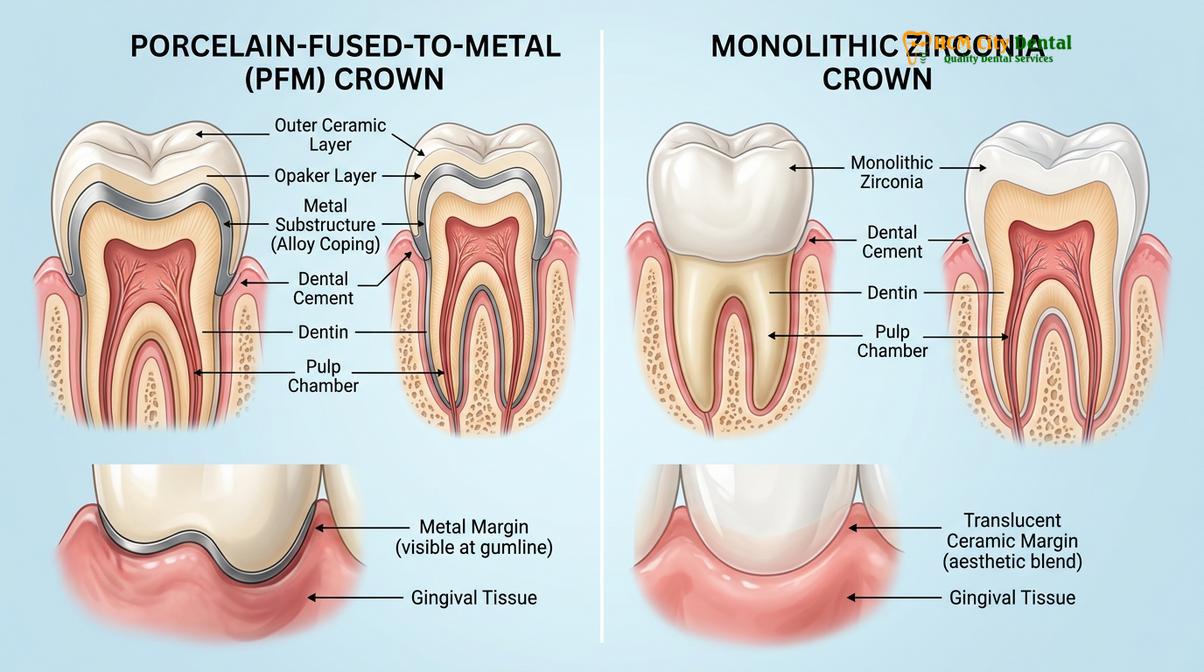
Zirconia (zirconium dioxide) is a white, crystalline oxide of zirconium. It is a ceramic material that possesses the mechanical strength of metal, earning it the nickname “ceramic steel.” Monolithic zirconia crowns are milled from a single block of material using CAD/CAM technology, resulting in a restoration that is virtually indestructible under normal physiological chewing forces. Unlike PFM crowns, zirconia contains no dark metal core, allowing light to pass through the restoration in a manner that closely mimics natural tooth enamel. For a detailed comparison, patients often review the Zirconia Crown vs Porcelain Crown: Clinical Guide | HCMC Dental to understand the aesthetic and functional differences.
Lithium disilicate, commonly known by the brand name E.max, is another premier all-ceramic option. E.max crowns are renowned for their breathtaking translucency and lifelike vitality, making them the absolute material of choice for restoring anterior (front) teeth where aesthetics are paramount. While slightly less robust than monolithic zirconia, E.max is more than strong enough for front teeth and premolars, and it bonds exceptionally well to the underlying tooth structure.
| Feature | Porcelain Fused to Metal (PFM) | Monolithic Zirconia | E.max (Lithium Disilicate) |
|---|---|---|---|
| Biocompatibility | Moderate to High (Depends on alloy used) | Exceptional (Hypoallergenic) | Exceptional (Hypoallergenic) |
| Aesthetics | Good, but opaque core blocks light; risk of dark gum line | Excellent, highly translucent, no dark lines | Superior, most natural-looking translucency |
| Strength | Very High (Metal core provides rigidity) | Extremely High (Resistant to fracture) | Moderate to High (Ideal for front teeth) |
| Tooth Preparation | Requires significant enamel removal for two layers | Conservative preparation possible | Conservative preparation possible |
| Best Application | Posterior bridges, masking severely discolored teeth | Heavy biters, posterior molars, long-span bridges | Anterior teeth, highly aesthetic smile makeovers |
When considering alternatives to PFM, it is also worth noting that minor aesthetic corrections might not require a full crown. In cases of minor damage, Dental Wax for Chipped Tooth: Clinical Guide & Repair | HCMC Dental or advanced porcelain fillings (inlays and onlays) can provide conservative, highly aesthetic solutions that preserve more of the natural tooth structure.
The Clinical Workflow for PFM Crown Placement
The fabrication of a safe and precise PFM crown involves digital intraoral scanning, meticulous tooth preparation, and collaboration with a high-quality dental laboratory.
The safety and success of any dental crown are heavily dependent on the precision of the clinical workflow. A poorly fitting crown, regardless of the material, will inevitably lead to microleakage, secondary caries (decay under the crown), and periodontal inflammation. The modern workflow for placing a PFM crown has been revolutionized by digital technology, ensuring a level of accuracy that was previously unattainable with traditional putty impressions.
The procedure begins with a comprehensive clinical examination, including digital X-rays or a 3D CBCT scan, to assess the health of the tooth roots and surrounding bone. If the tooth is severely decayed or has undergone root canal therapy, a core buildup is performed to provide a solid foundation. The dentist then meticulously prepares the tooth, removing a specific amount of enamel and dentin to create space for the metal coping and the porcelain layers. The preparation must feature smooth, well-defined margins to ensure the final crown seats perfectly without any microscopic gaps.
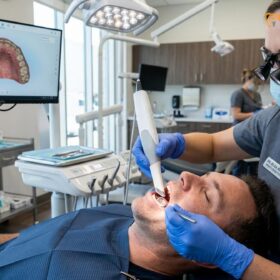
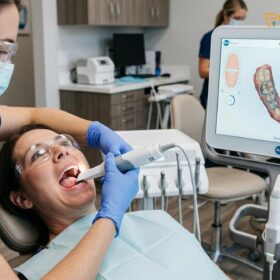
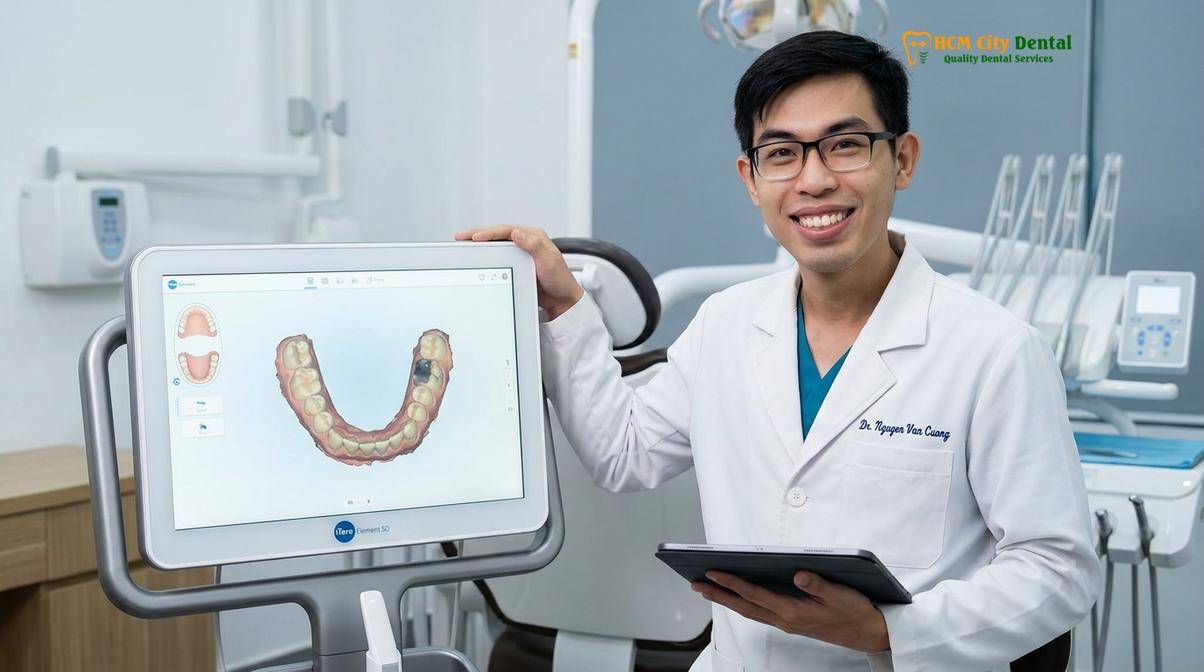
Following preparation, the traditional method involved placing gooey impression material into the patient’s mouth. Today, elite clinics utilize advanced intraoral scanners, such as the iTero Element 5D or Medit i700. These devices capture thousands of images per second, stitching them together to create a highly accurate, full-color 3D digital model of the patient’s teeth and bite registration. This digital file is instantly transmitted to the dental laboratory. By partnering with an integrity dental lab, the clinician ensures that the digital data is translated into a perfectly fitting restoration. Selecting a choice dental lab that adheres to strict quality control and uses premium, biocompatible alloys is a critical step in guaranteeing the safety of the PFM crown[5].
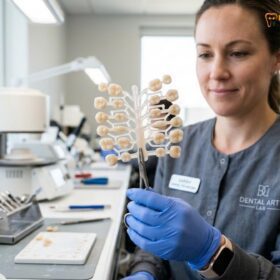
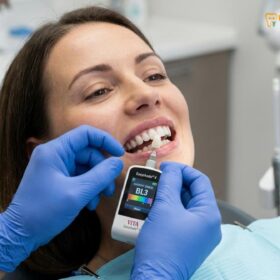
At the laboratory, the metal substructure is either cast using the lost-wax technique or precision-milled using CAD/CAM technology. Once the metal coping is verified for fit, skilled ceramists layer the porcelain by hand, carefully matching the shade, translucency, and surface texture to the patient’s adjacent natural teeth. The goal is to create a restoration that contributes to forever smiles, dental harmony, and optimal function. During the final placement appointment, the dentist evaluates the crown’s fit, contacts, and occlusion (bite) before permanently cementing it using biocompatible dental luting agents.
Longevity, Maintenance, and Potential Complications
With proper oral hygiene, PFM crowns can last over a decade, though patients must be vigilant about preventing porcelain fractures and maintaining gum health.
Patients frequently ask, How Long Does a Tooth Crown Last? Clinical Guide | HCMC Dental. The lifespan of a porcelain fused to metal crown is typically between 10 and 15 years, though many survive much longer with meticulous care. The longevity is a testament to the structural integrity provided by the metal core. However, the restoration is not invincible, and specific maintenance protocols must be followed to ensure its continued safety and function.
One of the most common complications associated with PFM crowns is the chipping or fracturing of the porcelain veneer. While the metal core will not break, the ceramic layer can shear off if subjected to sudden trauma, biting on hard objects (like ice or hard candy), or chronic teeth grinding (bruxism). If a minor chip occurs, it can sometimes be polished or repaired with composite resin. However, a significant fracture that exposes the underlying metal usually necessitates a complete replacement. Patients dealing with such issues can refer to the Broken Crown Tooth: Clinical Guide & Repair | HCMC Dental for immediate steps to take.
Maintaining optimal periodontal health around the crowned tooth is paramount. A common complaint is having food caught under dental bridge structures or around the margins of a single crown. This food impaction provides a breeding ground for bacteria, leading to plaque accumulation, gingivitis, and eventually, bone loss. Patients must adopt a rigorous daily oral hygiene routine. Brushing twice daily with a soft-bristled toothbrush and non-abrasive fluoride toothpaste is essential. Furthermore, interdental cleaning cannot be overlooked. Using high-quality plastic dental floss, interdental brushes, or a water flosser helps remove debris from the critical junction where the crown meets the gum line[4].
Clinical Warning: Signs of Crown Failure or Metal Allergy
Patients with PFM crowns should seek immediate dental evaluation if they experience any of the following symptoms: chronic redness, swelling, or bleeding of the gums specifically around the crowned tooth; a metallic taste in the mouth; localized itching or a rash on the oral mucosa; or noticeable mobility of the crown. These signs may indicate an allergic reaction to the metal alloy, cement washout, or underlying secondary decay that requires prompt clinical intervention.
Expat Dental Care and Advanced Restorations in Ho Chi Minh City
HCMC Dental Clinic provides world-class, English-speaking restorative care for expats, featuring direct insurance billing, digital workflows, and transparent pricing.
For the vibrant expatriate community residing in or traveling to Vietnam, navigating healthcare services can be daunting. However, Ho Chi Minh City has emerged as a premier destination for high-quality, affordable dental care. HCMC Dental Clinic stands at the forefront of this medical landscape, offering comprehensive restorative solutions, including PFM, Zirconia, and E.max crowns, tailored specifically to the needs of international patients.
Understanding the logistical and financial concerns of expats, HCMC Dental Clinic has established robust Direct Billing Insurance Partners. By collaborating with major international insurers such as Allianz, Bupa, Cigna, Liberty, Generali, Aetna, and InterGlobal, the clinic allows expat families to enjoy seamless, cashless transactions for a wide range of treatments, from routine teeth cleaning and pediatric checkups to complex crown and bridge restorations. This administrative support eliminates the stress of out-of-pocket payments and complex reimbursement claims.
The clinical environment is designed to meet rigorous international standards. Under the expert guidance of Dr. Nguyen Van Cuong, the clinic adheres strictly to European CE sterilization protocols. Multilingual communication ensures that every diagnostic finding, treatment option, and material choice is explained clearly in fluent English. Whether discussing the nuances of different types of dental implant surfaces, explaining the various dental implant parts required for a full-mouth reconstruction, or detailing the benefits of a Zirconia Crown: Clinical Guide, Types & Procedure | HCMC Dental, Dr. Cuong and his team prioritize patient education and informed consent.
Patient Case Study: Upgrading from PFM to Zirconia
An expat patient visited HCMC Dental Clinic in Ho Chi Minh City complaining of a dark, unappealing line around an old PFM crown on an upper premolar, accompanied by mild gingival inflammation. Dr. Nguyen Van Cuong conducted a thorough digital assessment using the iTero Element 5D scanner. The diagnosis revealed localized tissue irritation likely due to a base-metal allergy from the legacy crown. The treatment plan involved carefully removing the old PFM crown, refining the tooth preparation, and fabricating a highly biocompatible, monolithic Zirconia crown. The new restoration eliminated the dark margin, resolved the gingival inflammation, and seamlessly blended with the patient’s natural smile, all completed within a streamlined digital workflow.
Accessibility and transparent pricing are core pillars of the clinic’s service model. Located conveniently in the heart of Ho Chi Minh City, the clinic is easily accessible via a short Grab ride from major expat neighborhoods and business districts. Furthermore, the clinic offers a highly attractive pricing structure for international patients who plan ahead. According to the latest fee schedule, patients booking via WhatsApp receive a 40% pre-arrival discount. For example, a comprehensive Family / Pediatric Dental Exam & Consultation, normally ~$30 (750k VND) for walk-ins, is available from just $18 (450k VND). Deep teeth cleaning (Scaling & Polishing) drops from ~$40 to from $24. For restorative work, a premium E.max Ceramic Crown or Veneer, typically priced at ~$320 (8.0M VND), is accessible from $192 (4.8M VND) with the WhatsApp discount. All ceramic restorations are backed by a clinic warranty card featuring a 3-year bonding guarantee, with remote follow-up support readily available via WhatsApp.
When to See a Doctor
While PFM crowns are designed to be safe and durable, certain clinical signs warrant immediate professional evaluation. You should schedule an appointment with a qualified dentist if you experience:
- Persistent Pain or Sensitivity: Pain when biting down or lingering sensitivity to hot or cold temperatures may indicate that the nerve inside the tooth is inflamed or infected, or that the crown is sitting too high and disrupting your bite.
- Gingival Inflammation: Chronic redness, swelling, bleeding, or purulent discharge (pus) around the margin of the crown suggests periodontal disease, an allergic reaction to the metal, or a poorly fitting margin harboring bacteria.
- Crown Mobility: If the crown feels loose or shifts when you chew, the underlying cement may have washed out, or the core tooth structure may be compromised by secondary decay.
- Visible Damage: Any noticeable chipping, cracking, or fracturing of the porcelain veneer, especially if the underlying metal is exposed, requires assessment to prevent further structural failure or damage to opposing teeth.
- Unpleasant Taste or Odor: A persistent metallic taste or bad breath originating from the crowned tooth can be a sign of active decay beneath the restoration or metal oxidation.
Early diagnostic intervention is critical. Delaying a clinical examination can lead to irreversible damage to the underlying tooth structure, potentially necessitating root canal therapy or extraction. Always consult with a dental professional for an individualized assessment rather than relying solely on general educational information.
Frequently Asked Questions
Can I be allergic to a porcelain fused to metal crown?
Yes, allergic reactions can occur if the PFM crown contains base metals like nickel or beryllium. Patients with known metal sensitivities should inform their dentist beforehand so that high-noble alloys, titanium, or all-ceramic alternatives can be utilized to prevent localized gingival inflammation or systemic allergic responses. A thorough medical history review is the most effective way to prevent metal-induced contact stomatitis in restorative dentistry.
Why is there a dark line at the gum base of my PFM crown?
A dark line often appears at the gum margin of a PFM crown due to the underlying metal substructure becoming visible as gums naturally recede over time. This is a cosmetic issue rather than a functional failure, though it prompts many patients to upgrade to highly translucent all-ceramic or zirconia restorations. The dark line can also be exacerbated by the oxidation of non-noble metals within the oral environment.
Are PFM crowns stronger than all-porcelain crowns?
PFM crowns generally offer superior tensile strength compared to traditional feldspathic all-porcelain crowns due to their rigid metal core. However, modern monolithic zirconia crowns now match or exceed the fracture resistance of PFM restorations, providing both exceptional durability for posterior molars and superior aesthetics without the use of metal. Zirconia has largely become the preferred material for high-stress areas.
How long do porcelain fused to metal crowns typically last?
With optimal oral hygiene and regular professional checkups, a well-fabricated PFM crown can last between 10 to 15 years, and sometimes longer. The longevity depends on the precision of the marginal fit, the patient’s bite forces, and the avoidance of habits like bruxism which can chip the porcelain veneer. Regular professional cleanings and the use of a custom nightguard can significantly extend the lifespan of the restoration.
Can an MRI be performed safely if I have a PFM crown?
Yes, it is generally safe to undergo an MRI with a PFM crown. While the metal substructure may cause minor localized artifacts (image distortion) on the scan in the immediate oral and maxillofacial region, dental alloys are not magnetic and will not pose a physical danger during the imaging procedure. You should always inform your radiologist about any dental restorations prior to the scan.
“The evolution of dental materials has given us incredible options. While PFM crowns remain a safe and viable choice, the shift towards biocompatible, metal-free ceramics like Zirconia represents a significant leap forward in both systemic safety and aesthetic excellence.” – Dr. Nguyen Van Cuong
For personalized advice, comprehensive diagnostics, and world-class restorative treatments, contact the expert team at HCMC Dental Clinic to schedule your consultation and explore the safest, most aesthetic options for your smile.
References
- Journal of Prosthetic Dentistry. Biocompatibility of dental alloys used in porcelain-fused-to-metal restorations. (2019).
- American Dental Association. Clinical evaluation of all-ceramic and metal-ceramic crowns. (2021).
- International Journal of Prosthodontics. Gingival response to base-metal alloy crowns and marginal integrity. (2020).
- Journal of Clinical Periodontology. Oral hygiene standards and patient profiles in restorative dentistry. (2018).
- Clinical Oral Investigations. Digital scanning in restorative orthodontics and crown fabrication. (2022).